Celebrations of Marilyn Monroe’s 100th birthday abound, yet it’s startling to even try picturing her at that age when she remains forever young in the public eye. Marilyn Monroe is, in fact, one of the most recognizable faces in the history of photography. We know her, up close and personal, through contact sheets, archival negatives, publicity portraits, magazine spreads, photo books, 29 completed films, and more, though she never reached age 37.
What Made Marilyn Monroe a Hollywood Legend
From her early days as Norma Jeane Baker to her transformation into a Hollywood legend and sex symbol, Marilyn Monroe’s legacy endures through prolific photographic archives. The Getty Images Archive alone offers over 12,000 images that continue to shape our collective memory of her.
In a recent conversation with Getty Images’ Director of Archive Photography Bob Ahern and Chief Entertainment Photographer Mike Coppola, we discussed how Marilyn Monroe’s continuing photographic presence is not merely a story about her, but also a deeper one on the golden age of celebrity and the role of visual media in shaping that era. We also look at how shifts in access, technology, and social media have transformed the way we see and interact with celebrities today. Here are the highlights:
How Photography Immortalized Marilyn Monroe
“It’s incredible to still think of celebrities that died so early,” photographer Mike Coppola reflects at the start of our conversation. “It’s Marilyn’s hundredth birthday, and she still occupies such a presence in our minds and our hearts.” And it’s not just older generations who remember her. Coppola recalls asking his 16-year-old daughter if she knew who the actress was. “She looked at me like I was crazy,” he laughs. “She said, ‘Of course, Dad, everybody knows who Marilyn Monroe is.’”
For Bob Ahern, Marilyn Monroe’s longevity is inseparable from the medium of photography itself. “This had much to do with the new ease and dissemination of still photography during this time period,” he explains. “Marilyn was also working with some of the greatest photographers of her generation. That didn’t hurt.”
What also didn’t hurt was that her image began to circulate during the popularity of photo magazines like Life and Look. Ahern shared specifically how Philippe Halsman photographed Marilyn for her first Life cover in 1952, and it quickly became one of the most collectible covers in the magazine’s history.
Also helping push her fame forward was the Hollywood PR machine, as well as camera technology that enabled photographers to achieve unprecedented intimacy with their subjects. Everywhere you turned, there was Marilyn. Whether in carefully lit studio portraits or spontaneous, seemingly unguarded moments, these images made viewers feel even closer to her.
Inside Hollywood’s Golden Age of Celebrity Image-Making
When asked to define the “golden age” of celebrity photography, Coppola immediately pictures the glamour of mid-century Hollywood.
“That’s what I think of, the classic movie stars,” he says, referencing figures like Audrey Hepburn, James Dean, Clark Gable, and Humphrey Bogart. “The Hollywood lighting, the backlighting, the soft posing. The studios put so much effort and emphasis into these images.”
Ahern expands on that idea, noting that the period from the late 1930s through the 1950s represented a unique convergence of celebrity culture and photographic freedom. “You had photographers able to move around and gain access to celebrities in a way that is very different from today,” he explains, citing publications like Life and Look, as well as Picture Post. “There was the freedom as well as the spontaneity to do things. There was this incredibly different visual record compared to what we get today.”
From Norma Jeane to Marilyn: Constructing an Icon
Collectively, we were struck by the evolution of a young, seemingly naïve Norma Jeane Baker into the carefully constructed persona of Marilyn Monroe, and how photographers seemed to capture both identities simultaneously. Long before social media made its mark, Marilyn understood the importance of image curation, visual storytelling, and the tension between public access and personal control.
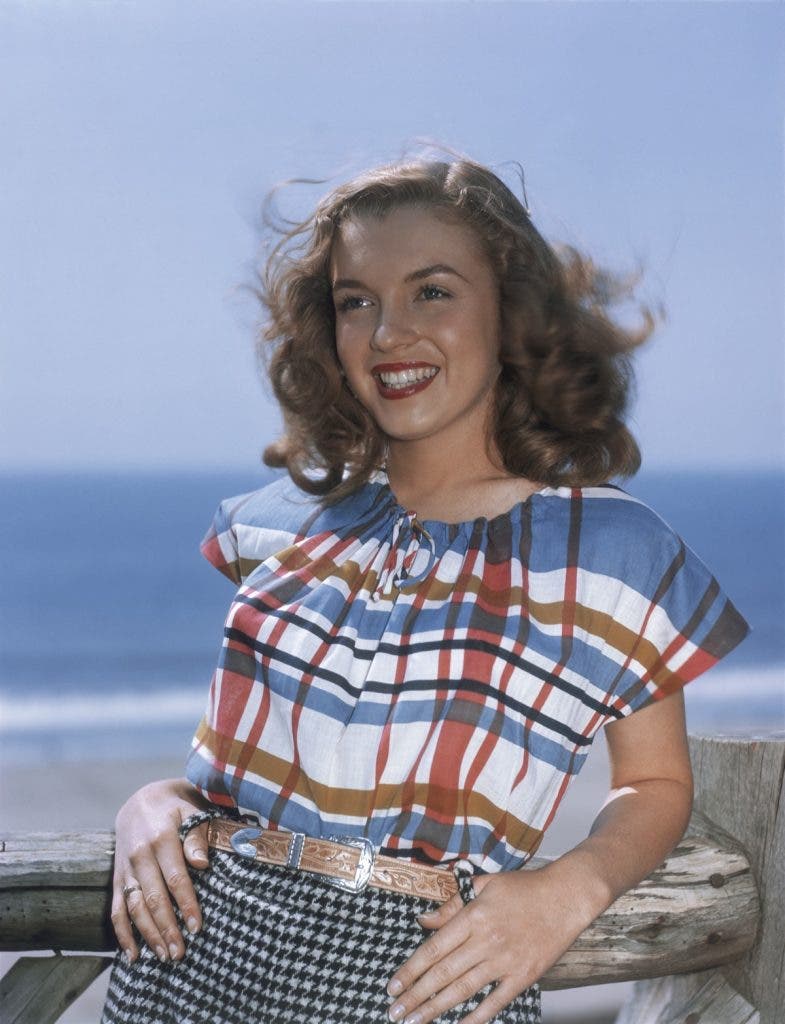
Both Coppola and Ahern agree that her vulnerability remained visible beneath the styling, lighting, and celebrity machinery built around her.
Coppola went further, comparing that evolution to contemporary celebrity culture, using pop singer Sabrina Carpenter as a modern parallel. “I photographed Sabrina ten years ago when she was virtually unknown. Now I can barely get near her as someone who is not only famous, but someone who is fully aware of her image with everything done with intention and purpose, whether it’s on the Met Gala red carpet or during a performance at Coachella.”
Early in a celebrity’s rise, he notes, photographers often shape the image collaboratively. Later, stars become increasingly aware of their public persona and begin directing their own performances.
“Marilyn, as she progressed over time, really knew what she was doing,” Coppola observes. “Versus the Norma Jeane era, where the photographers would take more guidance over her.”
Ahern adds, “The symbiotic relationship between the camera/lens, celebrity, and the audience is a beautiful construct. Marilyn was extremely collaborative because she wanted control and agency over her image. An early resonance of influencer culture and what appeals to audiences today.”
Before The Influencers, There Was Marilyn Monroe
The idea of Marilyn Monroe’s presence in today’s media landscape made us think about what the implications might be.
“I keep thinking about what she would be like at the Met Gala, a place where you’re not promoting anything, but you’re there because of your influence and place in pop culture,” Coppola explains.
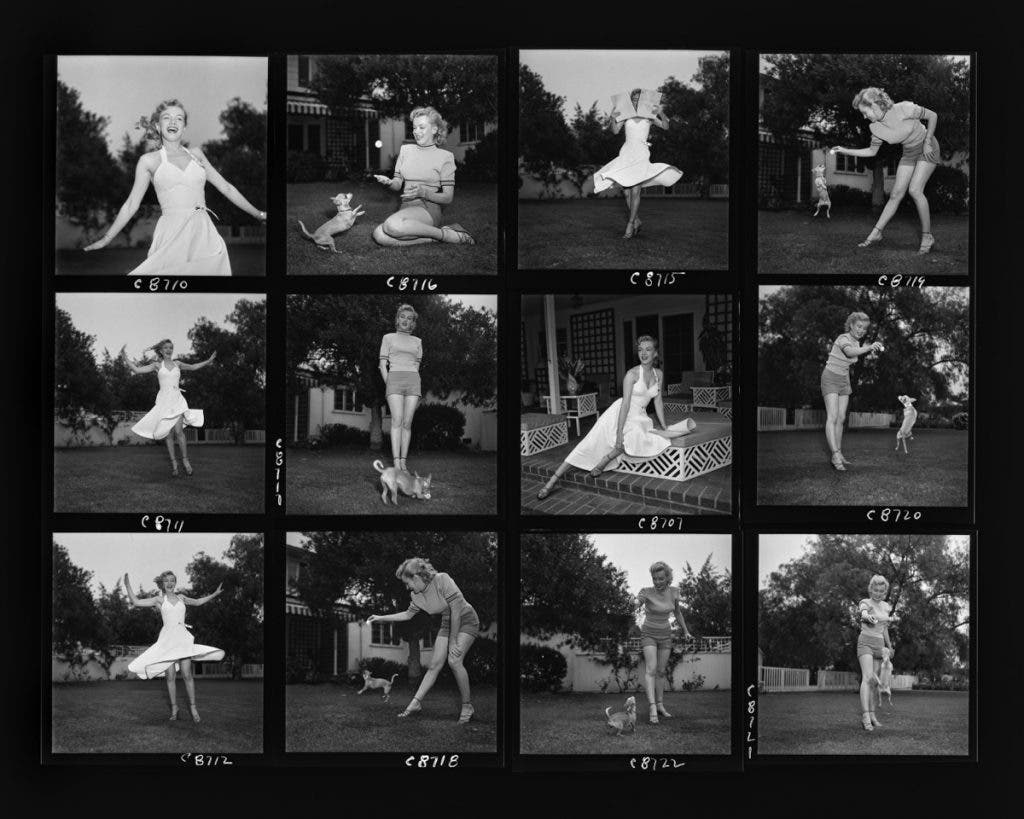
He compares the starlet’s meticulous image control to stars like Lady Gaga and Madonna, artists who deeply understand fame as performance and iconography.
We turn our conversation to Kim Kardashian wearing Marilyn Monroe’s famous dress to the 2022 Met Gala, an event that sparked enormous public reaction. “The fact that a Kardashian could have access to anything in the world and chose that dress specifically shows Marilyn’s influence,” Coppola says. “It was an honor and also incredibly telling.”
Ahern and Coppola agree that Marilyn’s image endures as shorthand for glamour, resilience, vulnerability, and old-Hollywood mystique. “Modern celebrities,” they note, “still borrow from her visual language and legacy because audiences instantly recognize it.”
Preserving History: A Deeper Look Inside Getty Images’ Archives
In terms of building and maintaining an archive as important as that of Marilyn Monroe, Ahern carefully describes Getty Images’ philosophy as intentionally conservative, preserving the photographs by balancing restoration with historical integrity.
“The authenticity and veracity of an archive picture is sacrosanct,” he explains. “Rather than aggressively ‘restoring’ photographs into polished modern versions, Getty Images focuses on preventative conservation rather than restoration. Digitally, minor corrections, like dust removal or color balancing in faded film stock, may occur, but the goal is to make material accessible while maintaining the integrity of the original object.”
Ahern continues: “We’d rather preserve the journey of that object as it exists today rather than restore it to some imagined former glory.”
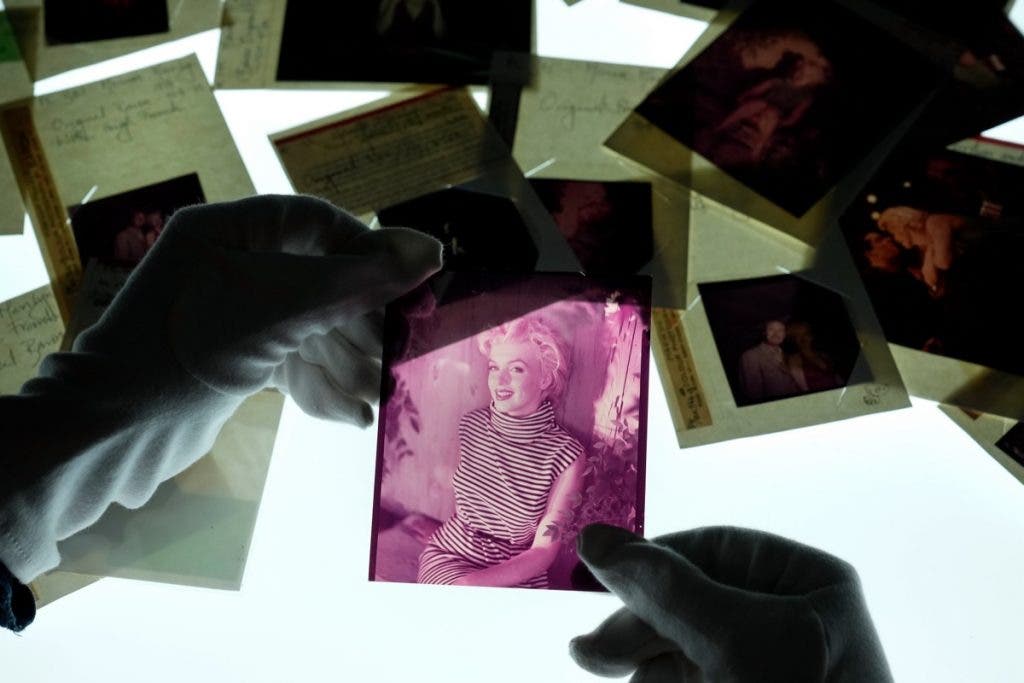
The archive itself extends beyond the final published image. Getty Images preserves original daybooks, contact sheets, index cards, and unpublished frames, allowing future generations to reinterpret history. “It sounds geeky,” Ahern jokes, “but it’s magical, as well as foundational to how we think about accurate and trusted content.”
As one of the world’s largest archives, Getty Images’ vast collection holds 150 million images tracing back to the beginning of photography, along with a video collection containing 3.1 million hours of offline video footage. Each year, Getty Images archivists and curators continuously uncover news gems from its four archival facilities located across the globe, along with content from image partners, bringing hundreds of thousands of newly digitized images and videos to the company’s site.
Ahern adds, “Each frame uncovered is the chance to bring new meaning, new context, and new narrative. It’s history unfolding daily, ensuring that decades of visual history remain protected, accessible, and relevant for generations to come.”
The Black-and-White Mythology of Marilyn Monroe
A discussion on color versus black-and-white photography struck up a particularly revealing moment.
“There are many Marilyn Monroe images that exist in color,” says Ahern, “yet audiences overwhelmingly associate her with black-and-white imagery. The monochrome aesthetic feels inseparable from her mythology.”
Says Coppola: “There are certain things that just need to live in my mind in black and white,”
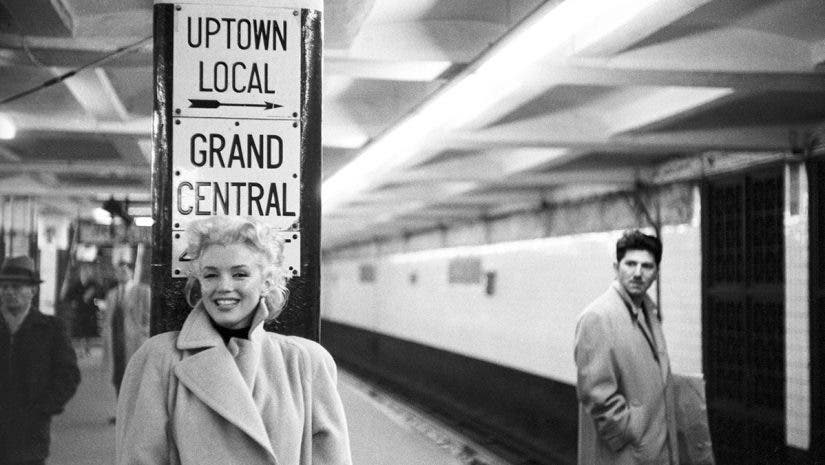
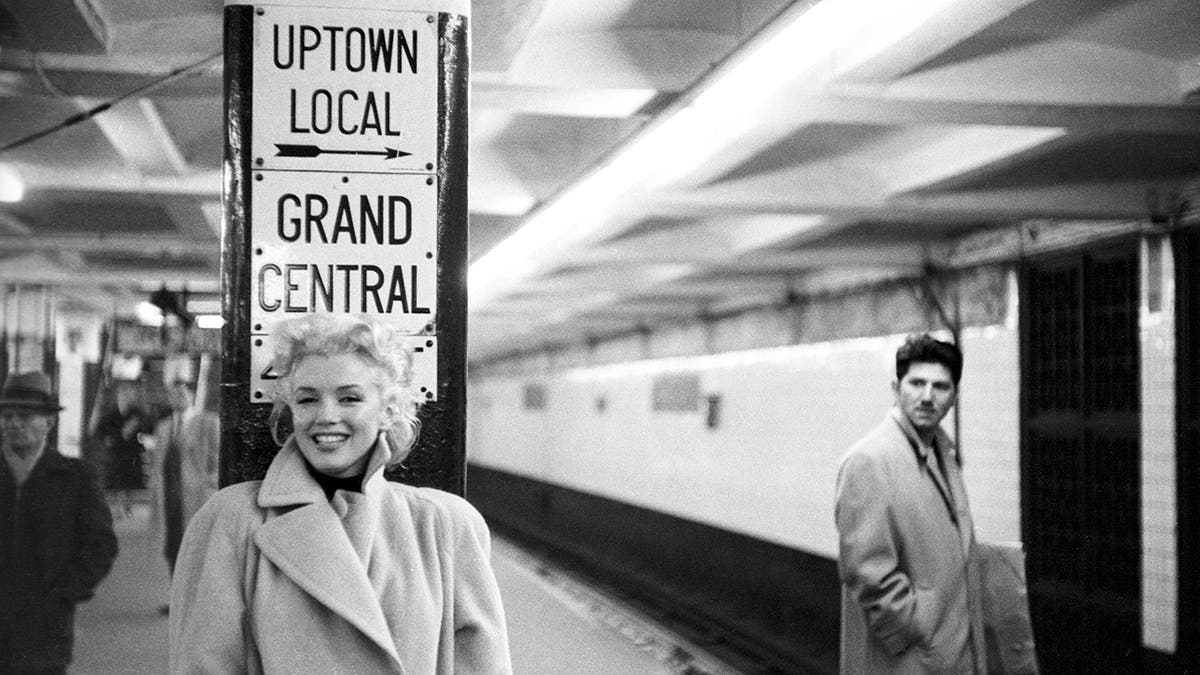
Black-and-white photographs, especially candid work like Ed Feingersh’s famous 1955 subway series, evoke a kind of emotional timelessness. “Marilyn appears less like a manufactured icon and more like a person moving through the city anonymously,” says Ahern. “It couldn’t be more anti-celebrity if it tried,” he says of the subway photographs, “but they’re beautiful.”
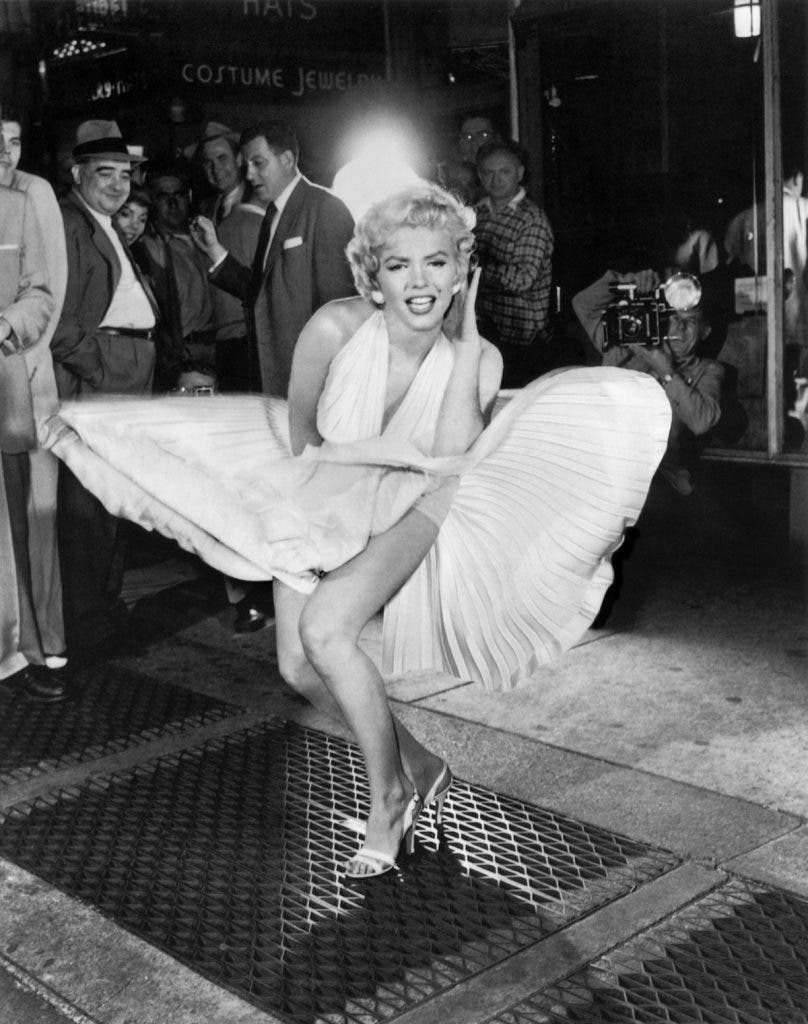
And of course, there’s the iconic image by Sam Shaw of Marilyn standing over a subway grate in New York City on September 15th, 1954, while filming The Seven Year Itch, which similarly transcends the specifics of color or costume, Ahern maintains. “Its power lies in silhouette, gesture, spontaneity, and photographic memory itself.”
Why Young Audiences Still Crave Analog Images
As the conversation shifts toward younger generations, both Coppola and Ahern express optimism about photography’s future.
Ahern says that despite younger audiences growing up in a digital world, they are increasingly drawn to analog aesthetics, including grain, imperfections, film stocks, vintage cameras, and tangible prints.
“While AI technologies are unleashing an incredible amount of creativity, there’s a yearning to reframe our experience back in authenticity,” he describes. “That nostalgia is visible everywhere, from film simulations in modern cameras to the resurgence of instant photography and the embrace of “imperfect” imagery in fashion campaigns and celebrity branding. We are seeing how the past is driving creative inspiration to tell stories today.”
Coppola notes that influencers with enormous digital followings understand the prestige and permanence associated with an agency such as Getty Images.
“They love Getty Images,” he says. “They see value in the immediacy of the images and where they live historically, and also the credibility of our watermark.”
For the last three decades, Getty Images has established itself as a trusted source in the entertainment industry, covering 70,000 entertainment events a year and providing unmatched scale in capturing and delivering high-quality visual content across awards, fashion, film, and global cultural moments.
An Enduring Icon Lives On in Photos
Perhaps the most striking idea to emerge from the conversation is this: Marilyn Monroe’s legacy is not fixed.
“History is always shifting,” Ahern explains. “Every generation discovers Marilyn Monroe differently. Some encounter her through classic cinema. Others through fashion editorials, museum exhibitions, or social media platforms. Yet the photographs remain central to all of it.”
As the conversation draws to a close, the consensus is that Marilyn Monroe transcends chronology. She exists simultaneously as a Hollywood construct and a deeply human subject, glamorous and fragile, controlled and candid, iconic and accessible. “A hundred years after her birth, she is still teaching us how photography shapes fame, and how an archive like the one at Getty Images preserves not just images, but also emotions, memory, cultural identity and evolution,” Ahern sums up.
Explore Getty Images’ “Marilyn Monroe: 100 Years – An Enduring Legacy” archive here.
Article Lead Image: Marilyn in Grand Central StationActress Marilyn Monroe takes the subway in Grand Central Station on March 24, 1955, in New York City, New York. Credit: Photo by Ed Feingersh/Michael Ochs Archives/Getty Images