A flash memory card is portable data storage for your electronic devices. They come in various formats that serve different purposes, such as storage for a digital camera or camcorder, extra space to store files on your smartphone, or a way to transport data between computers offline.
Every flash memory card has one thing in common: they all use what’s called non-volatile memory. This means they don’t need a constant power source to retain data over long periods.
Let’s now take a look at the different types of flash memory cards and why it’s important to know how each one works.
Types of Flash Memory Cards
There are generally three types of flash memory cards: SD cards, compact flash cards, and USB thumbsticks. Flash memory is also used in solid-state drives, but those aren’t classified as memory cards.
Over the years, there have been many different memory card formats and standards. Some have come and gone, and some are still around after decades of use. MultiMediaCard, Sony memory stick, and XD-picture cards are some styles that are no longer relevant to the market. There was also a time when game consoles relied on flash memory cards to save your game.
SD Cards
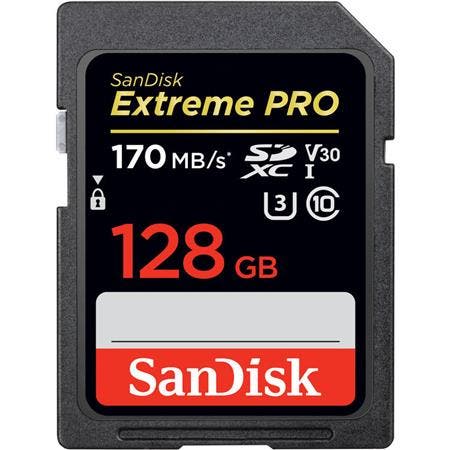
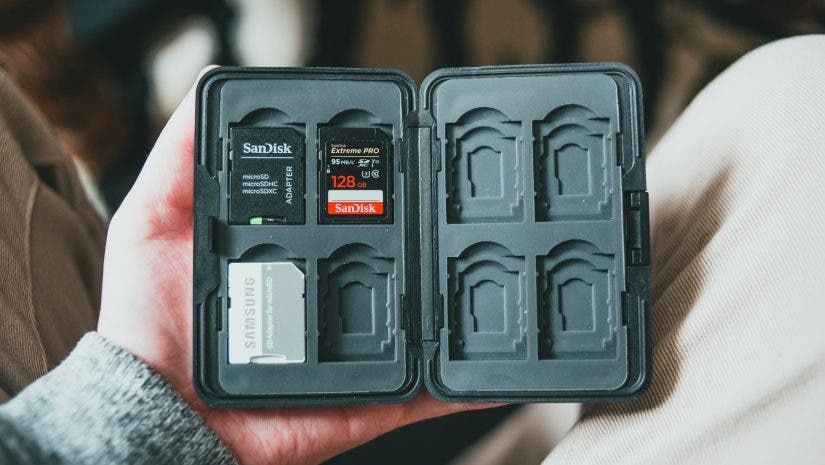
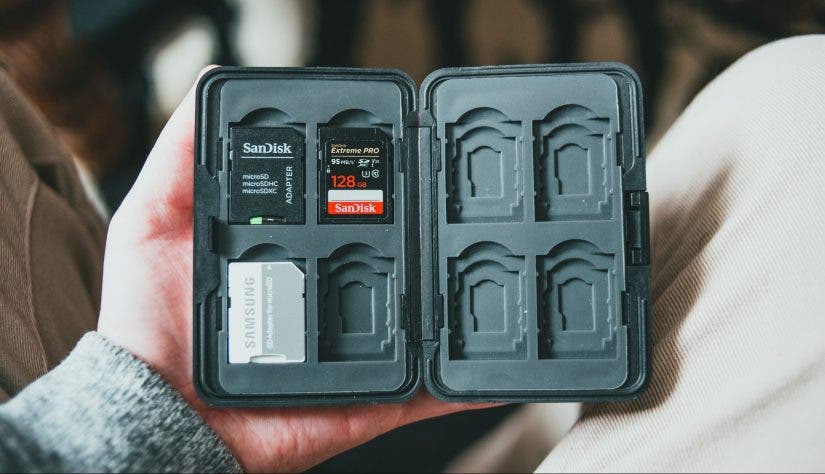
Secure digital cards (SD cards) are typical in digital cameras, action cams, and smartphones. They come in a couple of different form factors, and there are multiple speed and capacity classifications. There are two sizes of SD card: standard SD cards and the smaller MicroSD card.
SD cards are mostly used for DSLR cameras and camcorders, whereas mobile phones and compact action cameras usually support MicroSD if they support expandable memory. In some cases, you may need to use an adapter or connector to access them.
The two most common SD card classifications are SDHC and SDXC, which stand for secure digital high capacity and secure digital extended storage capacity, respectively. SDHC cards can support up to 32GB per card, while SDXC cards come as large as 2TB. You can also get these higher capacity cards in microSDHC and microSDXC form.
Recommended product:
Pay Attention to Bus Speed
The interface class determines the bus speed of an SD card. The default speed of the original SD card standard topped out at 12.5MB/s. Later, high-speed SD cards were introduced with 25MB/s transfer speeds.
These days, it’s more common to find SD Cards with one of the three ultra-high-speed bus interfaces.
- UHS-I cards are available in 50MB/s and 104MB/s packages
- UHS-II drives support 156MB/s at full-duplex or 312MB/s at half-duplex
- UHS-III cards support transfer speeds as high as 624MB/s
SD Express cards are the fastest SD cards available:
- SDHC cards top out at 985MB/s
- SDXC cards top out at 1970MB/s
- SDUC drives are capable of as much as 3940MB/s
Compact Flash Cards
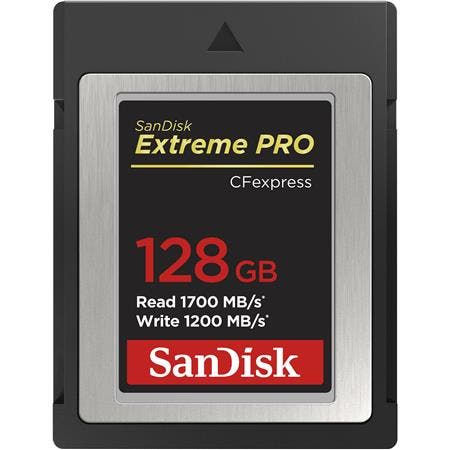
CompactFlash (CF) cards are another form of flash storage used in digital cameras. SanDisk developed the CompactFlash storage format in 1994. It quickly became one of the most successful flash storage media, often used in high-end digital cameras.
To this day, Canon and Nikon both offer high-end DSLR cameras that require CompactFlash storage media.
Recommended product:
Lower Maximum Storage Capacity
Compared to SD cards, CF cards are significantly larger storage devices, making them bulkier to carry around. Despite their physical size, the maximum capacity of CF cards is much smaller than the max capacity of SD cards.
The theoretical maximum size is 512GB, but it’s rare to find CF cards larger than 256GB, and you’ll find a much broader selection in the 32GB to 64GB range. The data transfer speeds of CompactFlash cards top out at around 150MB/s, which is comparable to UHS-II, but quite a bit slower than the fastest SD cards.
CFexpress for Higher Capacity and More Speed
The most advanced DSLR cameras support a faster format of CF card called CFexpress. These memory cards operate on the PCIe 3.0 NVME protocol. That’s the same technology used in the solid state drives found in modern desktop and laptop computers. It offers read-and-write speeds upwards of 1500MB/s.
USB Flash Drives and Thumb Sticks
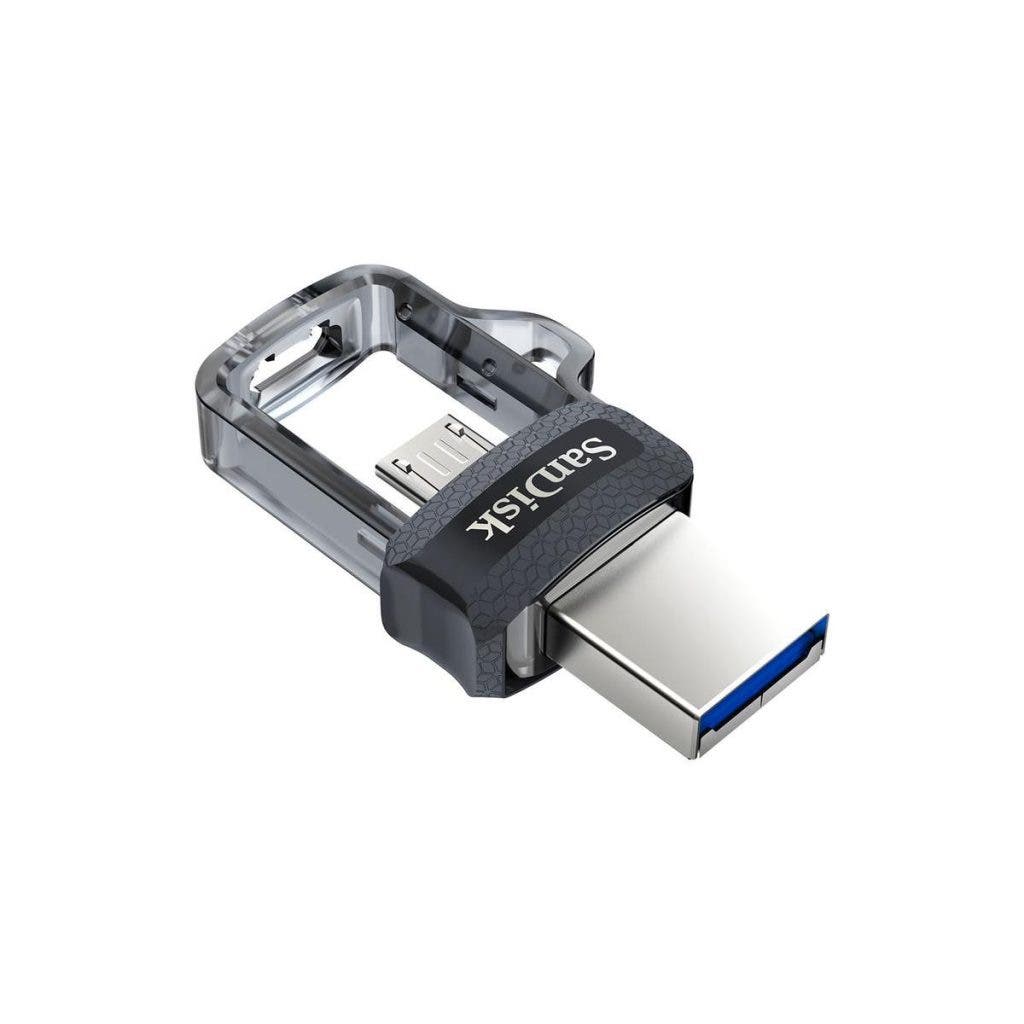
USB drives or thumbsticks also employ flash memory to store data. These handy little devices give you an easy way to transport files from one computer to another without a network connection. Thumb sticks come in various capacities ranging from less than 1GB to upwards of 1TB.
Recommended products: