Picture does not represent the actual item

Picture does not represent the actual item
See Options
Need help? Ask our experts.
Best one yet
Solid workhorse camera. Having worked with several previous models of the C300 & C500, I appreciate this one very much. Canon made a lot of the upgrades I was looking for. Built-in audio inputs is a huge step forward as well as internal 4K recording and frame rates up to 130fps. The handle on this model is much more sturdy than previous versions and the monitor is an upgrade as well. The back-lit buttons is the icing on the cake.
An Excellent All Around Camera
I bought this camera back in July of 2020 and I have ZERO complaints. It's great for set-ups, rigs, gimbals, and everything you can thing of.

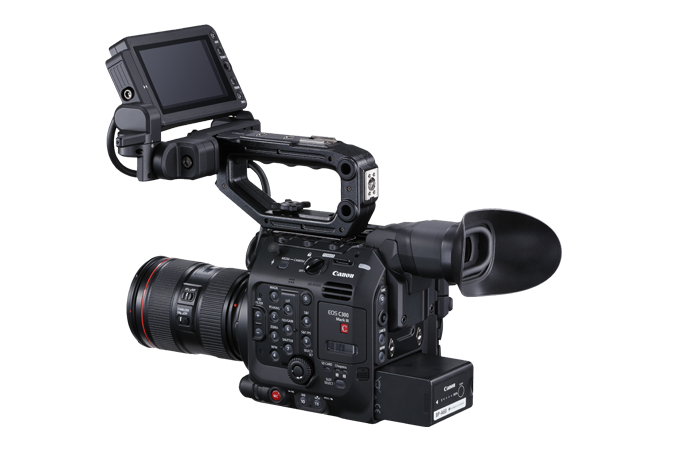
The Canon EOS C300 Mark III is an EF-Mount digital cinema camera that lets you shoot consistent cinema-quality footage. It has a Super 35mm Dual Gain Output (DGO) sensor, a next-generation imaging system that can generate high dynamic range while also maintaining low-noise levels during recording. The C300 Mark III is powered by Canon’s DIG!C DV7 image processor for recording at higher frame rates. It also has a Dual Pixel CMOS Autofocus for quick and easy focusing during shooting. View your shots easily thanks to its LM-V2 4.3" touchscreen LCD Monitor. This EF-Mount camera now has a new modular design, making it easier to fit different mounts, supports, and expansion units for specific shooting needs. Whether you’re shooting handheld or using a gimbal or drone, the C300 Mark III will be convenient to use while also yielding high-quality footage every single time.
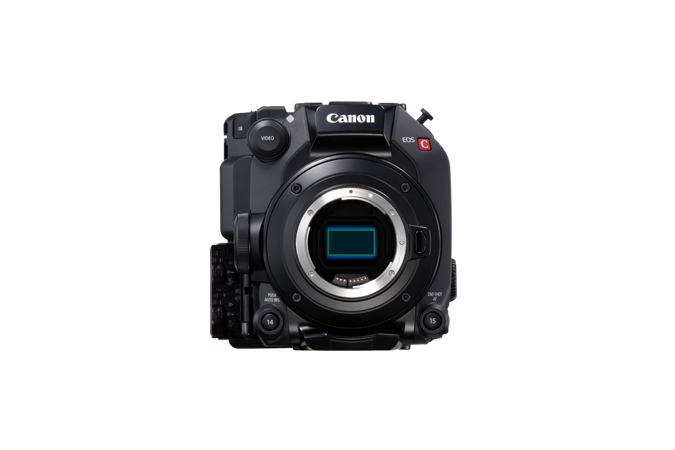
The lightweight body comes equipped with Canon's new Super 35mm Dual Gain Output (DGO) Sensor capable of over 16 stops of dynamic range. The DIGIC DV 7 Image Processor expands functionality and flexibility by enabling features such as internal RAW recording, 4K 120p High Frame Rate recording, and Dual Pixel Autofocus.
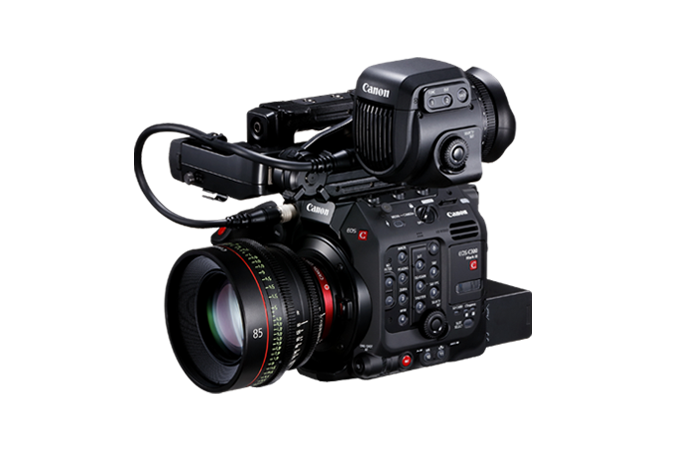
The EOS C300 Mark III is the perfect expression of form and function, exceptionally adaptable to virtually any production with its modular design. Three expansion units and user changeable lens mounts enable operators to build their ideal system for cinema or broadcasting.
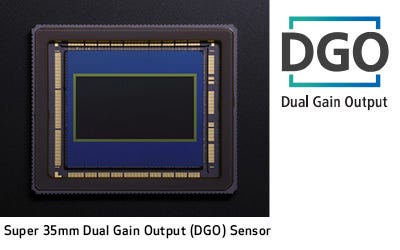
The EOS C300 Mark III features Canon’s next generation Super 35mm Dual Gain Output (DGO) Sensor. This new sensor is capable of dynamic ranges in excess of 16 stops and is compatible with Canon’s exclusive Dual Pixel CMOS Autofocus technology.
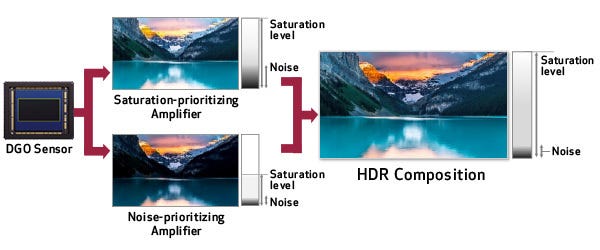
The DGO Sensor is a newly-developed imaging system that generates high dynamic range and maintains low-noise levels by reading out each pixel with different gains. It combines images using pixels shot with a saturation-prioritizing amplifier for bright areas, and a lower-noise noise-prioritizing amplifier for darker areas.
The EOS C300 Mark III features Canon’s DIG!C DV7 image processor that takes the extensive RAW information captured from the imaging sensor and processes it for output. DiG!C is also the engine behind features such as high frame rate recording, Dual Gain Output (DGO) Sensor, Dual Pixel Autofocus, Cinema Raw Light Recording, HDR (PQ) output, Electronic Image Stabilization, and proxy recording.
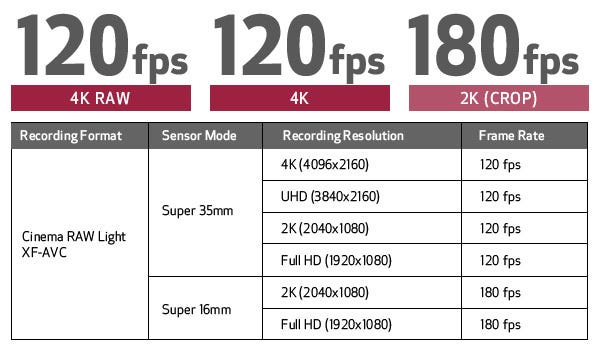
The EOS C300 Mark III is capable of ultra-high frame rates with its new chip design and DiG!C DV7 processor. Frames rate up to 120 fps can be obtained in 4K, while 2K CROP mode provides even greater flexibility with speeds up to 180 fps.
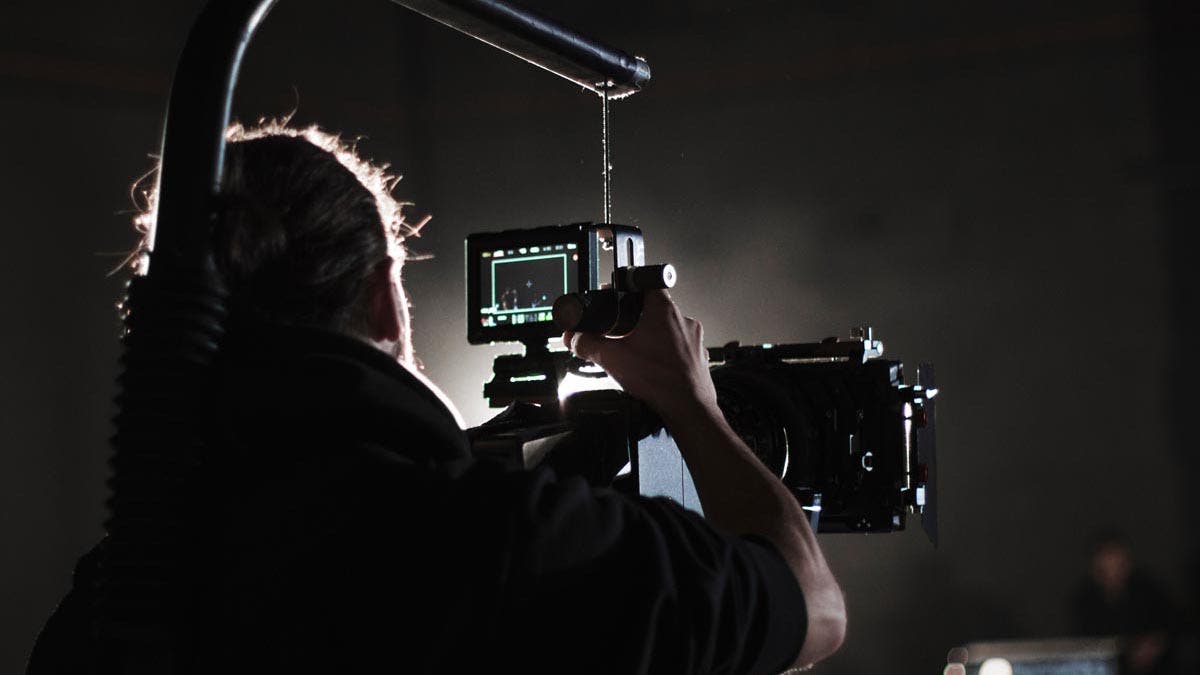
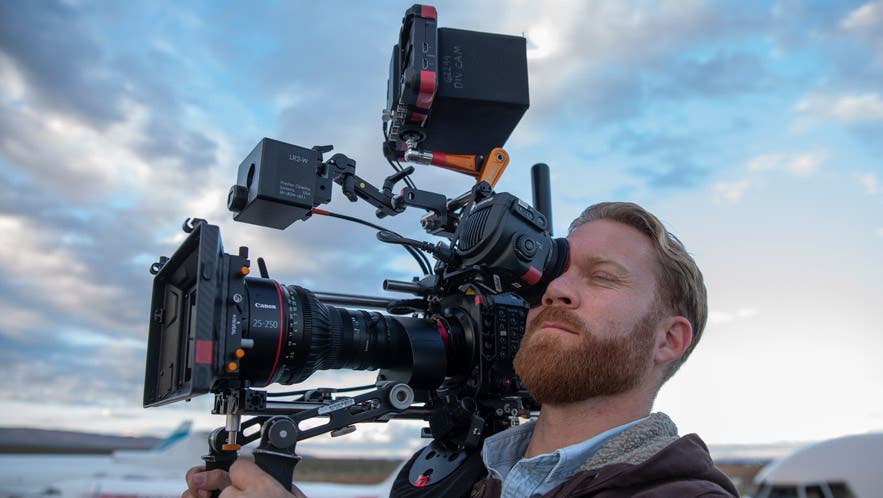
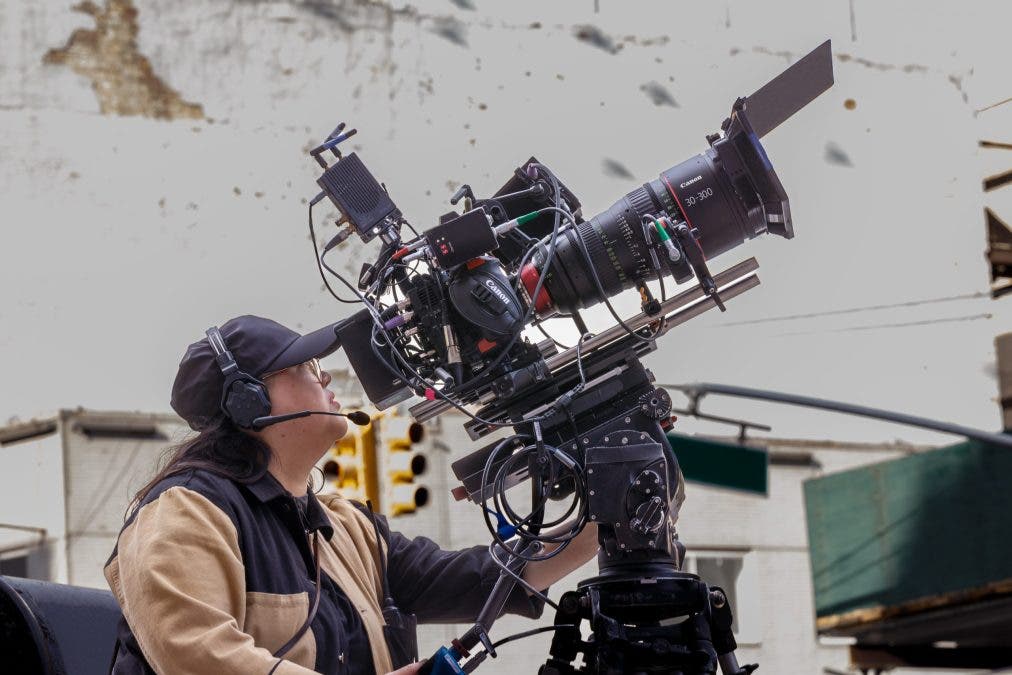
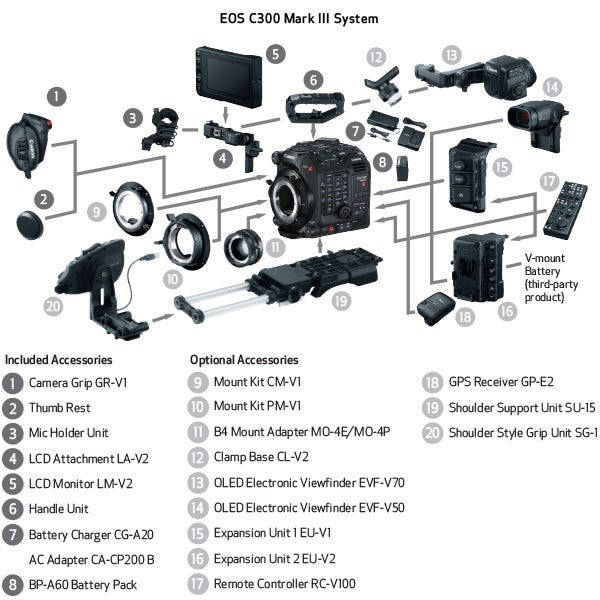
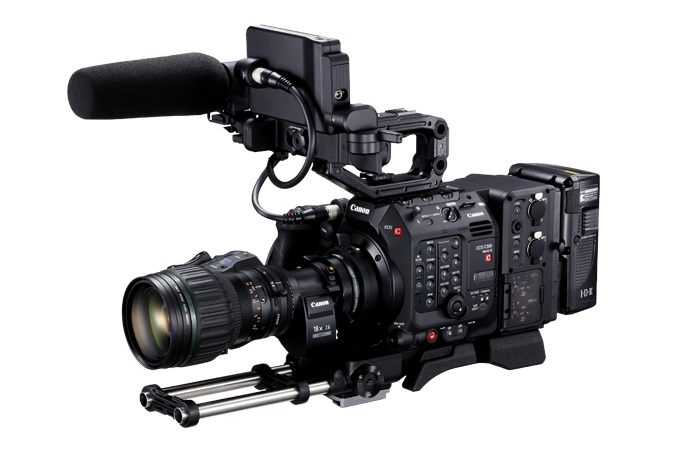
A new modular design allows productions to optimize and customize the EOS C300 Mark III to specific shooting needs. Accessories and expansion units can be easily attached to provide different levels of functionality. The camera is equally at home fully rigged with a large zoom lens, FIZ unit, audio accessories and rangefinder as it is stripped down flying on a drone.
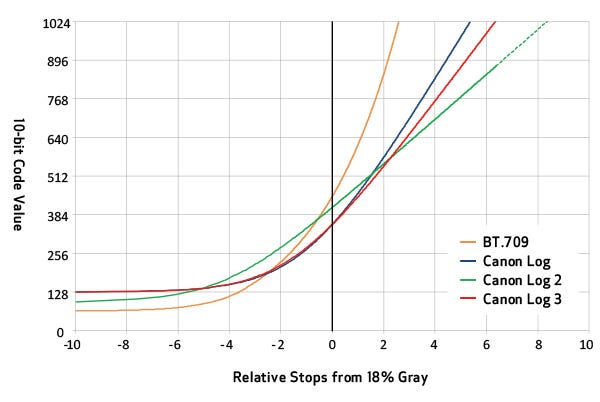
The EOS C300 Mark III supports both Canon Log 2 and Canon Log 3 Gamma. In post-production, Canon Log is designed to reproduce the entire tonal range that the CMOS image sensor is capable of. Log workflows provide the user with higher dynamic range, more highlight and shadow retention, and more flexibility in grading.
Canon Log 2 provides the largest dynamic range and image detail. While Canon Log 2 provides the most post-production flexibility and full dynamic range of the sensor, it typically requires more time in color correction.
For users looking for most of the benefits of log workflow, but with shorter turnaround times, Canon Log 3 provides an alternative with only a slightly reduced dynamic range of 14 stops.
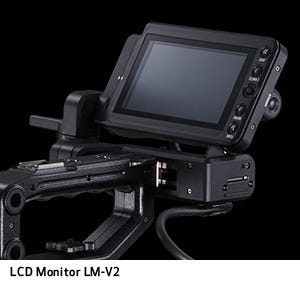
The LM-V2 4.3” LCD Monitor is an easy to view touch panel with approximately 2.76 million dots. The monitor easily attaches to the EOS C300 Mark III using included accessories and can be adjusted to different viewing positions. The LCD monitor is capable of displaying both image framing and visual confirmation of camera settings. Additionally, the display has a control interfaced to make it easy to access and change camera settings.
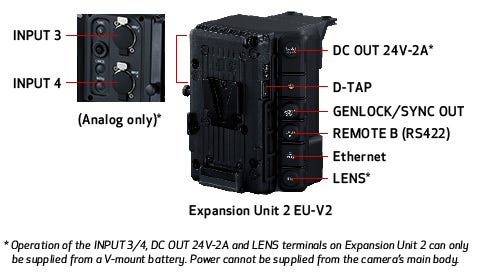
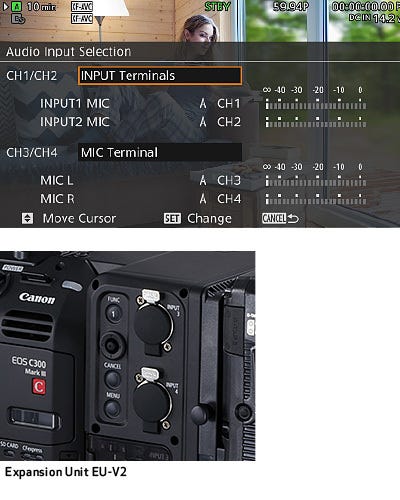
The EOS C300 Mark III supports up to 4-channel audio recording. Audio input from the camera’s internal microphone, mini mic port, and XLR ports can be assigned to the 4 different audio channels. With Expansion Unit EU-V2, a total of 4 XLR ports are supported. This flexibility allows a wide range of audio devices to be connected and
Users can upload and apply custom LUTs to the EOS C300 Mark III. LUTs can be assigned to specific output terminals, LCD and viewfinder. Clients can be viewing one LUT, while production works from another, giving different production roles the ability to customize the look of the image to their needs.
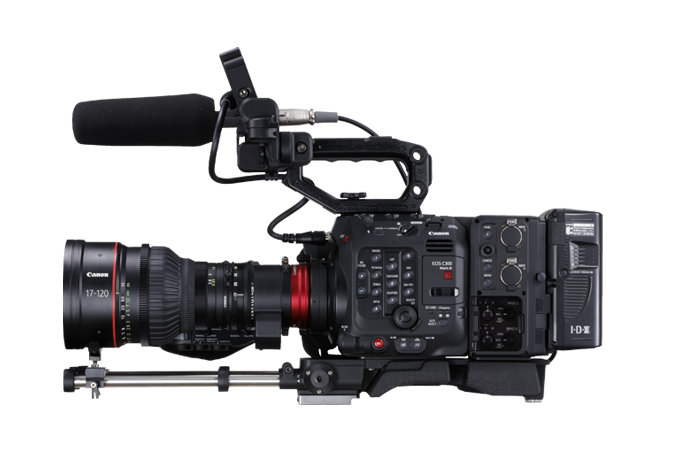
User interchangeable lens mounts and an available B4 mount adapter gives operators the freedom to make bold creative choices based on the subject matter.
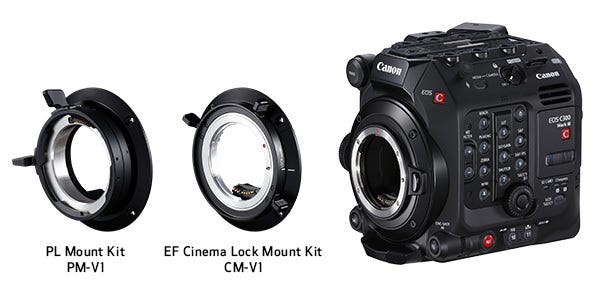
The EOS C300 Mark III ships with an EF Mount that can be user swapped to an optional Locking EF (EF-C) or PL mount. Each mount swaps easily by simply removing four M3 hex screws. A shim set is provided with each mount kit in order to adjust back focus for the precision in focusing accuracy that professionals rely on.*
*Depending on the mount the user has in place. Mounts need to be both swapped and shimmed correctly.
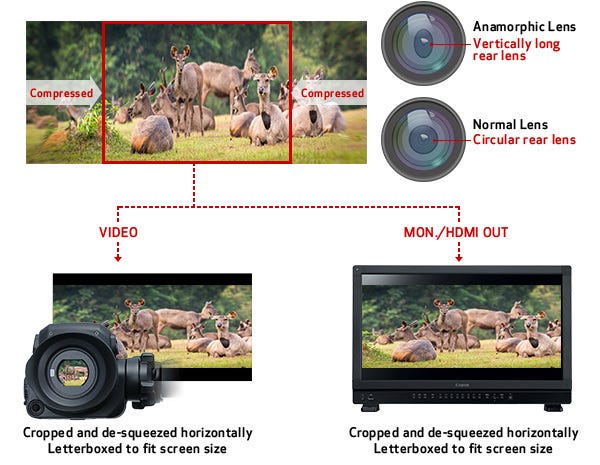
The EOS C300 Mark III offers cinematographers support for the use of both 2.0 and 1.33 anamorphic lens types. Users can achieve the wide cinematic looks, oval bokeh, and striking flares particular to anamorphic glass. It is a distinctly cinematic palette that is within reach for your next project.
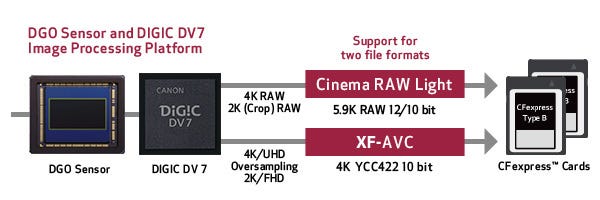
Thanks to the powerful DIG!C DV7 image processing platform, the EOS C300 Mark III can record Cinema RAW Light directly to onboard CFexpress™ cards. Cinema RAW Light offers plenty of freedom for grading with a dynamic range that can exceed 16 stops with Dual Gain Output (DGO) technology, while maintaining file sizes that are about 1/3 to 1/5 the size of Canon Cinema RAW. Canon Cinema RAW Light offers a great combination of codec efficiency and quality.
In addition to the conventional Intra-based XF-AVC codecs, we have added a 4:2:2 10 bit Long GOP-based codec with consideration for a balance of quality and data rates. This new Long GOP-based codec has a data rate that is less than half that of the conventional Intra codecs. This new lightweight codec makes it easier for users to reduce media costs and work with cloud-based infrastructures.
The EOS C300 Mark III Digital Cinema Camera incorporates the new Canon XF-AVC codec that allows 4K and 2K image data to be recorded internally onto CFexpress cards in workflow efficient file sizes using advanced video compression. Using the XF-AVC codec, the EOS C300 Mark III can record a variety of frame fates up to 4K 120p and 2K up to 180fps.
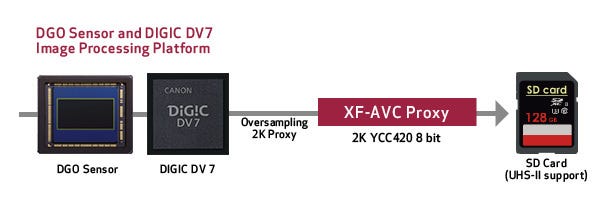
Higher resolution, greater bit depths and faster frame rates provide versatility and greater image quality but come at the cost of much larger file sizes. Proxy files can greatly speed up the editorial process by providing a lower bandwidth alternative for initial file sharing and rough cutting.
Canon’s powerful, high-speed DIGIC DV7 image processor makes it possible for the EOS C300 Mark III to simultaneously record 2K Proxy files. Cinema RAW Light can be recorded to the internal CFexpress card while an XF-AVC 2K 4:2:0 8-bit Proxy can be recorded directly to an internal SD card. Then C300 Mark III can also apply LUTs to Proxy recording.
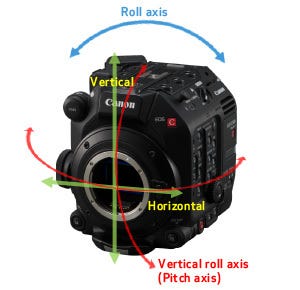
The EOS C300 Mark III includes the same built-in five-axis electronic IS introduced with the EOS C500 Mark II that works with almost any lens, including anamorphic.
The Cinema EOS C300 Mark III features Canon’s Dual Pixel CMOS AF Technology. For DAF, each pixel in the camera’s CMOS sensor is configured with two photodiodes. Two independent image signals can then be detected at each photosite and compared using phase-difference to provide autofocus with compatible lenses. DAF can survey the scene and recognizes not only whether the subject is in focus or not, but in which direction (near or far), and by how much. DAF also powers the intuitive Focus Guide for users who prefer to focus manually but enjoy the positive feedback DAF provides through the guide interface.
Support for 12G SDI allows for the EOS C300 Mark III to output 4K resolution up to 60p over a single BNC cable.
The EOS C300 Mark III body has a remote A terminal (LANC) on the body and supports remote B (RS422) in both expansion unit EU-V1 and EU-V2. Through these connectors, the EOS C300 Mark III can be completely remote operated either by a standard LANC compatible cable or over longer distances through the use of a serial connection.