When I arrived at the Canning Town address in East London where the Getty Images Hulton Archive is housed, I found myself surrounded by the utilitarian landscape of a business park. The nondescript scene included a large “Screwfix” hardware store sign looming in the corner. Nothing about the setting suggested the extraordinary repository of photographic history I was about to enter.
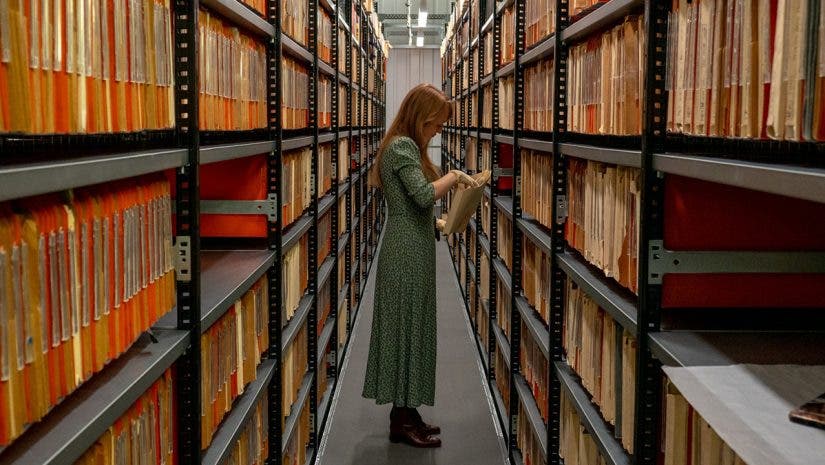
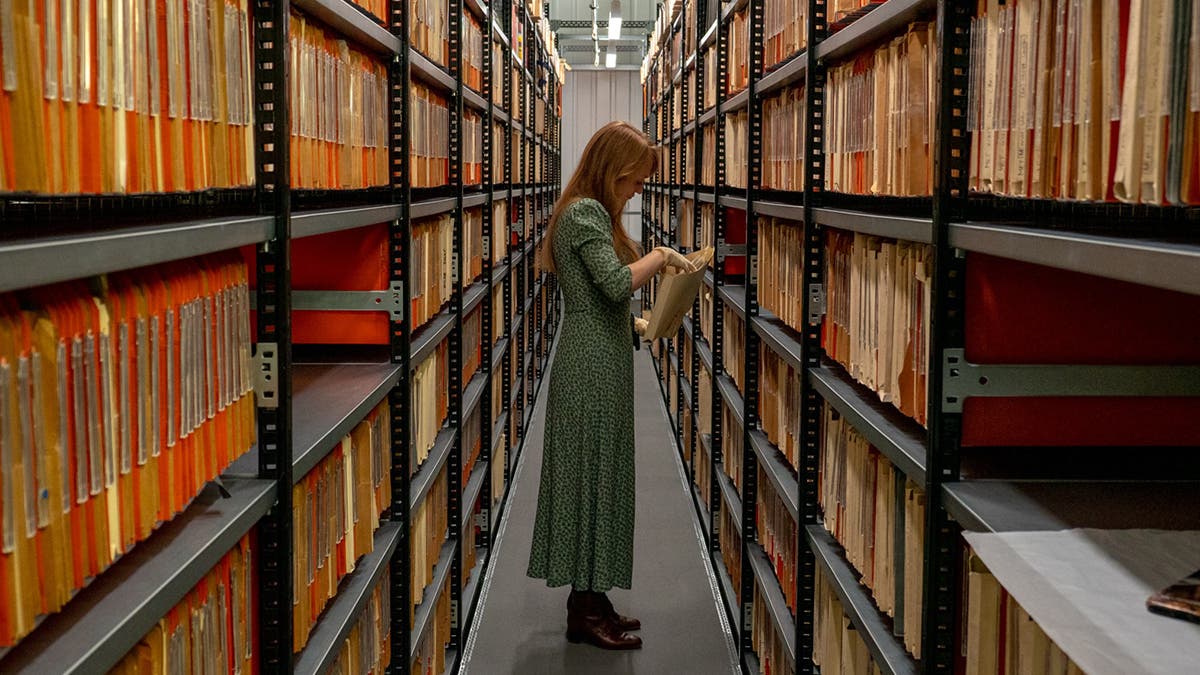
Inside the glass-and-metal structure are over 94 million photographs and photographic objects, including negatives, transparencies, prints, contact sheets, captions and related visual ephemera. The archive spans an estimated 1,500 collections and includes non-photographic printed media: engravings, etchings, and rare books. The collections cover politics, war, fashion, entertainment, sports, society, culture, and everyday life, dating back to the beginning of photography. The Archive also contains enthralling specialized sections. These include rare 19th‑century Indian landscapes and Herbert Ponting’s South Pole images. Additionally, the Allsport, the Princess Diana Archive, and individual photographer collections such as one of my favorites, Slim Aarons. The amount of history on display here is truly staggering. Curator Melanie Llewellyn, wearing purple latex gloves and a welcoming smile, guided me through it.
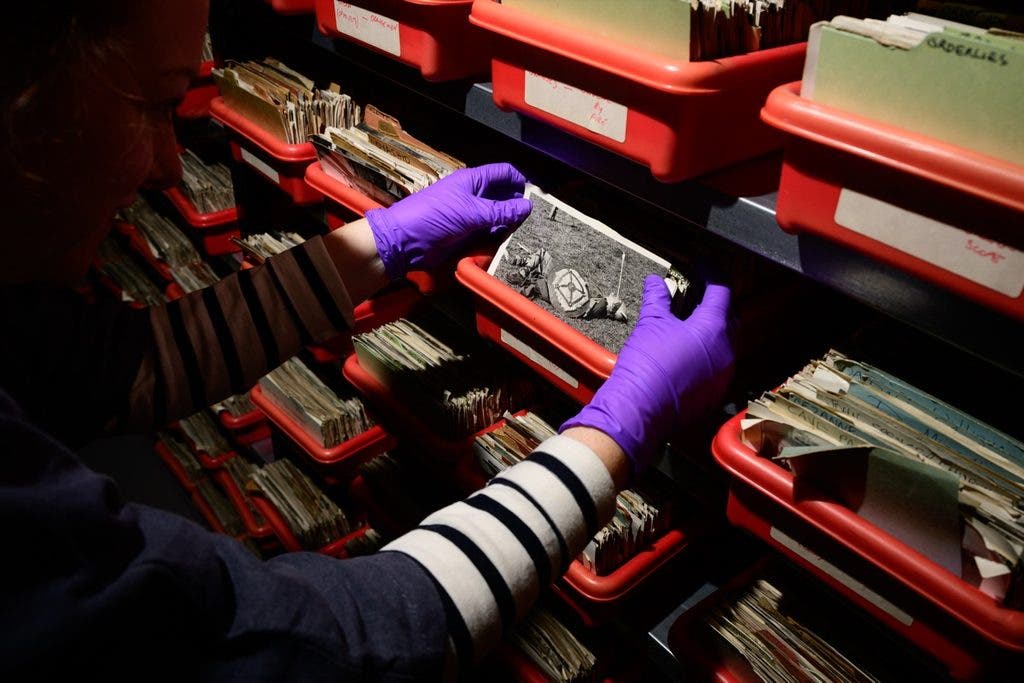
What Makes the Getty Images Hulton Archive So Special
The Hulton Picture Library was established in the late 1940s. The collection passed through several incarnations before Getty Images acquired it in 1996. As Llewellyn explains it, the collections are closely tied to historic press titles. Titles like The Evening Standard, with the Archive’s origins in Picture Post, a British photojournalism magazine founded in 1938. Its founding editor, Stefan Lorant, believed in visual storytelling. Its publisher, Sir Edward Hulton, saw potential in collecting historic and contemporary photography.
Llewellyn, who has been there since 2017, describes it as a place where “there are still many, many discoveries to be made.”
And those discoveries aren’t necessarily about coming across a famous photograph or surprise find. Sometimes they are about seeing something familiar differently, or finding photographs that never made it into the history books in the first place.
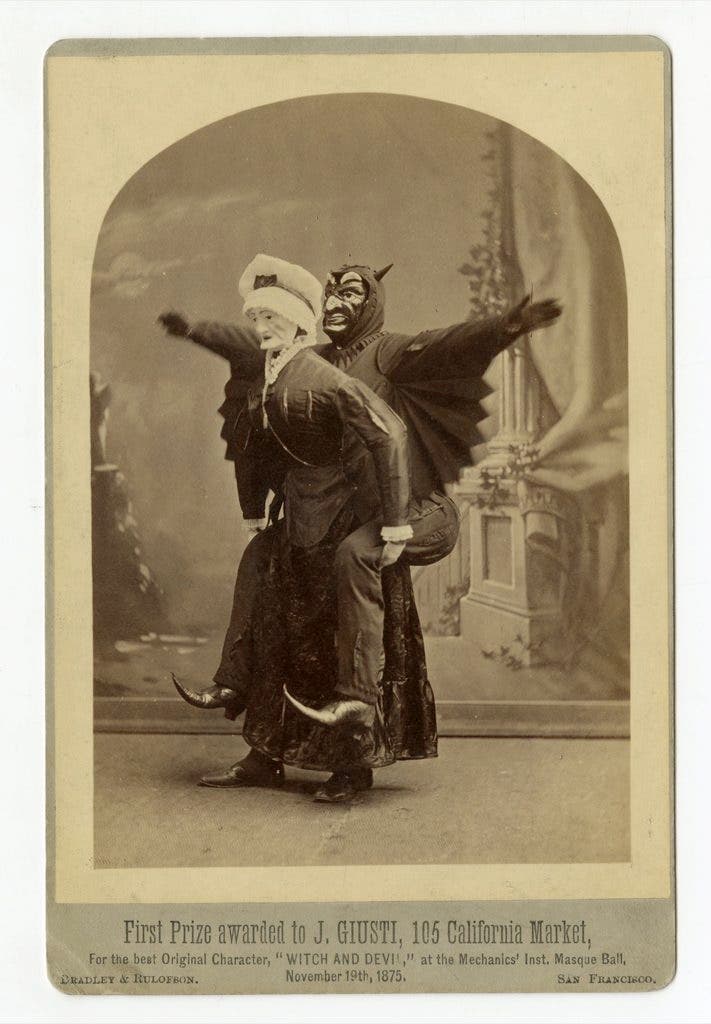
“A Curious Image Found Lurking in Our 19th-century Files”
One of Llewellyn’s favorites from the Archive’s vintage collection is described on a Getty Images Archive Instagram post as “a curious image found lurking in our 19th-century files.” She is drawn to it for, she says, “the many macabre tales that can be spun from it. Visually, it’s got a touch of the Edgar Allan Poe, too.” She writes about it here.
The physical collection I was introduced to during my tour includes negatives, annotated press prints, and contact sheets. Additionally, daybooks and other historic materials, including thousands of Picture Post stories that were “killed” or commissioned and photographed, but ultimately never published.
Part of the fascination is precisely in what can emerge when you look beyond the obvious. “A digital search may take you directly to the photograph you think you’re looking for. But opening a box, examining a contact sheet or turning the pages of an old publication can lead somewhere else entirely,” she explains. “Perhaps it’s an image you didn’t know existed, an alternate frame, an overlooked photographer, or an entirely different story.”
A Curator’s Instinctual Eye
Llewellyn’s curatorial role extends well beyond caring for a vast collection of photographs. She is also a researcher, writer, and interpreter of the material, continually looking for new ways into the archive and new stories within it.
In an essay from earlier this year about a 1908 photograph of British archer Lottie Dod competing at the Olympics, Llewellyn described it as “a document from which a multitude of stories can be written,” about women’s history, sport, London and fashion, and the photograph itself.
“A library of nearly 94 million images, the Archive is continually excavated to surface new stories according to our changing present moment,” she wrote. “Our program of preventative conservation, targeted digitization and deeply researched application of metadata ensures this historic resource will remain accessible to all and survive into posterity, including the tale of Lottie Dod.”
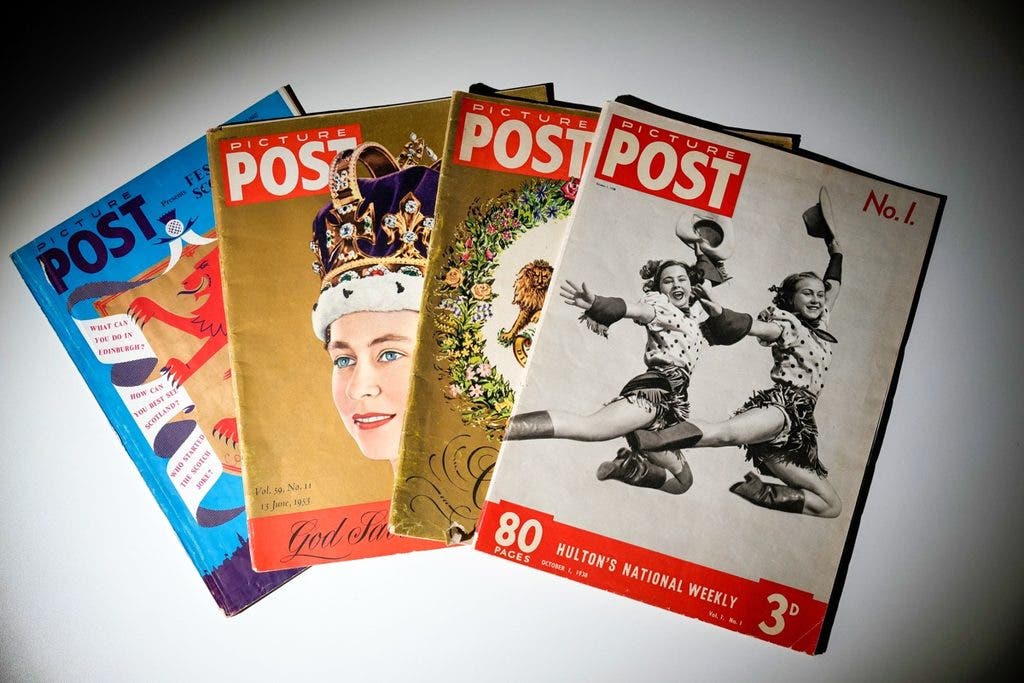
Gloved Fingers and Yellowed Pages
On the day I was there, I stood in awe as Llewellyn’s gloved fingers delicately rested on the yellowed Picture Post spread of chief Picture Post photographer Bert Hardy’s “The Man on the Ladder” from photo essay “Fire Fighters!” (February 1941); I reveled in the candor of Grace Robertson’s Ladies’ Turkish Bath (December 1951); and I was overjoyed to visually thumb my way through the Picturing Black History book produced in collaboration with Getty Images. Eventually, we made our way to the Keystone Collection and what Llewellyn describes as the “Hitler shelf.”
We stopped there so Llewellyn could show me how images and files get categorized and captioned. She pulled a card for a print of two girls standing next to Hitler, photographed by Hitler’s official photographer, Heinrich Hoffman. A typed caption reads, “Two lucky girls receiving Hitler signature and postcard.” Next came an image classified under “misery relief” and captioned “Bread being distributed to the poor in Peckham.” Everything is so meticulously filed and preserved, not just the images themselves. Then on to the next. Along the way, Llewellyn points out another of her favorites, the Julia Margaret Cameron Idylls volumes. We still had many boxes to open. Negatives to examine. Stories to reconstruct. Prints to be seen.
“Each box, folder, shelf or room contains a wealth of information. It’s a treasure trove of history and photography,” she exclaims.
A Working Picture Library: The Digital and The Tangible
“As a working picture library, we have always sought a balance between the conservation of the collections and their accessibility,” Llewellyn explains. “Digitization has supported that, preserving the object’s content while ensuring it can be shared and utilized easily and responsibly, minimizing handling of the originals. I would love to see this practice expanded to all those library tools, bound albums and rare books, as well as the supplementary materials that enrich our images, now historic documents in themselves. Enhancing navigation and providing valuable context, they are a fascinating resource that speaks to the histories of visual culture, as well as the myriad of past lives and events depicted.”
That distinction between the digital and the tangible became more noticeable when I met Hulton Archive photograph conservator Emma Lowe. Her enthusiasm for her work was so contagious that I wanted to move in and gleefully work beside her, permanently.
Lowe explained that the first steps in conservation treatment are to photograph the object, record its damage, and then dry-clean its surfaces, removing dirt and dust before they can embed in the paper fibers or print surfaces during treatment.
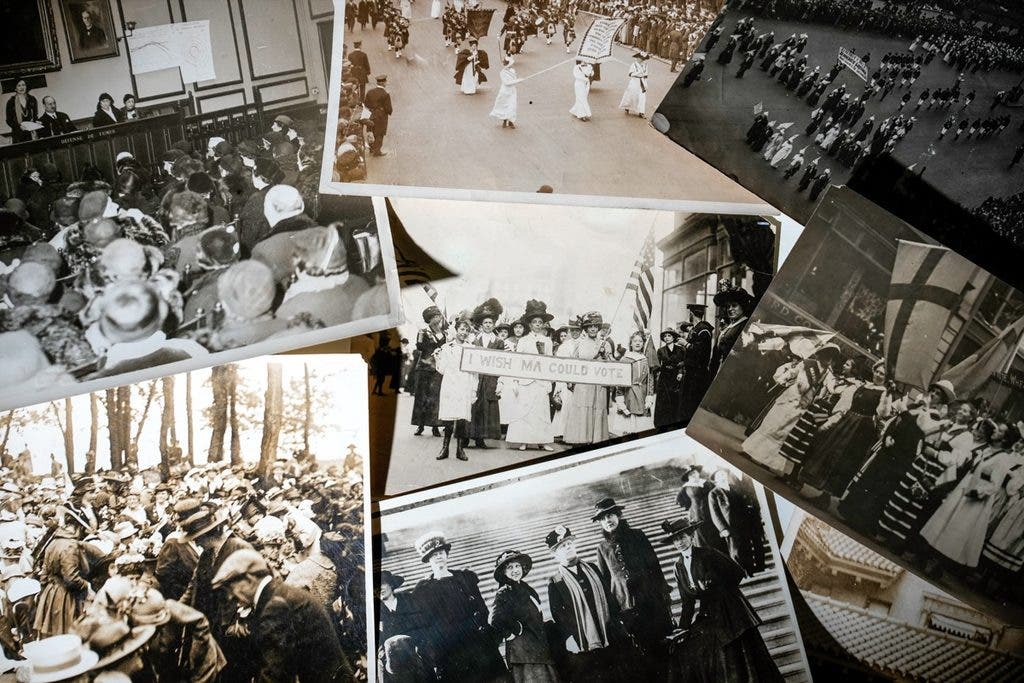
Killed Picture Post Stories
She also described the work currently being done on those killed Picture Post stories, from projects that had been prepared for publication but ultimately never got published. Some folders contain prints and negatives; others contain correspondence, handwritten captions, and even galleys showing how the stories had been assembled.
The material had spent decades in storage, and it was anything but pristine. Galleys had been folded, rolled, or compressed. Photographic prints had become stuck together. Paperclips had rusted. Some pieces were torn or fractured.
But the damage could also reveal something about a photograph’s history.
“A paperclip,” Lowe explains, “might be damaging a photograph, but it can also tell us something about how an editor worked with the pictures.” Two photographs clipped into the same position, she explained, could reveal that an editor was choosing between alternate images. Handwritten notes could preserve decisions that disappeared from the published magazine.
The Photograph Redefined
As I learned from both Llewellyn and Lowe, a digital image can tell us what a photograph looks like. The original can tell us something about how it existed in the world.
Consider a strip of negatives that shows the frames before and after the famous image. An old contact sheet reveals the photographer’s choices. A transparency conveys how a picture was edited or selected. A caption reveals what the photographer or picture editor thought mattered at the time.
We tend to remember the single frame, the photograph that was published, exhibited, reproduced, and eventually became iconic. But photographers don’t experience their work that way. They make sequences, they try things, they make mistakes. Often, they change position. They return to a subject. Editors make choices.
The Hulton Archive has spectacularly preserved some of that decision-making process. Today many images housed there continue to be used for editorial projects. Not to mention publishing, film and television, advertising, exhibitions and other creative work.
“Historic photographs can be brought out of the collection and given new context, sometimes sending researchers back into the archive to uncover material that has rarely, if ever, been seen,” says Llewellyn. In that sense, the archive isn’t the end of a photograph’s life. It can be the beginning of its next one.
Learn more about the Hulton Archive HERE.