

One of the most welcome trends in new camera design is the return of the eye-level viewfinder. But instead of those hardly-worth-it squintfinders of yore, these are digital, they’re showing up on more compact cameras, and they’re better than ever!
Remember squintfinders? Those were those little optical viewfinders that zoomed with the camera and gave you about a 60-70 percent view of what you were photographing. We complained about them, but then we complained even more when they started to disappear and were replaced with LCD monitors on the backs of digital cameras that forced you to hold the camera at arm’s length. This position encouraged camera shake, and the finders were (and in most cases, still are) barely usable in bright sunlight. Finally, the eye-level viewfinder is making a comeback in compact and not-so-compact cameras, and now it’s electronic!
We’re seeing more high-resolution EVFs on compact cameras, and image quality has improved. A 2 million dot resolution EVF looks almost as good as an optical image and the big advantage over optical squintfinders is that all EVFs we’ve seen show the entire image. They also let you view previews and provide lots of information so you don’t have to take your eye off the camera. Even better? You can hold the camera up to your eye to shoot, and that reduces camera shake.
If this is, indeed, a rebirth of the eye-level viewfinder, it’s about time!
The range of cameras with EVFs has expanded. Here are the key categories:
Superzooms
Where a couple of years ago an 18x zoom lens was considered a long stretch, now EVF cameras with built-in lenses have 30, 40 or even 50x optical zooms, and the lenses start out at wider wide-angle settings. Maximum focal lengths in the 800mm range (35mm equivalent) are not uncommon. There’s even a camera now that can zoom beyond 1,000mm! To accommodate such a wide optical range, superzoom EVF cameras use small sensors, the kind you’d find in a pocket-sized compact digital camera. In daylight that’s fine, but in subdued light, image quality degrades fast because of the physical limitations that come with squeezing so many pixels onto a space the size of your pinkie nail. Despite these limitations, noise suppression software can be applied in-camera which will let you produce 5×7 and even 8×10 prints that will be acceptable for most casual shooters. A caveat when shooting with a long-range zoom camera: Image stabilization will help in bright sunlight when zoomed to the longest focal length, but a tripod is much better and highly recommended.
Interchangeable Lens EVFs
The new sub-category is interchangeable-lens EVFs, which started when Panasonic introduced the G1, based on the Four Thirds sensor, in 2008, heralding a new era for photographers. In the last year, the category expanded greatly, with Sony and Fuji, and Olympus offering cameras with larger APS sensors. In both cases, the sensors in these cameras are commonly found on DSLRs, and the overall image quality is inevitably going to be much better than on smaller sensor cameras. But more importantly, each brand has a selection of interchangeable lenses, and third-party manufacturers have created adaptors that let you mix and match, putting other brand lenses on these cameras. Although these cameras look like DSLRs, they are smaller and lighter because they do not have a space-eating mirror housing.
But wait—there’s more!
There’s another sub-category, mirrorless interchangeable lens compacts which lack built-in electronic viewfinders. Just to confuse matters a bit more, some of those cameras have EVFs available as accessories that are available at an additional cost. I’m not including those cameras here, but you can read more about them in “The Best System Compact Cameras Right Now.”
A note about DxOMark Lab Tests: The Adorama Learning Center’s partner test lab, DxOMark, has published lab test results of some interchangeable lens cameras, but not for fixed-lens EVFs. I’ve included basic result information and a brief interpretive statement for each camera where lab tests are supplied.
And now, on to the cameras. First, we’ll look at EVFs with built-in lenses, then interchangeable-lens EVFs. Adorama prices are accurate as of October 14, 2015.
Fixed Lens Superzoom “Bridge” Cameras with Electronic Viewfinders
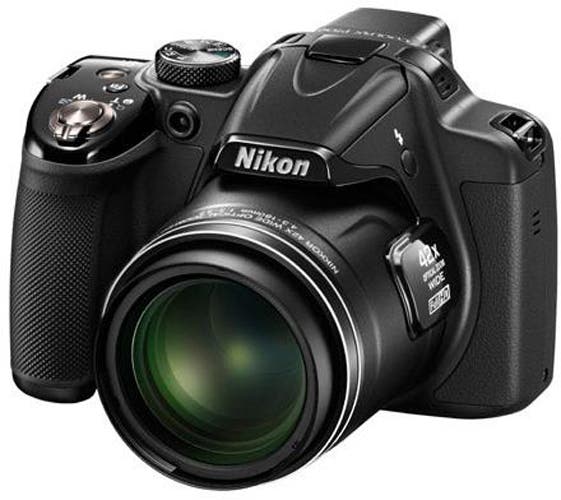
Nikon Coolpix P530
Adorama price: $276.95
Overview: The Nikon Coolpix P530’s amazingly long-ranging zoom lens stretches to an amazing 42x zoom ratio—24-1000mm. The lens is f/3-5.9, and the EVF is a modest 201k dot resolution—good enough for reference but not tack sharp. But the 3-inch LCD monitor, at 921k dot resolution, leads the pack. Macro close-up can bring you to within half an inch of the front of the lens, while the camera gives you many AF options for action or more stationary subjects. This camera offers 1080 HD video in 6 recording speeds, and other resolution at a variety of frame rates. It has has 19 scene modes and—a Nikon strength—7 in-camera editing actions. Sorry, no RAW image capture.
Key Features:
- 16MP 2/3-inch CMOS sensor
- 24-1000mm (35mm equivalent) f/3-5.9 powerlens
- Built-in GPS
- 3.2-inch 921k dot resolution LCD monitor
- Eye-Level Electric Viewfinder with 201k dot resolution
- Up to 7fps full-resolution burst rate
- 56MB Internal Memory
- Auto Scene Selector
- Motion detection
- Optical vibration reduction
- Subject Tracking
- Macro focus to 0.4 inches from surface of lens
- ISO range 100-6400
- 1080p HD movie recording with built-in stereo mic.
- 17.5 oz.
- Optional WU-1a Wi-Fi adapter available
Lab Test Results (Provided by DxOMark):
Not tested
Who would love it: Travelers, soccer moms, wildlife and birding enthusiasts who’d rather bag a great photo of their subject than kill it.
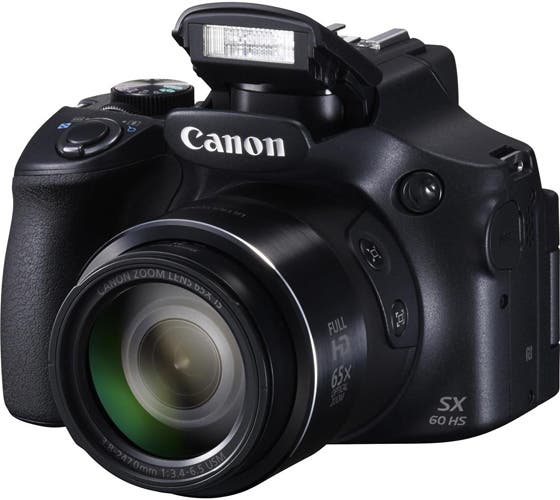
Canon PowerShot SX60 HS
Adorama price:
Sporting one of the longest-ranging zooms in any digital camera (65x covering the 35mm equivalent of 21-1365mm), the Canon PowerShot SX50 has a 16MP CMOS sensor and is capable of capturing both RAW and JPEG images, as well as HD video up to 1080p with stereo sound; it’s the first PowerShot camera with a Mic Jack It’s also the first to offer Wi-Fi and NFC connectivity. The camera has a maximum ISO of 6400, and the 2.8-inch LCD monitor can flip out and has a 922k dot resolution. The camera also has an eye-level electronic viewfinder with a sharp 922k dot resolution. It offers the usual boatload of photo effects, and has a sports-friendly burst mode of 6.4 shots per second. In Macro AF mode, it will focus to the surface of the lens (in other words, 0 inches!), another impressive bit of optical wondermint.
Key Features:
- 65x Optical Zoom Lens
- 21-1365mm f/3.4-6.5
- Macro focus to surface of lens
- 16MP CMOS sensor
- 3-inch LCD Monitor with 922k dot resolution
- Electronic Viewfinder with 922k dot resolution
- Shutter speeds 15-1/2000 sec
- ISO range 100-6400
- RAW & JPEG
- Up to 1080p Video
- Microphone Jack
- Built-in flash range 1.6-18ft wide angle
- Hot shoe compatible with Canon Speedlite flashes
- Smart Auto sets camera based on 58 predefined shooting situations
Lab Test Results (Provided by DxOMark):
- Maximum ISO for acceptable image quality (digital noise): 200
- Maximum ISO for acceptable dynamic range: 200
- Color depth: Good (19.2 bits on a scale of 1-25)
- Overall image quality: Fair (47 on a scale of 1-100)
- Dynamic range: 10.8 stops
A typical performance for a small-sensor camera, the SX50 performs best at its native ISO 100, but noise becomes apparent by ISO 400. Noise supression might gain a stop or two.
Who would love it: Wildlife/birding photographers, travel shooters, soccer moms
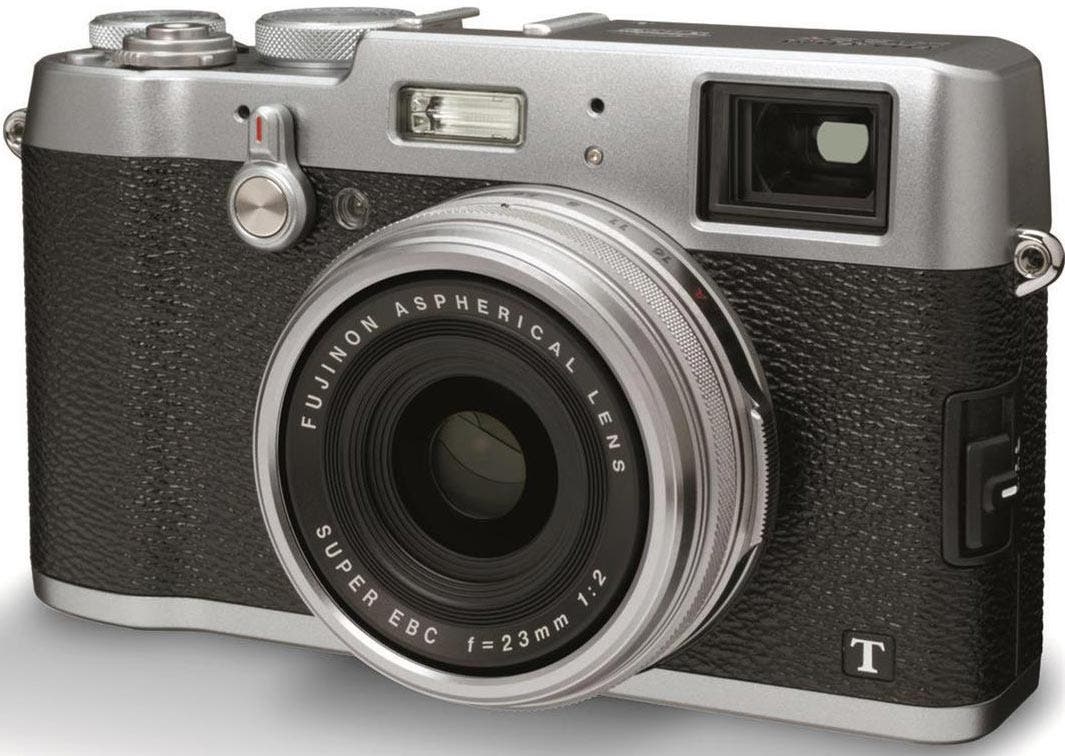
Fujifilm X100T
Adorama price: $1,299
The Fujifilm X100T is not for everyone. But if you are interested in candid photography such as photojournalism or street photography and don’t want to compromise on image quality, the X100T is a very popular choice with a loyal following amongst prosumers and professional photographers. It has a dual, switchable optical/electronic viewfinder, and the X100T, along with its interchangeable-lens sibling the X-Pro 1, are the only cameras to offer such a system. Key features include a 16.3MP APS sensor, 23mm f/2 lens that provides the equivalent of a 35mm lens field of view, and according to Fujifilm, virtually no shutter lag time and really, really fast autofocus.
Key Features:
- 16.3MP APS-C X-TRANS CMOS II Sensor
- Hybrid Optical/Electronic switchable rangefinder
- 23mm f/2 lens
- ND Filter
- 6fps burst rate
- Electronic shutter speed up to 1/32000 sec
- 1.04 million dot 3-inch LCD monitor
- Close focus to 3.9 inches
- Focus Peaking
- Up to 1080/60p full HD video
- Stereo mic jack
- Interval shooting
Lab Test Results
Not tested
Who would love it: Street photographers and photojournalists, travel photographers.
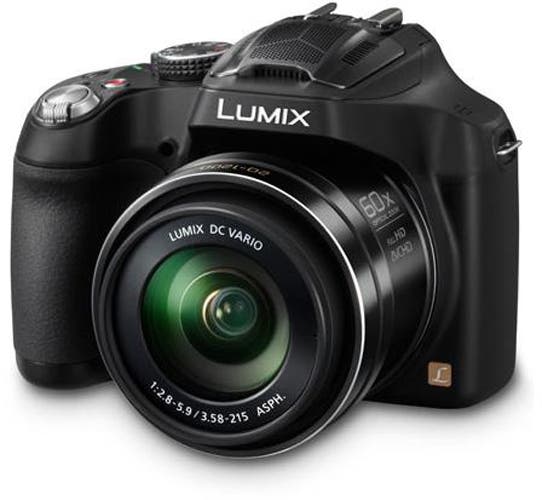
Panasonic Lumix DMC-FZ70
Adorama price: $247.99
Overview: Meet the longest-range built-in zoom lens camera in the world, the Panasonic FZ70. Featuring a 60x optical zoom lens with a 20-1200mm (35mm equivalent) range and a very reasonable widest aperture of f/2.8-5.9, the FZ70 is a very attractive choice for photographers who want it all. The 20mm equivalent is the widest angle lens we’ve seen on a point-and-shoot camera. Anti-shake is effective according to our field tests with this camera, and the 16MP ½.3-inch CMOS sensor surprised us with the image quality. Panasonic claims it is designed in a way to cut image noise by 15 percent and improves quality at higher ISOs. The camera has a pop-up flash will also accept the Panasonic DMW-FL220, wireless DMW-FL360L, and DMW-FL500 external flash models. And yes, at 1200 you can shoot the moon and get good results! Attention bargain hunters: The price for this camera recently dropped $100!
Key Features:
- 20-1200mm (35mm equivalent) f/2.8-5.9 lens
- 1/2.3-inch, 16MP sensor
- Built-in flash
- 1080p HD video capture at up to 60i
- Filter effects
- 3-inch, 460k LCD monitor
- 202k dot resolution EVF
- Optical image stabilization
- AF and manual focus, macro to within 1 inch
- Shutter speeds 8-1/2000 sec
Lab Test Results (Provided by DxOMark):
- Maximum ISO for acceptable image quality (digital noise): 200
- Maximum ISO for acceptable dynamic range: 200
- Color depth: Fair (19.4 bits on a scale of 1-25)
- Overall image quality: Fair (41 on a scale of 1-100)
- Dynamic range: 10.8 stops
A typical performance for a small-sensor camera, the FZ70 performs best at its native ISO 100, but noise becomes apparent by ISO 400. Noise surpression might gain a stop or two.
Who would love it: Travelers, realtors, wildlife and birding enthusiasts, even astrophotographers. It zooms out that far.
Mirrorless Interchangeable Lens Cameras with Electronic Viewfinders
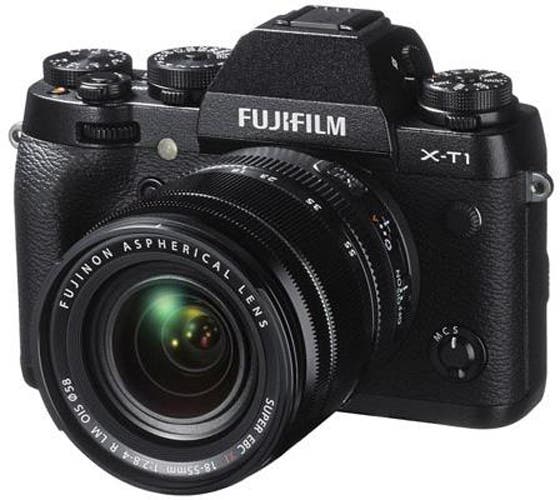
Fujifilm X-T1
Adorama price: $1,699.00
Overview: After successfully redefining the classic rangefinder-like camera category with the X-Pro 1, X-E2, among others, Fujifilm has taken on the DSLR-like experience with the retro look but bleeding-edge Fujifilm X-T1 ($1,698.95 with 18-55mm kit lens). Sharing the latest 16MP X-Trans II sensor, a weather-sealed body, flip-out LCD monitor, hi-res EVF, and knobs and buttons that control its basic exposure functions, the X-T1 offers a gratifying experience for traditionalists weaned on classic film SLRs. Read the Adorama exclusive Guided Tour of the Fujifilm X-T1.
Key Features:
- 16MP APS-C (23.6×15.6mm) X-Trans CMOS Sensor II
- 2.36K Eye-level EVF
- 3-inch LCD
- Claimed start-up tine 0.5 sec, shutter lag 0.05 sec
- Time-lapse
- 8fps with AF tracking
- Weather-Sealed Body
- ISO Range 200-6400, pushable to ISO 100, 12800, 25600, 51200
- TTL 256-zone metering
- Focal plane shutter
- Shutter speeds 30-1/4000 sec
- Flash sync 1/180 sec
- 8fps burst rate
- Tilt Screen
- External Mic Jack
- 1080/30p HD Video
- Optional vertical grip
- Wi-Fi
Lab Test Results (Provided by DxOMark):
Not tested.
Who would love it: Travel and portrait photographers as well as serious hobbyists seeking a compact camera with variety of mode settings and the ability to shoot in low-light situations, as well as HD video.
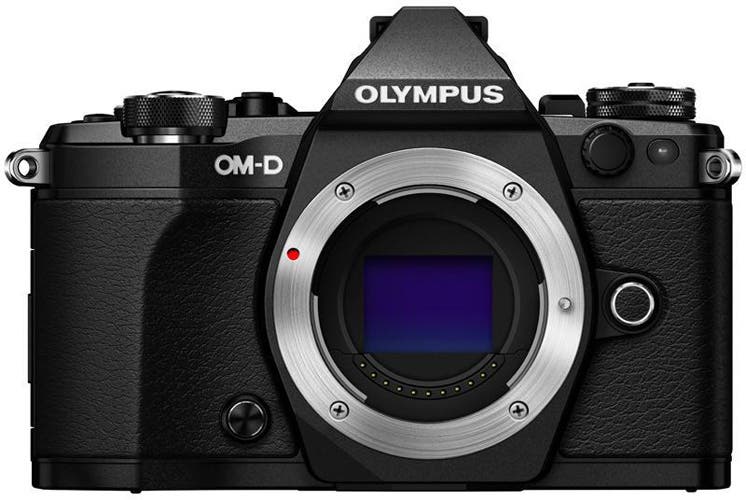
Olympus OMD EM5 Mark II
Adorama price: (body only)
Overview: When the original Olympus OMD-EM5 arrived a few years ago it was greeted with a chorus of OMG’s as the camera revived the design and spirit of Olympus’s most popular film camera line, the OM series, which had a successful 29-year run. Now the second generation Mark II offers several improvements on an already impressive camera, including an overhauled (and super-fast) AF system. In addition to delivering outstanding image quality from its 16MP Four Thirds sensor (including highly-rated low-light performance), this camera accepts all Micro Four Thirds lenses and has enough Art filters to make the Instagram crowd jealous. It has a super-hi-res electronic viewfinder and a flip-out 3-inch LCD monitor, menu and mode options that will be familiar to DSLR users, and our field tests showed it to be quick and responsive.
Key Features:
- 16MP CMOS sensor
- Over 800 AF targets
- Electronic Viewfinder with 2.36 million dot resolution
- ISO range 200-25,600
- Shutter speeds 60-1/4000 sec
- 10fps high-speed shooting
- 5-axis image stabilization
- Dust-proof, splash-proof
- 3-inch tilting 1037-dot resolution monitor
- 11 art filters with variations
- Dust reduction system
- Shutter mechanism tested to 100,000 cycles
- Multiple exposures possible
- Digital leveler
- 1080p HD video
Lab Test Results (Provided by DxOMark):
- Maximum ISO for acceptable image quality (digital noise): 800
- Maximum ISO for acceptable dynamic range: 1600
- Color depth: Very Good (22.8 bits on a scale of 1-25)
- Overall image quality: Good (70 on a scale of 1-100)
- Dynamic range: 12.3 stops
Above-average image quality for a Four Thirds Sensor. Measured ISO is consistently about 1 stop lower than the indicated one.
Who would love it: Serious hobbyists, travelers, street photographers.
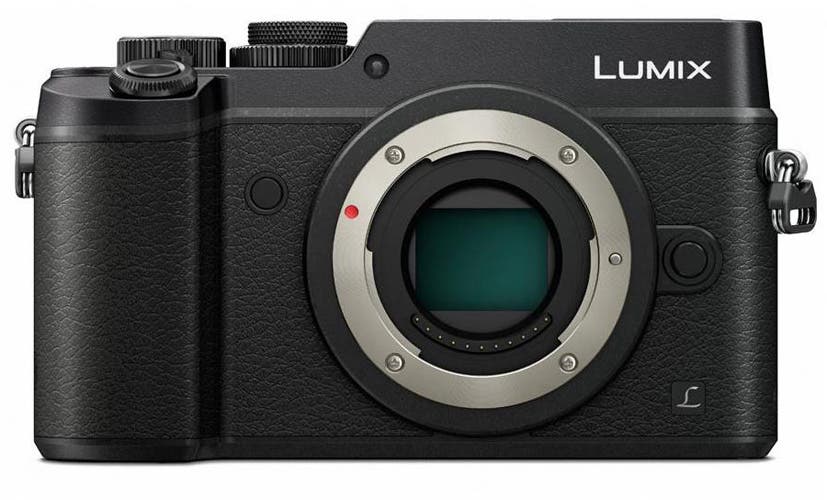
Panasonic Lumix GX8
Adorama price:
Overview: Panasonic listened. Until now their high-end mirrorless compacts were little sports coups, performance wise, but were missing an important feature: An EVF. Users who wanted eye-level viewing were forced to buy an additional external finder, adding to the cost. The GX7 added a finder, and the new GX8 has refined it, starting with a new 20.3MP sensor. The GX8 features tiltable super-high-resolution EVF, and the lens lineup continues to grow. There’s in-camera stabilization and the camera has built-in Wi-Fi and NFC. For video fans, the GX8 is the first in its class to offer 4K video. Street shooters, start your engines.
Key Features:
- 20MP Four Thirds sensor
- 90 degree tiltable 2,3600k dot resolution EVF
- 3-inch, 1040k resolution monitor
- In-camera stabilization
- 4K video
- External mic jack
- Focus peaking and magnification windows
- 22 filter effects
- Top shutter speed 1/8000 sec
- ISO range 100-25,600
- Magnesium-alloy body
- Contrast AF system
- Wi-Fi, NFC, QR Code Connection
Lab Test Results (Provided by DxOMark):
Not tested
Who would love it: Street photographers, photojournalists and anyone (like travelers) who wants a small, unobtrusive camera that is fast and precise.
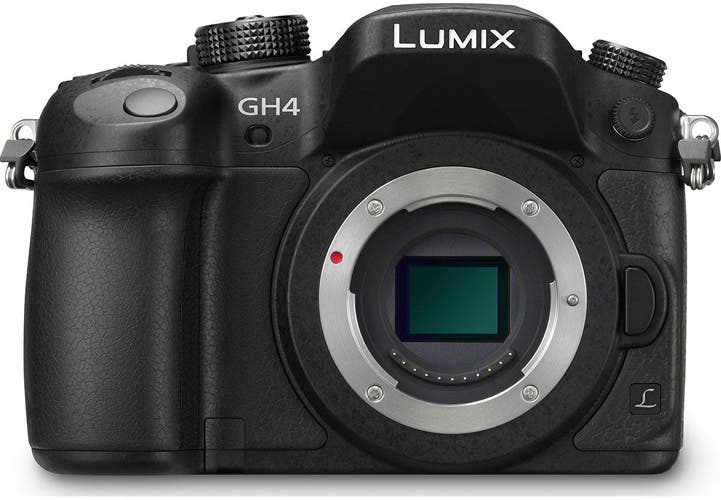
Panasonic Lumix GH4
Adorama price: (body only)
Overview: The Panasonic Lumix GH4 is as much a highly-talented cinema camera as a still one. It’s the first Four Thirds still camera to capture 4K-resolution video. Built on a newly designed 16MP sensor that’s optimized for 4K video capture of footage at up to 4096×2160 pixels, the camera has a 2.36 Million Dot OLED EVF, focus peaking, and an attachable XLR adapter. Although the big news about the GH4 is that the camera puts 4K recording capability in the hands of prosumer-level users, it also offers many more options for plain old 1080p HD video shooting, including multiple recording format choices, and slow-motion capture in full HD. You will be able to switch from 4K to 1080p and shoot at varying frame rates and file formats. The big upgrade here is specifically in video; no changes are expected in still image quality. The GH4 can be combined with one of Pansonic’s Lumix G Lenses or via an adaptor with movie industry PL mount Cine lenses.
Key Features:
- 16MP Live MOS Four Thirds sensor
- 4K 24p cinematic video (4096×2160), plus 4K 3840×2160 30p/24p
- Wi-Fi, NFC
- AF Acquisition claimed at 0.07 sec
- 49-area AF in still or video
- 12FPS Burst rate
- 2.359 million dot EVF
- 1.03 million dot LCD
- Top ISO 25,600
- Top shutter speed 1/8000 sec
- High-speed 49-area autofocusing in photo or video
- Durable magnesium alloy body
Lab Test Results (Provided by DxOMark):
- Maximum ISO for acceptable image quality (digital noise): 800
- Maximum ISO for acceptable dynamic range: 1600
- Color depth: Excellent (23.2 bits on a scale of 1-25)
- Overall image quality: Good (74 on a scale of 1-100)
- Dynamic range: 12.8 stops
Boasting the best image quality test results of any Micro Four Thirds camera thanks to its redesigned 16MP sensor, the Panasonic GH4 delivers excellent color depth and dynamic range but, as typical with smaller-sensor cameras, is limited when it comes to low-light high-ISO performance. Actual ISO consistently measured nearly a stop less than the one indicated by the manufacturer.
Who would love it: Serious cinematographers on a limited budget, amateur photographers and movie makers with higher aspirations and 4K monitors.
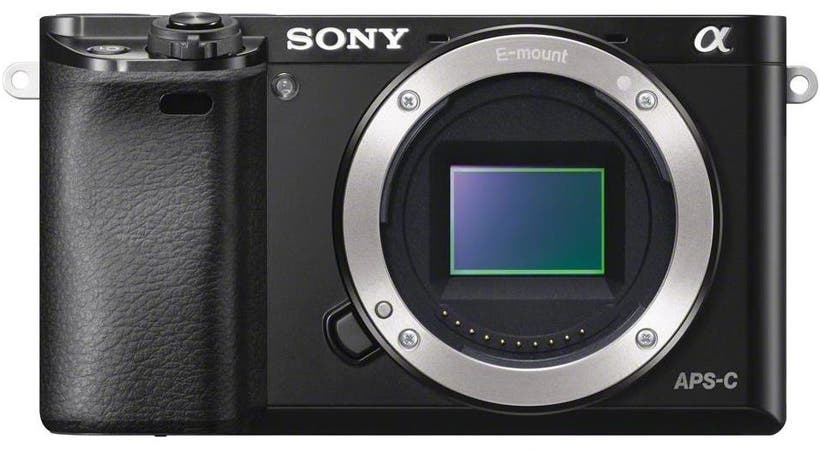
Sony Alpha A6000
Adorama price: (body only)
Overview: The Sony A6000 has so much going for it—from its DSLR-quality 24.3MP APS-C sensor, top quality EVF, and 11fps burst rate to its best-in-class overall image quality score and ability to deliver virtually noise-free images at ISO 1600. It replaces the NEX-7, which we declared in our review to bet the best APS MILC at the time. It is a pro-level camera that offers many layers of features, from those a casual user would enjoy to capabilities that could satisfy the most demanding photojournalists and wedding photographers. With virtually no lag time and a growing selection of interchangeable, high-quality lenses, this camera is an investment in serious photography. Read our exclusive Guided Tour of the Sony A6000.
Key Features:
- 24.3MP APS-C Sensor with new BIONZ X processor
- 10fps top burst rate
- HD movies with manual control
- Flip-up 3-inch LCD monitor, 921k dot resolution
- 1,440k dot OLED EVF
- E-mount lenses
- Sweep Panorama mode
- P/A/S/M modes for still and video
- 25-point AF
- Three manual control dials with assignable modes
- Object tracking AF
- Focus Peaking
- 6-image layering combines multiple image for sharper images
- Intelligent AF
- Dynamic Range Optimizer
- Multiple picture effects
- 1080p at 60p/60i/24p
- WiFi with NFC
- 10.3 oz (body only)
Lab Test Results (Provided by DxOMark):
- Maximum ISO for acceptable image quality (digital noise): 1350
- Maximum ISO for acceptable dynamic range: 1600
- Color depth: Outstanding (24.1 bits on a scale of 1-25)
- Overall image quality: Excellent (82 on a scale of 1-100)
- Dynamic range: 13.1 stops
This is one of the best non-DSLR APS cameras on the market when it comes to image quality. It is especially good at higher ISO settings and captures a wide dynamic range, which is great for weddings and other scenes where contrast can be high.
Who would love it: Street photographers, wedding photographers, photojournalists, serious photo hobbyists looking for a quick, accurate, compact camera that delivers best-quality images.
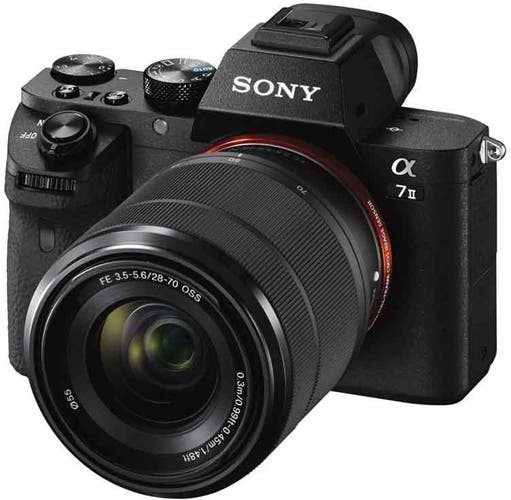
Sony a7II
Adorama price:
Overview: Sony rocked the photo world a few years back when it announced the A7, the world’s first full-frame mirrorless interchangeable-lens compact digital camera/ Sony has since expanded and updated the a7 line, and the II is faster, with better in-camera stabilization (4.5 stops of it), 30 percent faster autofocus, and 117 point phase detection and 25 contract detection AF. Compatible with Sony’s growing lineup of FF-mount lenses, you can also use older Sony A-mount lenses via an adapter with no loss of functionality. 1200-zone evaluative metering, area-specific noise reduction and 16-bit image processing are also among this camera’s impressive set of features. It also captures uncompressed 1080 HD video at 60p and 60i, and has one of the highest resolution electronic viewfinders available.
Key Features:
- World’s lightest interchangeable lens full-frame camera
- 24.3MP resolution 35mm sensor
- 16-bit RAW image capture
- Hybrid AF with phase detection
- Intelligent AF optimized for full-frame sensor
- Compatible with Sony E-Mount lenses via optional adapter
- 2.4 million dot OLED EVF
- Tiltable 3-inch, 1.229k dot LCD monitor
- NFC and Wi-Fi wireless connectivity
- Full HD movie capture
Lab Test Results (Provided by DxOMark):
- Maximum ISO for acceptable image quality (digital noise): 2500
- Maximum ISO for acceptable dynamic range: 3200
- Color depth: Outstanding (24.9 bits on a scale of 1-25)
- Overall image quality: Outstanding (90 on a scale of 1-100)
- Dynamic range: 13.6 stops
By any measure, the Sony A7 II is at or near the top of every DxOMark image quality rating for any camera with any size sensor and is the highest-rated EVF camera in its price range.
Who would love it: Photojournalists, travel photographers, street photographers.