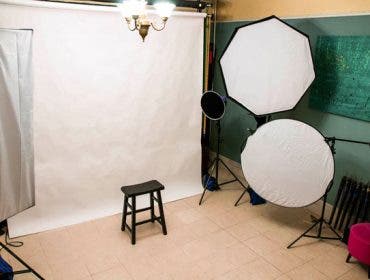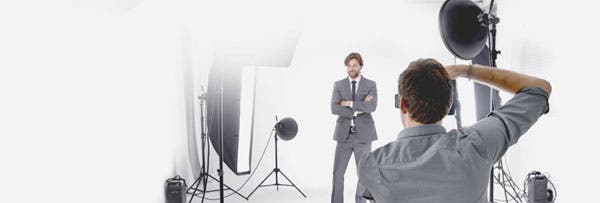
You have a subject. You’ve selected the wardrobe. You have a hairstylist and makeup artist on board for spinning their magic to make your subject look their best. Your assistant is ready to help you at a moment’s notice. Ready to go? Nope! One key piece to your shoot that you are missing is a background. There are so many different types of backgrounds and then more and more choices once you start making decisions on type such as size, texture and color – and it can be overwhelming…! While it’s just good creatively – to know your options, to know what’s available out there for you – the choice is really up to you. In this article, I’ve included some general information, types of backgrounds and considerations to help you choose a background that is right for your subject.
Importance of Your Background
A background can make or break your image. Put your subject in front of a super busy scene and it takes the focus off of your subject – not to mention, it can sometimes create mergers. Your background should not have a bunch of distractions and should help focus attention on your subject.

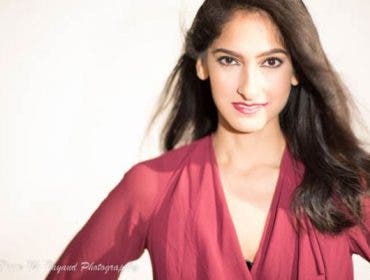
Sometimes a background can add context to your image or it can lend emotion and feeling to a shot, as shown in the image above. As you can see, choosing the right background or backdrop for your subject can be just as important as choosing the right lens for the shot.
Considerations for Choosing Backgrounds & Backdrops
There are a few key factors when deciding on the right background/backdrop for your photo shoot. Some of those considerations include:
- What are you shooting… a product or person? Shooting a product typically requires a crisp and clean background to give all focus to the subject.
- What look and feel does your client want? Your client might be a corporate officer just looking for a timeless headshot where a canvas background would do the trick or your client may want an edgy image where a floor drop might work as a great background.
- What mood are you trying to convey? Are you looking for something dark and moody? A plain black seamless paper or muslin could do the trick. Perhaps you are trying to recreate a scene. Here a painted backdrop and a floor drop would be a great choice.
- How much weight can you carry? Some backgrounds like canvas and vinyl can weight a lot whereas muslin and a short roll of seamless can weigh very little.
- How much room do you have for a backdrop? While many backgrounds comes in various sizes, if you have a small 8 foot space to shoot, a 9 foot roll of seamless may not be ideal and you may need to get a shorter 53” roll instead.
- What is your budget? While muslin and the support needed to set it up is very low cost, painted canvas and some floor drops can cost up to a couple hundred dollars.
Types of Backgrounds
There are several different types of backgrounds out there from outdoor or indoor location backgrounds to plain seamless paper and everything in between. Here are a few general types of backgrounds and some of the pros and cons to consider for using them.
Indoor/Outdoor Location Backgrounds
An indoor or outdoor location background can be a wonderful choice and can give context to editorial, fashion and environmental portrait work, however, sometimes the background can be a bit busy and distracting causing the need for some type of faux background.

In the image above, I wanted to give the image context by shooting my model Andy near a construction site. As you can see the background is a bit busy, but with a little background contrast and some shallow depth of field, I managed to keep the focus on the subject.
Pros
- Adds context for the subject
Cons
- Sometimes weather dependent
- Can be busy or distracting taking focus from the subject
- Bad composition can lead to mergers
Portable Backgrounds
Portable backgrounds can be a great choice as they are versatile, convenient due to collapsibility and inexpensive. You can use them in the studio or take them with you on location. A 6-foot portable background can fold up into a circle as small as 24 inches. They typically have a border so may not be a great choice for a full-length shot, but they work perfectly for headshots, portraits and three-quarter body shots.

My 5×6 foot portable background folds to a 24 inch circle as shown here.
The Savage Black & White 60”x72” Collapsible Background shown above is available at Adorama for .
Pros
- Portability for travel and storage – it’s a great rescue background since it folds small and can always be with you
- Many beautiful colors and designs to choose from
Cons
- Can get scratched and damaged easily if not taken care of properly
- Can be difficult for smaller photographers to fold back up due to its long length and arm span needed to fold it… but this is where that photo assistant would come in handy!
Muslin
Muslin can be an excellent choice to shoot with since it’s not reflective at all, folds as small as you need and can be hung from a portable background support and costs a fraction of some of the other choices. This all-cotton option is a classic choice for these reasons. Imagine, before cameras, how the old masters’ portrait paintings sometimes had a drape of material in the background. They knew it worked then. We know it works now.

Collaged image by Dawn M. Wayand – original image pieces courtesy of the Adorama website.
The Savage Economy Background Support System with black and white muslin shown above can be found at Adorama for . I included just a few other colors on this system to show you the possibilities in changing out colors.
Pros
- Versatile – it can be dyed different colors
- Can be shaped or draped on anything
- Light-weight
- Can be washed
Cons
- Unless you are looking for a crinkled look, muslin wrinkles easily
- Requires a steam iron
Canvas Backdrops
Canvas backdrops come in a variety of sizes, colors and designs. They are a good choice because they can be reused over and over again but they can also be a bit heavy to set up. You can use a canvas backdrop multiple times without your image looking the same by changing up your foreground elements and your subject’s wardrobe and accessories. Canvas backdrops, however, can be one of the most expensive choices of all of the choices I’ve listed but can be one of the most creative as well.

Collaged image by Dawn M. Wayand – original image pieces courtesy of the Adorama website.
A very small sample of canvas backdrops available at Adorama above include (clockwise from top left): Arctic Blue, Black, Seville and Classic Rembrandt.
Pros
- Endless variety of colors and designs
- Easy to fold up and store
- Excellent creative opportunities
Cons
- Heavy
- Expensive
Floor Drops
Floor drops are often used together with back drops to recreate a scene. They typically come in designs such as wood floors, brick walls, metal panels or tile as shown below. A rubber floor drop also makes for a great backdrop when going for a more edgy feel to an image. It’s simple enough to still keep the focus on your subject.

Collaged image by Dawn M. Wayand – original image pieces courtesy of the Adorama website.
A small sample of floor drops above include (clockwise from top-left): Industrial Grunge, Mosaic Pavers, Worn Planks and Red Brick.
Pros
- Can add an edgy feel to images
- Wide variety of designs
Cons
- Depending on size – can be a little heavier than other options
Vinyl
Another classic and preferred choice for photographers is vinyl. It gets a great reputation because it hangs flat whereas muslin tends to wrinkle easily and seamless tends to crinkle and get dirty more easily. Vinyl is easy to clean and takes up very little space to store as it can be stored straight up and down in a corner.
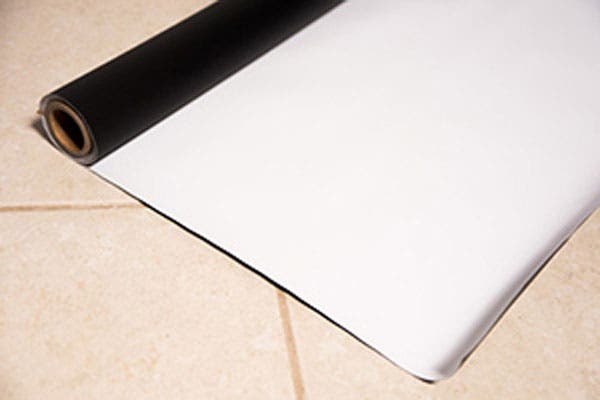
My versatile 6-foot roll of vinyl -black on one side and white on the other.
Pros
- Matte finish
- Doesn’t reflect a flash
- Consistent look and feel when reusing
Cons
- Heavy
- Can be hard to find a storage/travel solution unless you get creative
Seamless Paper
If you are looking a clean, crisp and simple background, seamless is definitely the way to go. Savage seamless paper alone comes in around 69 colors to choose from, making it an optimal choice if you are looking for a specific color. You can buy a 9-foot wide, 12-yard roll of Savage Pure White Seamless Paper for around at Adorama.

My Auto Poles with Interfit Chain System for Seamless Paper
Seamless paper requires a few additional pieces for support than other backgrounds and these different pieces can be pricey unless you put your kit together yourself like I did. My kit consists of two (2) Manfrotto Auto Poles at each, an Interfit Wall Bracket Kit at which you can attach to your wall or to a couple of Auto Poles and a four (4) of Manfrotto 035 Super Clamps w/o Studs at each.

Manfrotto Auto Pole
Image courtesy of Adorama website.
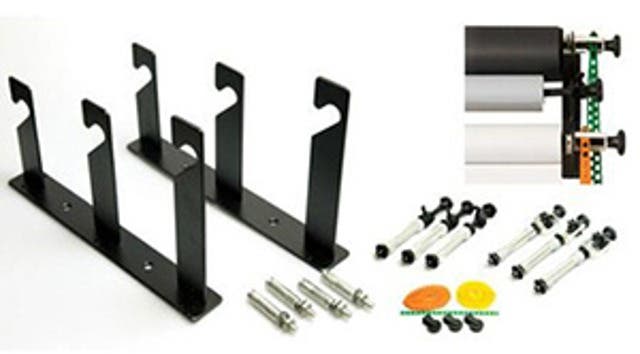
Interfit Wall Bracket Kit
Image courtesy of Adorama website.
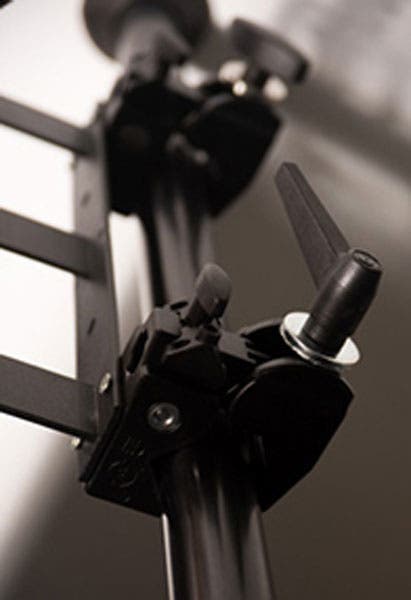
My Manfrotto 035 Super Clamps
Pros
- A multitude of colors to choose from
- Is a straight color/shade of background
- Crisp and clean
- Great for commercial images
- Perfect for full length images
Cons
- Cannot be cleaned and reused which means it can be costly since you have to discard the seamless paper used on the floor with each use
- Can require a good deal of room in your space width-wise since rolls come in 53” or 9 feet widths, length-wise as to keep the seamless “seamless” your subject has to step forward and height-wise to keep the top of the seamless from showing in your images your papers need to rest up high
- Rolls are heavy and require sturdy background support system
Other Creative Backgrounds
I’m all for thinking outside the box and making my backgrounds as interesting as possible. Some other great creative choices for backgrounds include materials such as wallpaper, sequin fabric and designer art paper which makes for a great headshot background that you can get at your local art store for between $4-10 each piece (as shown below), among numerous other options. Put your creative thinking cap on and figure out some other interesting backgrounds that might work for you.

Just a few of the creative art papers I’ve collected over time for headshot opportunities.
About Colors
It’s important that your background does not overwhelm your subject so be careful with the colors that you choose. Crazy bold colors with patterns might work well for rockstar photo shoots, but you probably wouldn’t shoot your grandmother in front of one of those background colors/designs.
Colors should also be complementary to your subject’s features and their wardrobe so that you don’t lose your subject in a “same color” scheme. As mentioned previously, colors can also help effectuate a feeling or emotion for the subject in the image. (i.e. a black background can dispel a mood of mystery and darkness while white can instill purity and goodness.)
As you put together your photo shoot, don’t forget that background as it can make or break your image. Your background is a very important piece of your photo shoot puzzle, something that it will never be without – so it’s important not only to choose creatively, but to choose wisely so that the focus stays on your subject and not the background.
*All images by Dawn M. Wayand unless otherwise noted.