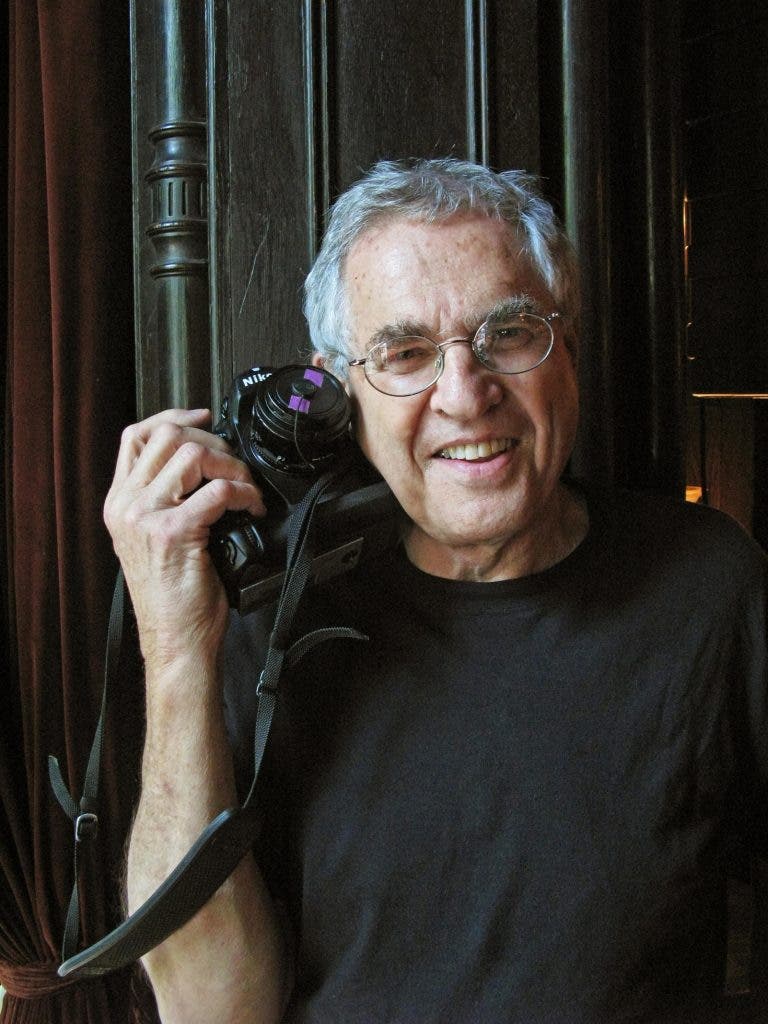
I met Jay Maisel in 1986 when I was just 23 years old. I was working as an editor at Photo District News. On assignment, camera in hand, tasked with snapping party pictures at an industry event.
At one point, Jay watched me press the shutter. Then he “scolded” me. “You are pressing it too hard and not really paying attention,” he stated. I don’t remember if I said anything. However, I was already in awe of him and thrilled just to have him notice me.
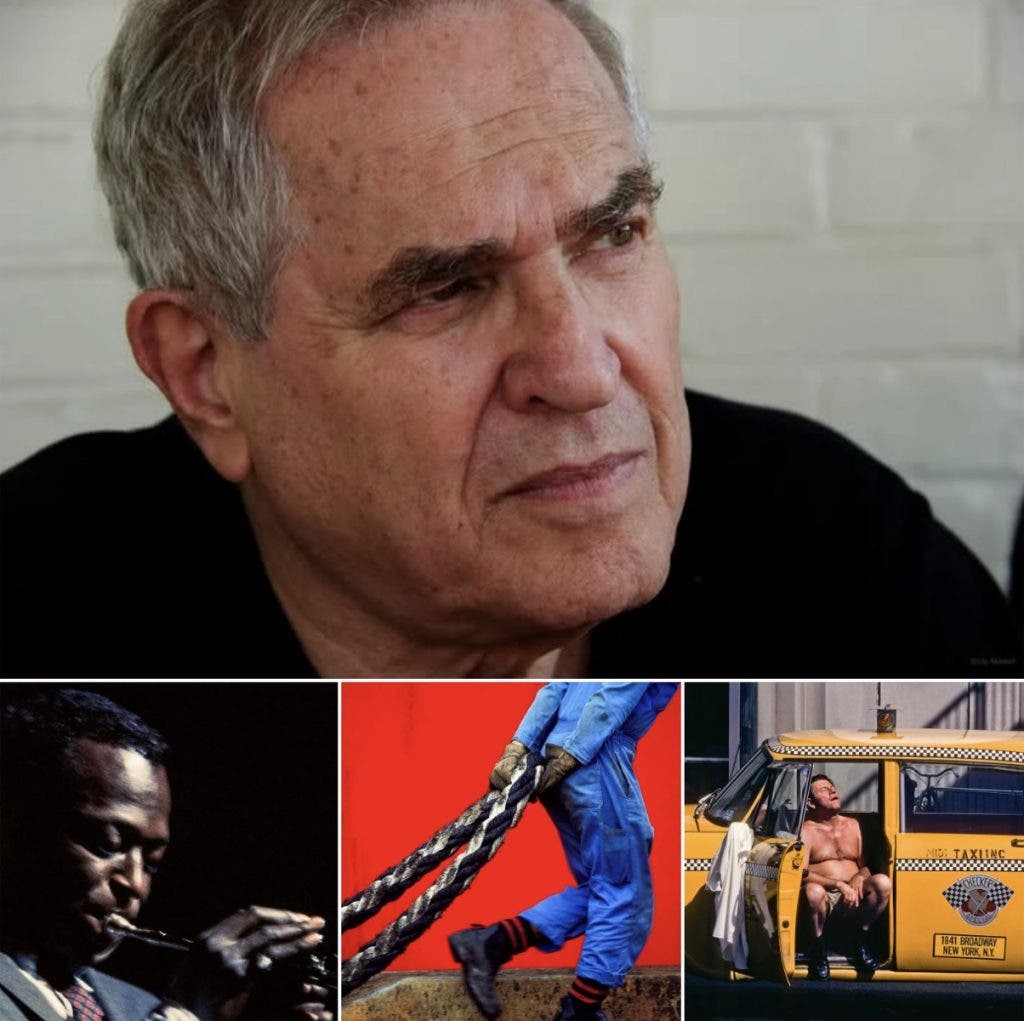
Maisel, who died at age 95 on August 20, began his career in 1954. He studied painting and graphic design at Cooper Union and Yale. He went on to photograph everyone from Marilyn Monroe to Miles Davis. His close-up image of Miles Davis playing the trumpet on the musician’s Kind of Blue album is one of his most notable and applauded. He photographed five Sports Illustrated swimsuit covers. Additionally, he created the first two covers of New York Magazine. Maisel spent 12 years shooting ad campaigns for United Technologies. Numerous awards included lifetime achievement honors from the International Center of Photography (ICP), The Lucie Foundation, the American Society of Media Photographers, and the Art Directors Club Hall of Fame, among others. He wrote several major books, including Light, Gesture, and Color (2014), and It’s Not About the F-Stop (2014). Listing his vast accomplishments, though, only tells part of Maisel’s story.
A Photographer Who Made You Look, Really Look
Like the title of his book, Jay Maisel had an almost legendary ability to find extraordinary light, gesture, and color in everyday places. Whether it be a building, a shadow, a person walking down the street: He could see something in it that most of us would have walked right past. And he wasn’t particularly interested in making photography seem easy. He was interested in making you see.
“I remember listening to Jay tell a story about photographing a woman on the street,” recalls former Photo District News VP/Publisher and The Lucie Foundation President Lauren Wendle, who first met Jay when she was just 18. “He said she turned around and demanded, ‘Why?’ Jay replied, “Because you’re beautiful.”
Wendle continues: “That was Jay. He saw beauty in the light, the wonder, the unexpected…in everyday life. Through his camera, he had an extraordinary ability to make the ordinary extraordinary.”
From Commercial to Personal
After stepping away from commercial photography in the late 1990s, Maisel devoted himself increasingly to his personal work and to teaching. He lectured and led workshops around the country, becoming known as someone who genuinely wanted to pass on what he knew. He lived and worked for 50 years at 190 Bowery, the iconic six-story Germania Bank building he purchased in 1966 for $102,000 and sold for $55 million in 2015. In between, he turned it into a beloved home and studio. It quickly became synonymous with Maisel’s commitment to photography and photographers.
As former Photo District News editor-in-chief Holly Hughes describes, “I think an important aspect of Jay Maisel’s legacy is his unwavering advocacy for photographers’ rights and the value of the photographic image. A mentor to many, he always taught photographers to protect their images and their copyrights like they would safeguard their children. Jay seemed tailor-made for the role: He was blunt, quick-witted, a great storyteller, and a larger-than-life figure. His career successes demonstrate the wisdom in his words. The images he shot for advertising clients and for himself are timeless, and their value endures.”
Hail and Farewell
Yes, Jay Maisel could be blunt. He had strong opinions. He was outspoken. Underneath it all was a deep belief in photography and in the photographer’s responsibility to pay attention to the world unfolding before them.
Photographer Randy Duchaine, who took a workshop with Maisel in 1986, remembers the artist as a remarkable teacher who inspired generations of photographers to challenge themselves and keep looking. “He was uniquely charming, loud, funny, quick-witted, high-energy, generous, and kind, with that unmistakable New York accent and usually a cigar in hand. Jay had a gift for transforming the ordinary into the extraordinary and opening our eyes to see the world in our own way. He was a remarkable teacher who inspired generations of photographers to challenge themselves and keep looking. Hail and farewell.”
Eugene Mopsik, executive director of ASMP from 2003 to 2014, describes Maisel as a perfect trifecta: a creative visionary, a consummate businessman who preserved and protected the rights to his work, and a sharing and considerate friend to many. “During my tenure at ASMP,” he says, “Jay was always available for consultation and was very generous with his time. He shared his knowledge and experience freely. The world of photography has lost one of its brightest lights. He will be missed.”
A Lifelong Friend
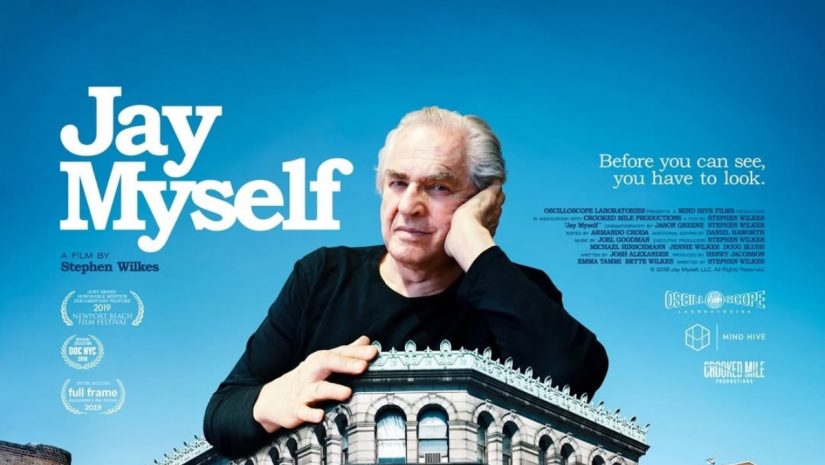
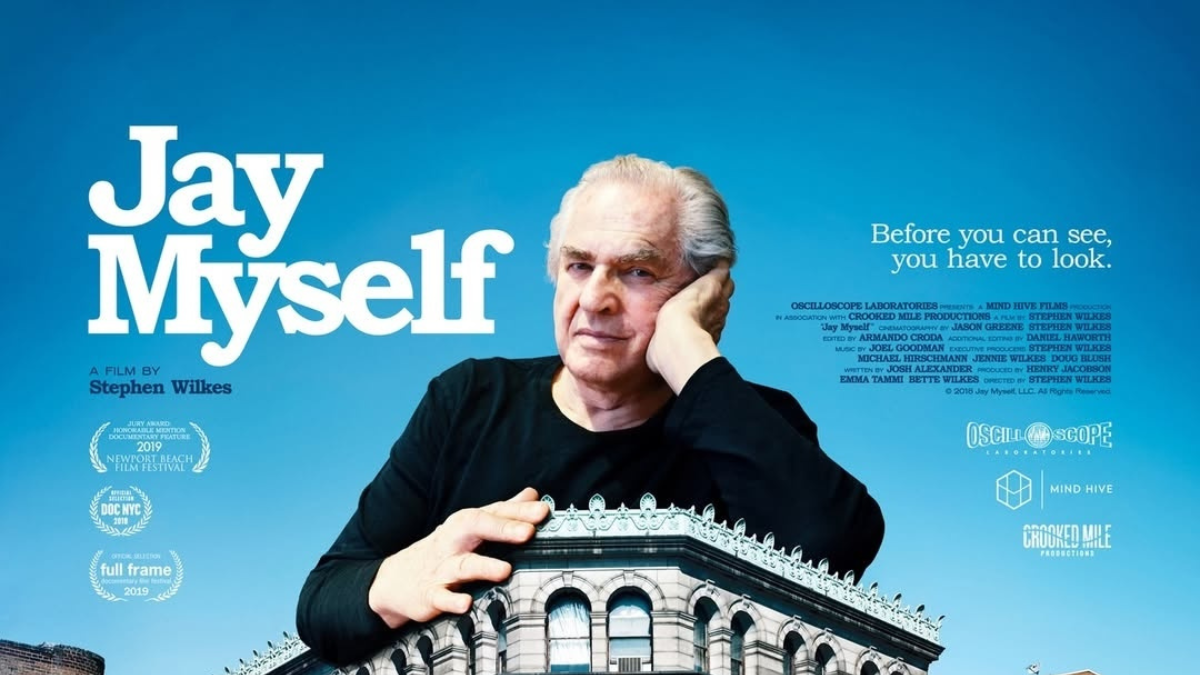
Stephen Wilkes, a lifelong friend and self-described Maisel mentee, was also the director of the 2018 documentary Jay Myself. The film gives a rare glimpse into Maisel’s home and studio, how he acquired the 30,000-square-foot building in NYC’s Bowery, and his decision to sell it almost five decades later.
“My first encounter with Jay’s images was when I was in college at Syracuse,” Wilkes wrote on his Facebook page. “I was obsessed with a Time-Life series of books on photography, and one book in particular spoke to me. It was called ‘Color.’ Inside, I saw three photographs that stopped me dead in my tracks. All three were by Jay Maisel. At the end of my junior year, in 1979, I made a phone call that would change my life. I somehow found the courage to call the man himself. He answered the phone, and the rest is history. Today, my thoughts are with LA, Amanda and Jeffrey—and with all of you who were blessed to know Jay and who share this loss. He would certainly say, ‘Okay, kid, enough with the bullsh*t. Get back to f**king work!’ I know he’s enjoying some incredible light right now.”