
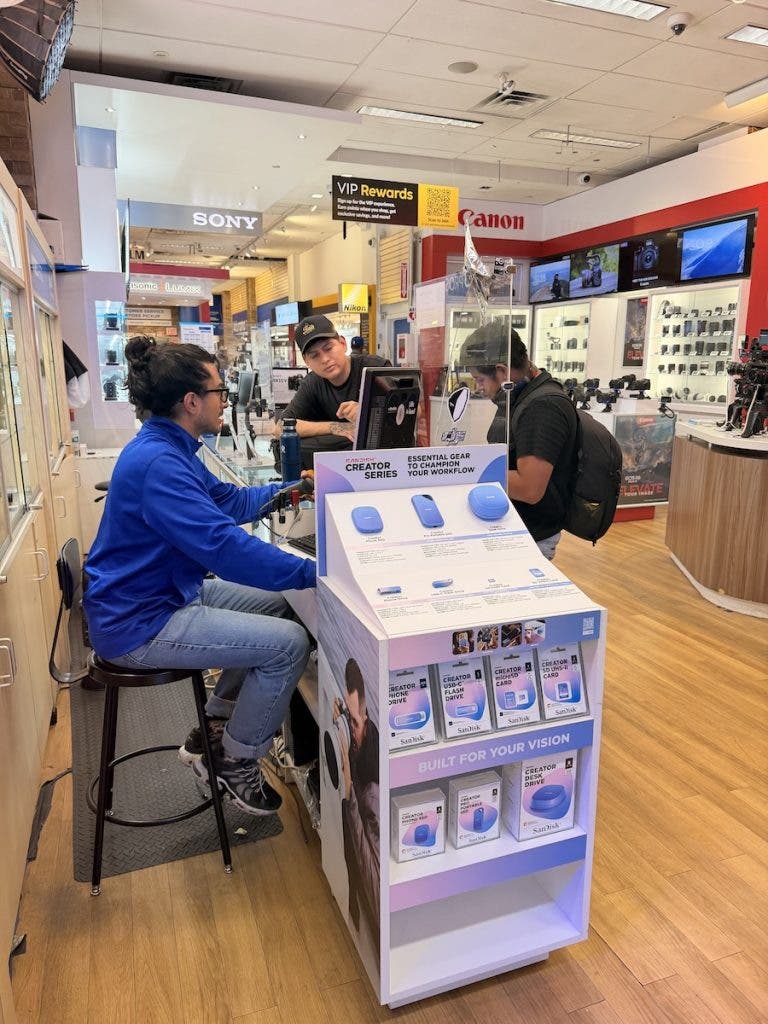
A customer walks into a camera store looking for the “best” camera for their needs. At that same moment, in this new age of AI, another person asks ChatGPT the very same question.
The AI bot compiles a list of highly rated options in under a few seconds. The response may even be surprisingly good, comparing sensor sizes, autofocus systems, burst rates, and video capabilities.
But the knowledgeable camera salesperson, like the one I recently chatted with at Adorama while on the hunt for a good, everyday point-and-shoot, didn’t start with a recommendation. Instead, he asked me the following questions: “What do you want to shoot, stills or video?” “Is this for work or travel, or both?” “Is something like weather sealing important to you?” “Are you carrying it all day? Will you need a case or sturdy strap?” “What about lenses? Do you want a fixed lens, or interchangeable lenses?”
The difference? AI provides information. The salesperson provides context, asks questions, and determines what matters to the customer in a specific situation. This simple interaction reflects a much larger shift. As AI becomes a go-to source for information in the age of AI, the value of human expertise isn’t disappearing. It’s evolving.
AI May Have Won the Battle but Not Our Trust
There is no denying that we are living in the age of AI, which has transformed the way people search for information.
According to a Pew Research Center survey in June 2026, nearly half of U.S. adults now use AI chatbots, with information searches and work-related tasks among the most common uses. About one in five users say they’ve sought medical advice from AI. Yet adoption hasn’t translated into complete trust. Many Americans remain skeptical that government or technology companies can develop and regulate AI responsibly.
Surveys also conducted by The Next Web and WorldMetrics show that many Americans remain skeptical about AI’s long-term impact, ranging from concerns about whether companies can develop the technology responsibly to whether government can regulate it effectively. While many consumers appreciate chatbots for quick, routine questions, they’re far less likely to trust AI with important decisions that require experience, judgment, or personal context.
For photographers and videographers, information has never been more accessible. Product specifications are available instantly, reviews are abundant, and tutorials covering nearly every photography and video topic imaginable can be found with a quick search.
That’s a tremendous advantage, but it also changes where expertise delivers the most value.
When everyone has access to the same information, the challenge is no longer finding answers; it’s about determining which answers apply to your specific situation. AI excels at summarizing, comparing, and explaining information. What it struggles with is understanding the nuances that make every situation different.
Information vs. Judgment
Ask an AI tool for the best all-around camera, and it may recommend something like a Sony A7 IV. That’s a reasonable answer. It is a capable camera that performs well across a wide range of situations.
But an experienced salesperson might learn that the customer spends every weekend photographing youth soccer games, dislikes spending hours editing images, and wants dependable autofocus above all else. In that case, they may recommend a completely different camera.
On paper, that recommendation might seem less impressive. In practice, it may be exactly what that photographer needs, and that’s the point.
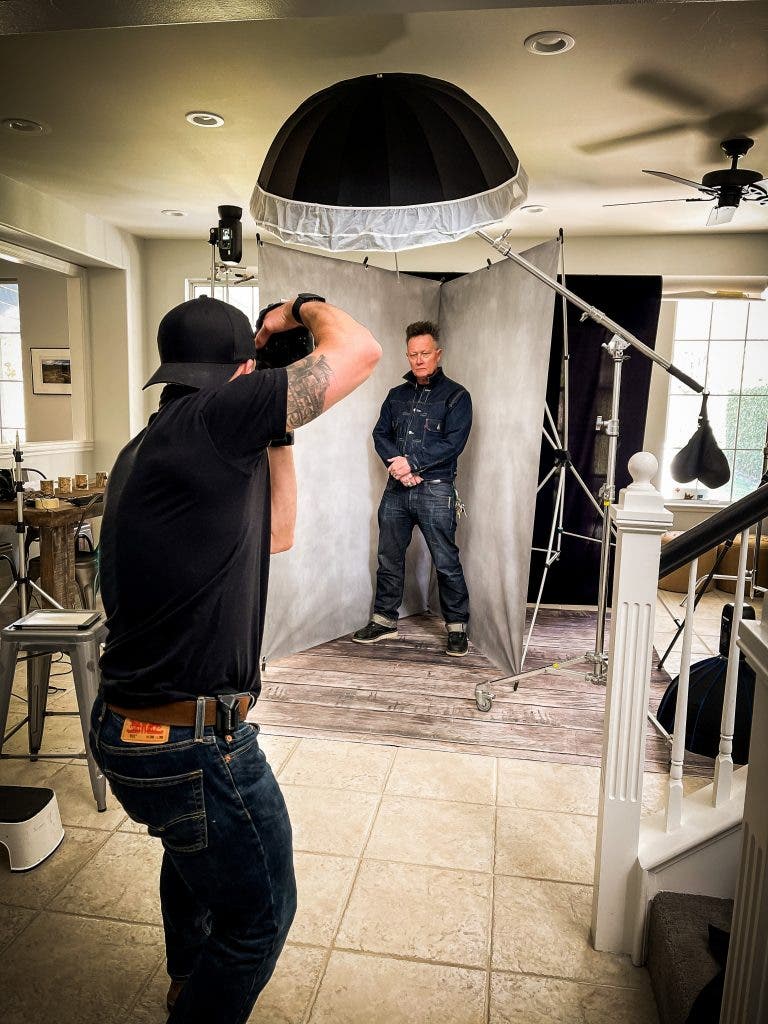
The same principle applies to lighting in photography. AI can explain three-point lighting and provide diagrams showing where to place lights. An experienced lighting professional can walk onto a set and immediately notice issues that aren’t in any diagram: reflections in a product shot, color contamination from nearby walls, budget limitations, or practical challenges within the space itself.
Video production offers another example. AI can suggest microphones and explain audio terminology. A seasoned production professional can listen to a recording and quickly identify why it sounds poor, how the room is affecting the audio, and which compromises make sense given the available budget and timeline.
Experts understand the human factors surrounding every technical decision.
A Photographer Weighs In

“The reality is that yes, AI has a lot of answers,” says photographer Ian Spanier. “However, the experience of seeing in person, or even through online videos, a professional sharing their camera advice and experience is still invaluable. AI can gather information and even feign the emotional components of photography, but it’s more theoretical. The individual experience of a professional photographer can’t be easily replicated.”
In other words, AI can imitate Spanier’s perspective, but it can’t replicate the instincts, judgment, and split-second decisions that come from decades behind the camera. I discovered that myself when reviewing courses by several prominent photographers featured on the Masters of Photography platform. There was invaluable information offered up that rivaled any chatbot, and even better, it helped me understand how these photographers see the world.
That type of experience also comes into play when photographers seek out gear advice. When I asked Spanier how often someone comes to him convinced they need a particular camera, lens, or setup only for him to recommend something completely different, his answer was immediate.
“All the time,” he says. “Many photographers want the shortcut. It makes me laugh when people ask what f-stop they should use for a particular shot. That’s where the approach is wrong. Every photograph has its own unique challenges, and the decisions we make as photographers not only solve those challenges, but they also say something about us as the creators of the image.”
For Spanier, technical knowledge is only one part of becoming a great photographer. The bigger lesson is how that knowledge gets applied.
“Learning to see light, not just use it, but really see it, is critical,” he says. “Photography literally doesn’t exist without light, so why wouldn’t you want to understand all its intricacies? Knowing your camera and your lenses and thinking in f-stops before you even pick up the camera is how you become a great photographer. These skills are developed over time. There is no magic pill. There is no AI shortcut.”
Of course, that doesn’t mean Spanier avoids AI altogether. In fact, he regularly uses Evoto AI-powered editing software for retouching both in post-production and sometimes during tethered shoots.
“Time-saving tools are essential today,” he says. “Anything that speeds up my workflow is welcome, but I still like the control. Being able to set the parameters, dial back the changes, and output high-resolution files made me a fan of using some AI.”
Expertise Is Built on Pattern Recognition

Perhaps one of the biggest misconceptions about expertise is that it’s simply the accumulation of facts. In reality, expertise is built through pattern recognition developed over years of repetition and experience.
That’s exactly what Spanier was describing. A camera salesperson may have helped hundreds of customers choose equipment, seeing firsthand which purchases people regret and which products consistently perform well. Likewise, a professional photographer or videographer has likely solved the same technical challenges countless times under different conditions, navigating equipment failures, difficult clients, changing weather, tight deadlines, and creative obstacles.
Those experiences create a depth of judgment that can’t be found in a chatbot’s list of specifications. An expert doesn’t necessarily know more facts; they recognize patterns, understand context, and know how small details can change the outcome. That’s why expertise remains difficult to replace. It’s not simply about having information; it’s about exercising good judgment with that information.
Lessons From Other Industries
Photography and video are hardly the only fields where expertise still matters. The same pattern appears across many industries.
Medicine offers one of the clearest examples. Patients frequently arrive at appointments after researching symptoms online or consulting AI tools. While that information can be helpful, physicians and dentists must still evaluate context, medical history, imaging, and physical examinations before reaching a diagnosis.
Dr. Jonathan Diamond, a dentist with Rockefeller Dental Group in New York City, welcomes informed patients but says online research should be the beginning of the conversation, not the end.
“Patients who have Googled or used AI generally have a good mental picture of what might be going on,” he says. “That makes it easier for me to explain what I think or know the problem is. But you should never equate your Google knowledge with your doctor’s experience.”
In dentistry, he says, a diagnosis depends on far more than a patient’s description of symptoms. “There’s tremendous value in visually examining the patient, taking X-rays, and palpating the affected area. AI or Google doesn’t have access to those details. A human expert also understands what information is important…and what isn’t.”
I’ve learned that lesson myself. One summer, after developing a series of red welts on my leg, I asked a chatbot to identify the problem. It confidently suggested bedbugs. A dermatologist and a biopsy revealed the real culprit: a bad reaction to some mosquito bites.
Legal advice presents another limitation of relying on AI. Attorney Donna Tobin, chair of the intellectual property group at Royer, Cooper, Cohen & Braunfeld, points out that relying on chatbots can create risks that users may never consider.
“If my client takes the advice I’ve given them and enters it into a chatbot, it blows attorney-client privilege the moment they enter it,” she says. “I also had a client tell me AI said my legal advice was wrong, but it wasn’t.”
She adds that AI can be helpful for general information, but it cannot replace the confidentiality, legal protections, and professional judgment an attorney provides.
Across industries, the pattern is remarkably consistent: Information is everywhere. Judgment remains scarce.
Why AI Still Needs Human Expertise
None of this suggests that AI is replacing the value of a human expert, or that experts should ignore AI. In fact, the most effective professionals are already combining both. Photographers and videographers use AI-assisted editing tools to streamline their workflows; camera salespeople rely on AI to stay current on new products; doctors are incorporating AI-assisted diagnostics; and business consultants use AI to analyze large amounts of information more efficiently.
AI excels at gathering and organizing information. Human experts excel at interpreting that information, recognizing context, and applying judgment to an individual’s unique situation. Anyone can ask AI which camera is best. The harder and more important question in the age of AI is: which camera is best for you? As information becomes easier to access, the value of expertise isn’t simply providing answers. It’s knowing which answers matter most.