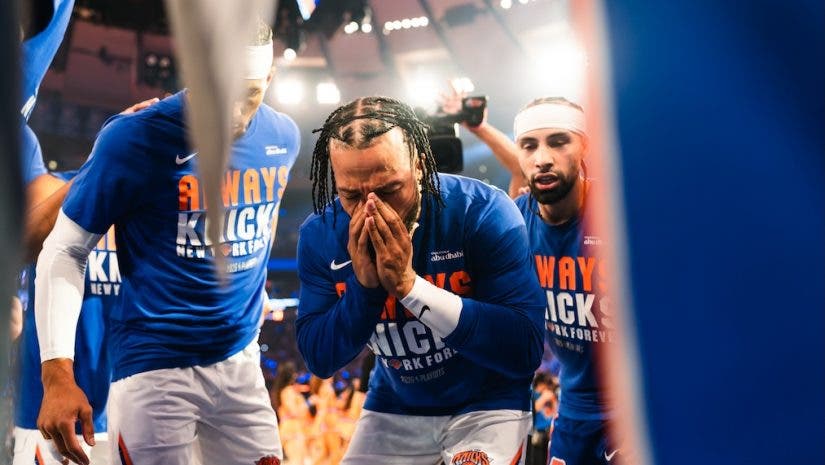
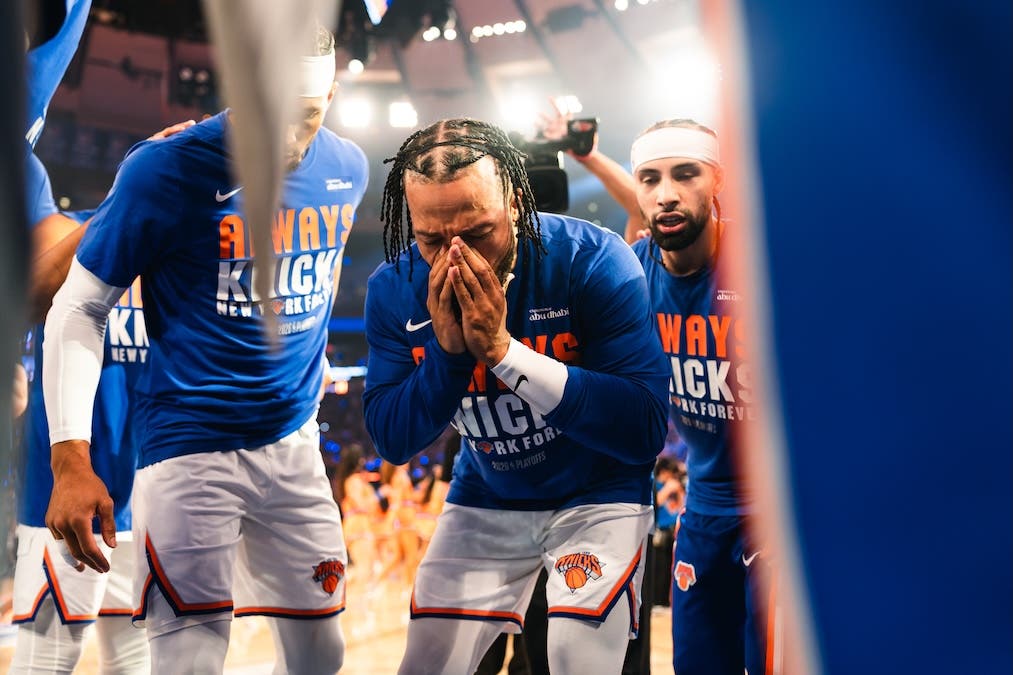
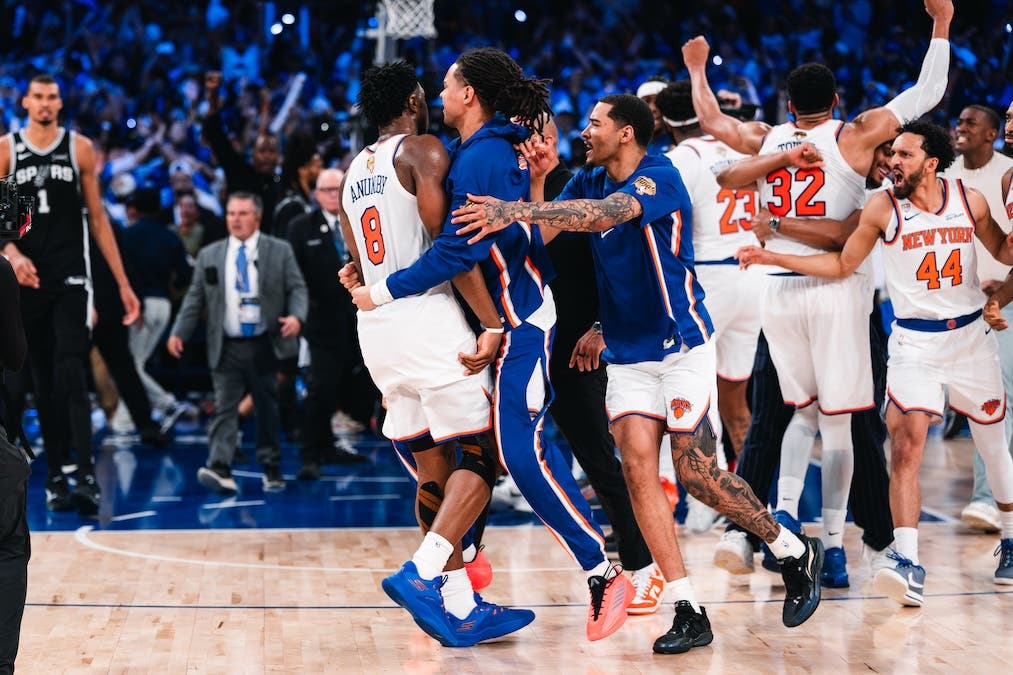
It’s already come and gone, yet New Yorkers are still talking about the New York Knicks’ first NBA championship win in 53 years. One play in particular has become franchise lore: Game 4, when OG Anunoby tipped in Jalen Brunson’s missed three-pointer with seconds remaining, capping an improbable comeback after the Knicks trailed by 29 points at the end of the third quarter. Knicks photographer Evan Yu was there, at MSG, but missed the play.
“I got blocked by a fan,” he says with a laugh. “In moments like that, though, I stay locked in and get whatever else I can, including player reactions. Often, those reactions can be more impactful than the actual play.” That approach is what’s helped make Yu the successful sports photographer he is today.
An Unconventional Path
Yu’s path to the New York Knicks wasn’t a clearcut one.
The photographer, based in New Jersey and a graduate of Seton Hall University, began his craft as a hobby, spending his free time traveling, shooting street photography, and learning on his own rather than through formal classes.
His professional break came in 2017, when he joined the NBA not as a photographer, but as a photo editor. “That was my gateway into the photo industry,” he explains. “After more than two years editing league photography, I moved over to the XFL shortly before the COVID-19 pandemic. When that league shut down, I was laid off, like many others.”
Fortunately, that setback led to his biggest opportunity. A former XFL connection reached out about an editing position with the New York Knicks in 2021. In his first two seasons, Yu mainly edited images while gradually earning chances to shoot games. By his third season, he had become one of the team’s primary game photographers.
Today, he works as a freelance photographer under contract with the Knicks while continuing to shoot baseball, soccer, and other sporting events throughout the year.
A Different Kind of Energy at MSG
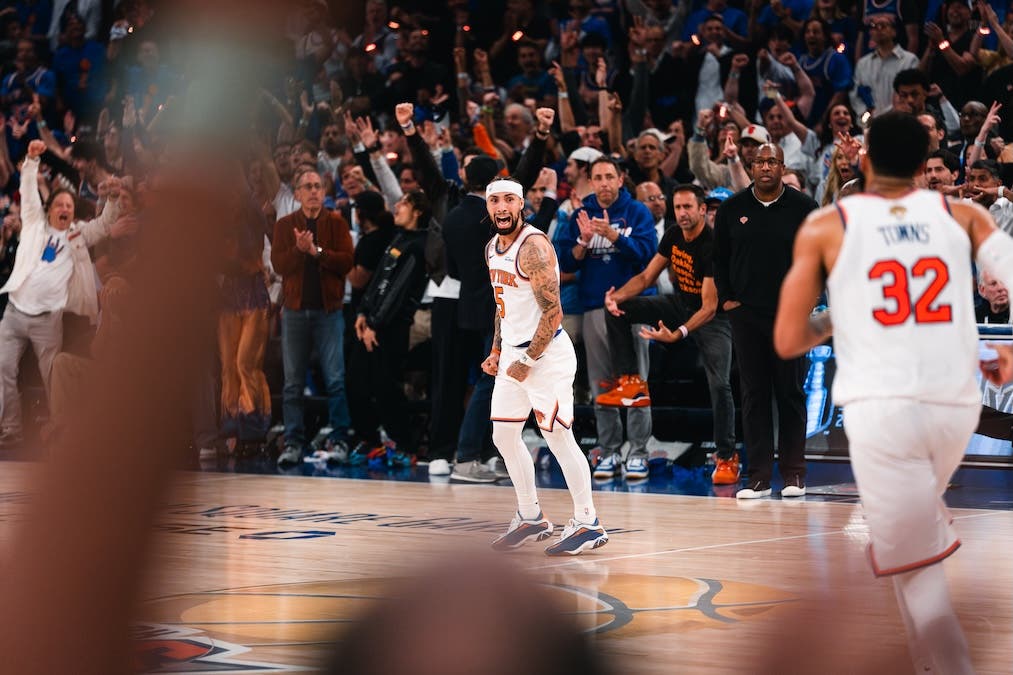
Yu has photographed dozens of regular-season games, but he says nothing compares to playoff basketball at Madison Square Garden.
“The atmosphere is crazy,” he says. “It’s a whole different beast.”
While fans experience the deafening crowd and electric atmosphere, Yu tries to mentally approach playoff games the same way he would a regular-season game in January.
“There is a team of three of us shooting,” he explains. “My primary focus is just shooting the game. The other photographers concentrate on celebrity courtside guests, crowd reactions, and arena atmosphere. I just lock in and focus on the game.”
That consistency is intentional. “It’s muscle memory at this point,” he says. “Trying to anticipate what’s going to happen. It all just flows the same for me.”
Looking for Images Beyond the Play
Ironically, Yu’s favorite images from the championship run weren’t necessarily game-winning baskets.
Instead, they came afterward.
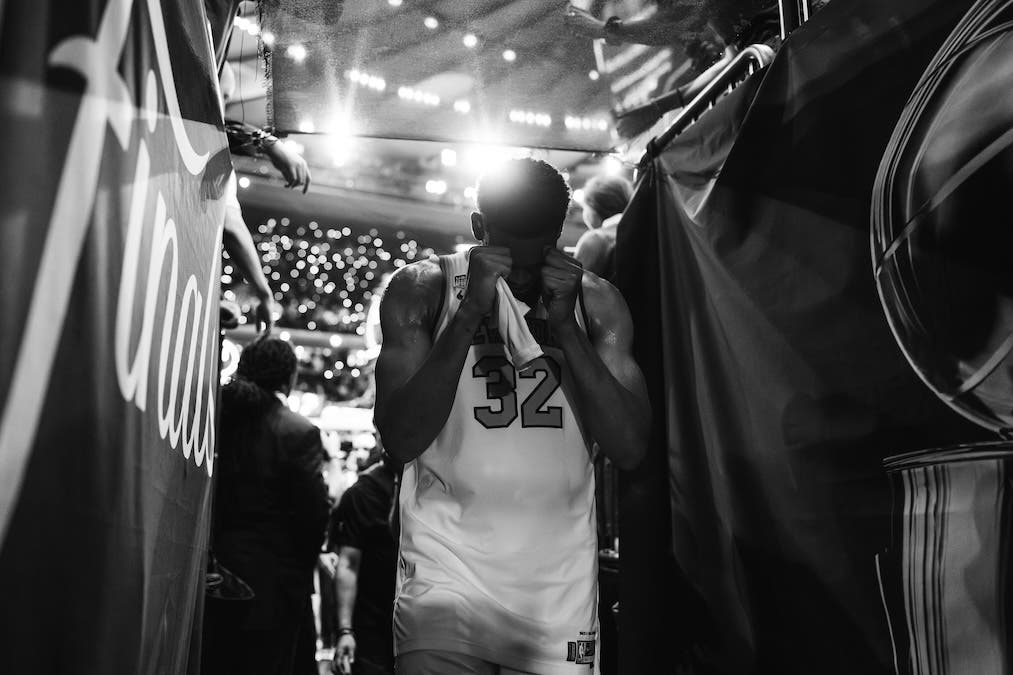
One of his favorites was taken in the tunnel after Game 4. As the celebration spilled across the court, Yu slipped backstage, where Karl-Anthony Towns, aka KAT, walked alone beneath the lights of Madison Square Garden with Finals branding lining the hallway.
“He has his head in his hands,” Yu recalls. “Then he came out after that with a big smile.”
It was a moment only someone with team access could witness. “It’s the emotional stuff, the stuff the fans can’t see that I love most.”
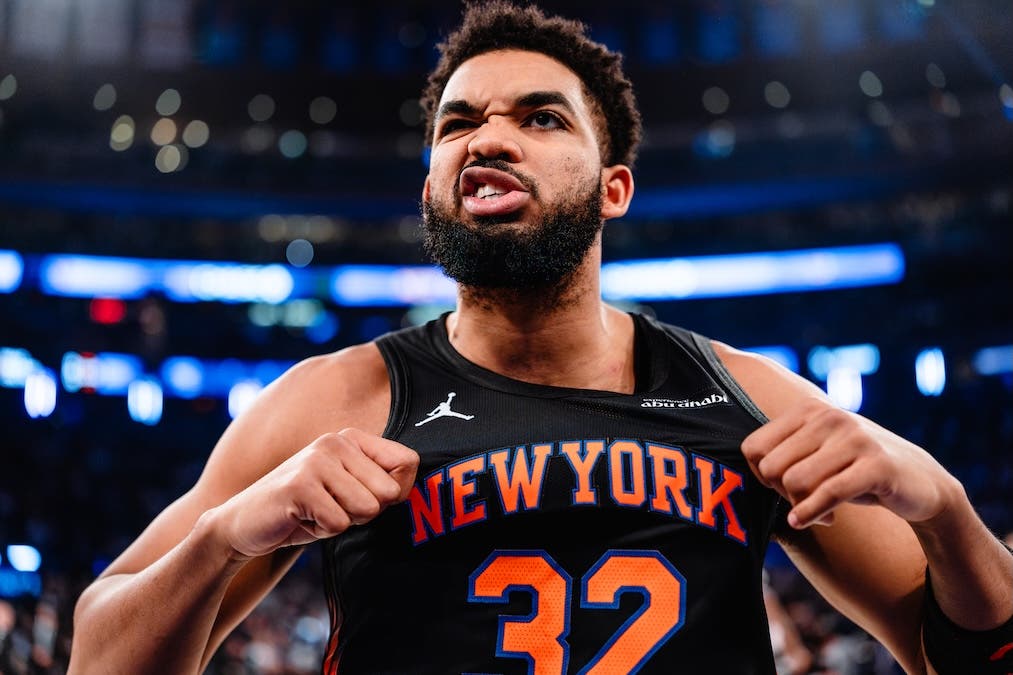
That philosophy defines Yu’s work. While dozens of photographers may capture the same dunk or three-pointer, the moments between the moments often become the most memorable, whether it’s Josh Hart’s exuberant celebrations, Karl-Anthony Towns processing a championship, or families embracing players after the game.
Gear, Technical Challenges, and Workflow
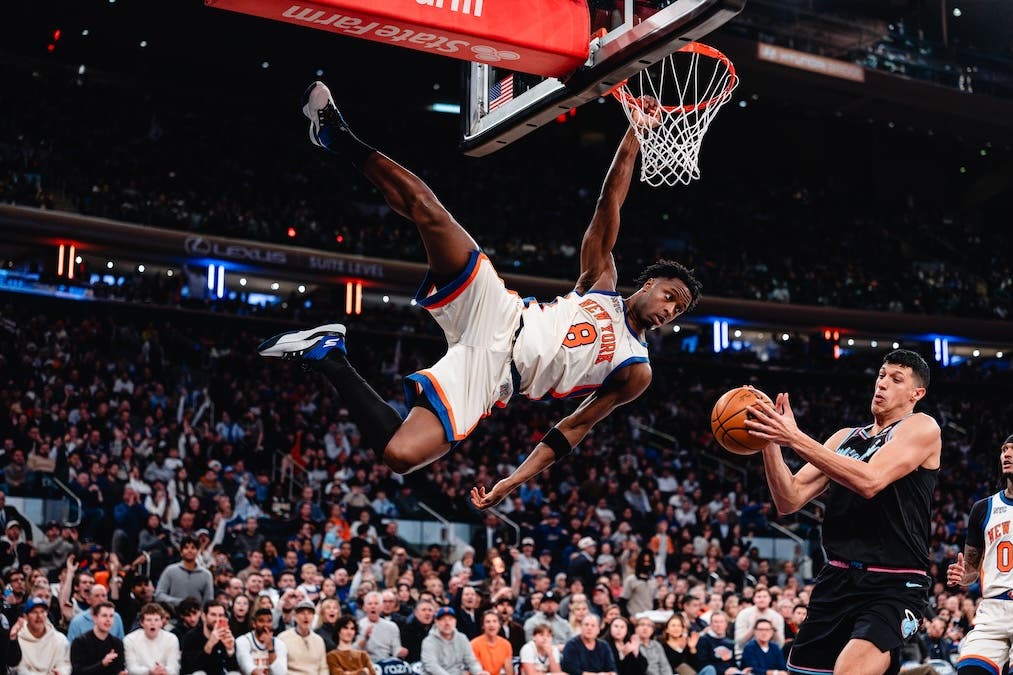
Despite its reputation as basketball’s most famous arena, Yu says Madison Square Garden presents unique challenges for photographers.
“The lighting isn’t great,” he admits.
Unlike many newer NBA arenas with more evenly distributed lighting, the Garden’s theatrical setup creates dramatic brightness variations across the court. “Underneath the basket and in the corners, it can be a stop or two darker than the open floor.”
That means constantly adjusting exposure and white balance while tracking players moving at full speed.
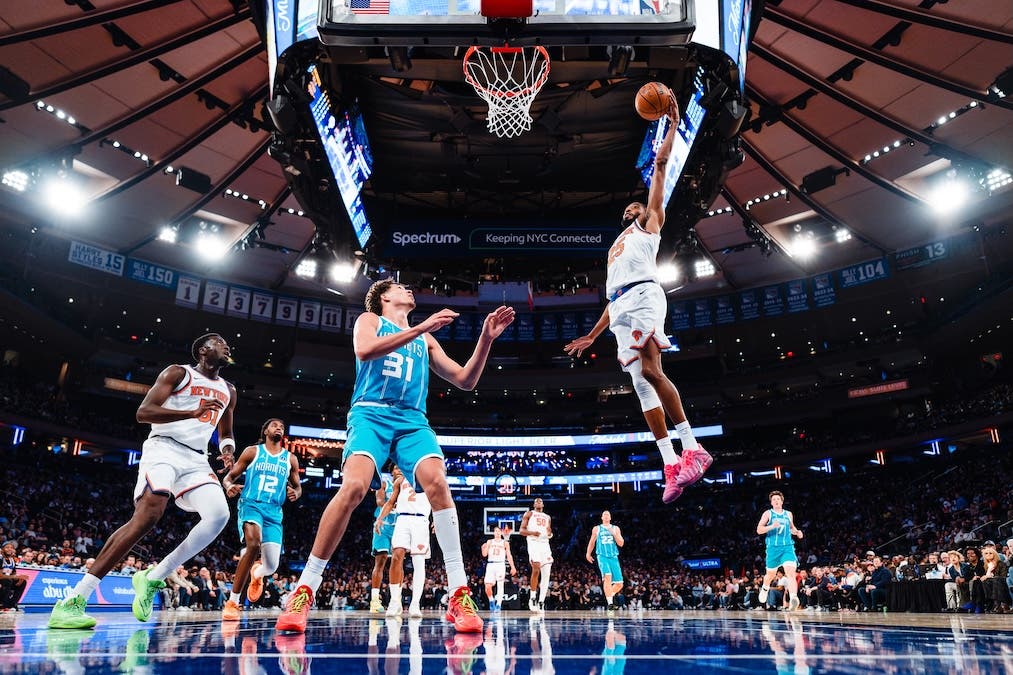
Gear-wise, Yu shoots with a Sony A1 II And Sony A1 Mark 1 throughout most games, usually paired with a 50-150mm f/2 lens. It’s his workhorse for roughly 90 percent of the action. He relies on the 28-70 f/2 for pre-game shots when he is on the floor and then will mix in a 14mm prime and use his 300mm as well.
While the cameras can shoot 30 frames per second, Yu deliberately slows himself down.
“I shoot around 10 frames per second,” he says. “I feel like I know what to look for.”
By the end of a game, he’ll have roughly 700 to 1,000 images, which is far fewer than many sports photographers produce.
“I try to limit my shooting,” he states matter-of-factly.
During games, he transmits selected images to his editor via Wi-Fi, then they are processed and distrubuted in real time to social media, marketing, and the players themselves.
Advice for the Next Generation
Having built his career from the editing desk to the New York Knicks’ baseline, Yu is often asked by aspiring photographers how they can follow a similar path. The inquiries usually include his camera settings, shutter speeds, and the gear he uses.
His answer is rarely what they’re expecting.
“There isn’t a blanket answer,” he says. “Every arena is different.”
A setting that works in an NBA arena might fail completely in a dimly lit high school gym. Instead of copying another photographer’s settings, Yu believes young photographers should learn to understand light, adapt to different environments, and develop their own style.
More importantly, he encourages photographers not to overlook opportunities simply because they aren’t at the professional level.
“A lot of people think, ‘I need to shoot the Knicks right away,” he says. “It doesn’t work like that.”
With only a limited number of credentialed photographers allowed on the floor for professional games, Yu says the best experience often comes from shooting high school, college, or G League sports, where photographers can experiment, build a portfolio, and develop the instincts needed to anticipate the action.
Of course, like anything else, it takes time to perfect an approach and style. Looking back at photographs from the first professional game he ever shot, he admits he sees plenty he’d do differently today.
“I’ll look at some of those photos and think, ‘Ugh, I don’t like this,'” he says with a laugh. “Even the editing, I’ll look back and think, ‘Why did I do that?’ The color is off; the skin tones are off.”
His sage advice is: “Hone your craft on the editing side, too,” he says. “Develop your own look. Build your portfolio. Learn the fundamentals first and then go from there.”
It’s Not Over Until It’s Over
The Knicks Championship Parade in NYC where the team received the ceremonial keys to the city from Mayor Mamdani remains one of Yu’s favorite memories.
Stationed atop Josh Hart’s float as hundreds of thousands of fans packed Broadway, he spent the day documenting history while occasionally forcing himself to lower the camera.
“You have to shoot what you have to shoot,” he says. “But at times you want to just look out at everything and take it all in yourself.”
“You never know; it could be a once-in-a-lifetime moment.”
Some of his favorite images, in fact, came even earlier, immediately after the Knicks clinched the title in San Antonio. During the on-court championship ceremony, when Jalen Brunson was named Finals MVP, and the Larry O’Brien Trophy was presented, Yu had already envisioned the photograph he wanted.
As confetti rained down around the team, he captured the players raising the championship trophy amid the celebration, a defining image of the New York Knicks’ historic run.
Still, even after documenting an NBA championship, one missed photograph lingers in his mind: that OG tip-in.
He’s seen overhead photographers’ images of Anunoby perfectly timing the winning play.
“I still wish I was able to get that,” he admits.
Then again, missing one shot hardly defines a photographer who spent an entire postseason documenting everything else: the joy, relief, exhaustion, and emotion that followed. Sometimes, the most unforgettable pictures also happen after the buzzer.
Thumbnail image: Photo by Evan Yu/The New York Knicks