
Are you ready to dive into Strobist photography? Shoe-mounted flashes have evolved, and they’re no longer just a source of extra illumination. Thanks to TTL and wireless features, you can more easily move a flash around your subject and use it in a more creative manner to add dimension and direction to your light.
But with these changes come a confusion of choices. Which flash is best for your needs? The options available vary, depending on the brand of camera you use. Most camera makers offer a choice of rich-featured, wirelessly-controlled flashes (at a price), while others have simpler, more limited options. However, there are also independent-brand flashes, that may offer you what you need at a more budget-friendly price.
Most photographers start out with a single flash, typically made by the same company that made their camera, and then add to their collection as they grow as photographers. As you grow, you may want to add a wireless flash transmitter and transceiver system for more reliable multi-flash control. If you’re just starting out, this is probably how you’ll by your first flash. If you’re looking to add a couple of additional flashes so you can photograph events or portraits, your choices widen vastly.
This guide will offer you a brand-by-brand overview of what’s available for first-time and more advanced flash buyers, including a few highlighted models. This is by no means a comprehensive list—there are over 250 on-camera flashes available at Adorama—but it should give you the tools to be able to look at a flash listed in the Adorama On-Camera Flashes department and be able to intelligently choose the best flash for your needs.
Some terms you should be familiar with
- TTL: Through the lens flash automatically determines the correct amount of light a flash would put out. Either pre-flash is sent out to measure the flash-to-distance subject, or the camera measures the flash reflectance during exposure. Either method determines the right amount of light and exposure. This usually works, but it can be misled by overly bright, dark, or low-contrast subjects, as well as windows and mirrors.
- Manual flash: Most flashes made by the same manufacturer as the camera offer a choice of TTL or Manual flash output control. Some photographers prefer having full control over exposure, and that includes how much light the flash emits. Independent manufacturer flashes may also have the same choice, but less costly models may be manual only. This can save you a lot of money, but check the specs carefully; if you’re looking for TTL, you may want to skip these models. A little secret: Nearly all flashes made to work with digital cameras will work in manual mode with any camera, no matter which camera brand. Learn more about making a mix-and-match FrankenFlash!
- Flash sync: Every camera has flash sync speed, usually in the 1/250-1/60 second range. You can use a slower exposure to increase the ambient light, but that could introduce motion blur. If you use a faster shutter speed, some of the image might not be exposed properly.s Conversely, some camera/flash combinations allow for High-Speed Flash Sync, which lets you shoot at a fast shutter speed with a fast flash pulse. The advantage of high-speed flash: It lets you freeze motion more effectively, and gives you the option of wider apertures.
- Wireless Flash: Nikon, Canon, Pentax and Sony all have wireless flash systems which let you operate your flash off camera without the need for connecting cables or wires. This way you can move the flash to one side or another, backlight a subject, or work with multiple flash units to create various lighting effects. The days when you need to keep your flash attached to your camera’s hot shoe and get subjects looking like they were photographed in a coal mine are over!
- Radio Transmitters: Most wireless flash systems work optically based on pre-flash or infrared signals sent out by the camera, and therefore the camera and flash must be within line of sight of each other. If you’re shooting outside the line of sight, a radio flash transmitter system is more reliable. There are both TTL and manual radio transmitters made by the camera companies or independent brands such as Phottix, PocketWizard, and Flashpoint.
- “Any Flash Brand”: Some flash models are marketed as being compatible with any camera brand https://www.adorama.com/l/Lighting-and-Studio/Flashes-and-Slaves/On-Camera-Flashes?sel=Compatibility_Any-Flash-Brand. These non-dedicated flashes are manual output control affairs, and are not TTL or wirelessly controlled, but will work with some wireless transmitter systems. They are generally substantially less expensive than their TTL, brand-specific counterparts.
If the Flash Shoe fits…
Let’s take a brand-by-brand overview of your shoe-mount flash options.
Canon
With over 80 compatible flashes available, the widest variety of flashes can be found for owners of Canon DSLRs and compacts with hot shoes. Canon’s on selection includes the bare-bones Canon Speedlite 270EX II (), the mid-range 430 EX III, and the pro-level Canon Speedlite 600EX-RT ($499). All Canon-brand flashes can be operated wirelessly, and the more advanced models offer a choice of infrared or more reliable radio transmission for off-camera and multi-flash setups.
Some 20 independent flash makers also manufacture flashes that are compatible with the Canon system, and many of them, including the Nissin Di466 ($139) and Phoenix Digital SmartFlash PZ139 ($84.95) are compatible with Canon’s eTTL and eTTL II automatic flash exposure systems.
Canon flash highlight:
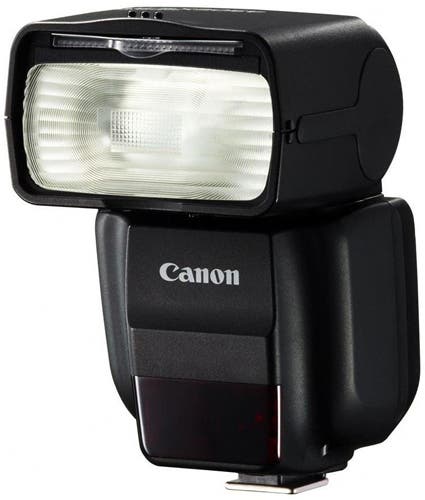
Canon Speedlite 430EX III ()
Canon’s newest flash, the 430 EX III replaces Canon’s most popular model, the 430 EX II; the biggest change? It offers both optical and radio wireless transmission operation, and has 10 custom functions and 8 personal functions for advanced users. With a guide number of 141 feet (ISO 100) and a rotating head with a 180-degree side-to-side and 90 degrees up range, the 430 is Canon’s most popular flash, usable in both everyday and pro shooting situations. Its recycle time has been improved, it has a reach of up to 80 feet at ISO 100, and as a part of Canon’s E-TTL system, it can work as both a primary flash or a slave unit in a multi-flash system. The flash foot is made of metal, so it is more durable. A new multi-dial and LCD monitor make it easy to use.
Fujifilm
Fujifilm offers a pair of flashes that are matched to its X-line of mirrorless interchangeable-lens and self-contained compact digital cameras, with the EF-42 () offering the most choices. The only limitation is that the Fujifilm system doesn’t offer wireless control. For that, you would need to add a wireless transmitter and transceiver. Your options for that are somewhat limited.
Fujifilm flash highlight:
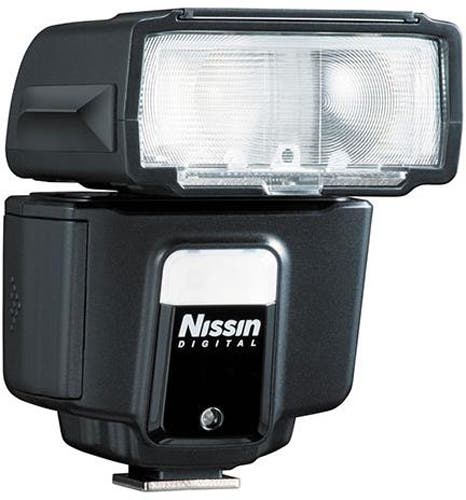
Nissin i40 ()
The Nissin offers TTL metering, supports up to 1/8000 sec rapid shutter speed operation, and has plenty of light output with a guide number 40. It has an LED video light in addition to flash. Head rotates up to 180 degrees diagonally, 90 degrees up. Zoom range 25-105mm. Manual output available, power can be adjusted to +/- 2 stops. Can control multiple flashes wirelessly using slave modes and wireless TTL. Claims up to 1,700 flashes per battery charge.
Leica
Leica is best known for their unique, premium digital rangefinder cameras. However, they have produced a couple of basic flashes, such as the small Leica SF 26 ($343.50), which is designed for their Micro Four Thirds compact digital camera lineup.
If you want a full-featured flash to use with your M-series Leica, consider a manual model designed for all digital cameras, such as the Flashpoint Streaklight 180, Cactus RF60, or Metz MZ53622 36.
Leica flash highlight:
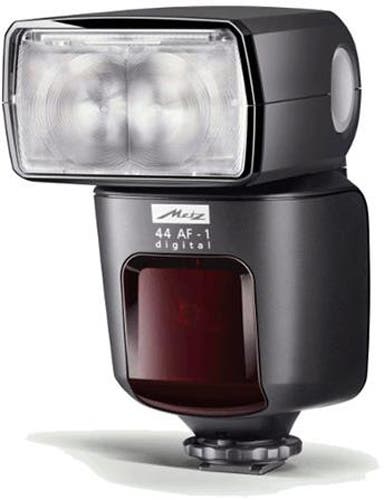
Metz 44 AF-1 ($219)
The Metz 44 AF-1 offers the kind of flexibility and power not available in Leica-made flashes, although it is primarily for Leica’s Micro Four Thirds cameras, rather than the M series. This TTL flash has a maximum guide number of 44 at ISO 100, can work as a slave in a multi-flash setup, and covers 24-105mm. Good for a range of uses from casual to pro.
With over 70 flashes available, including their own and those made by independent manufacturers, Nikon users can enjoy one of the largest and and most pro-oriented variety of compatible flashes. The most popular Nikon flash is the SB700 (), an i-TTL Speedlight that, like the powerful SB-910 ($546.95) and more basic SB-500 (), uses Nikon’s Creative Lighting System and can be operated wirelessly as a stand-alone flash or in multi-flash setups.
Nikon-compatible flashes from independent flash makers include the Strobist-friendly Phottix Scott Kelby Mitros + TTL flash kit ($499.95) with high-speed sync and a bag full of accessories, the budget-priced Flashpoint ZoomLioN ($179.95) with its 150-foot wireless range and 112 Guide number, and the low-cost, TTL-compatible Bower SFD35N ().
Nikon flash highlight:
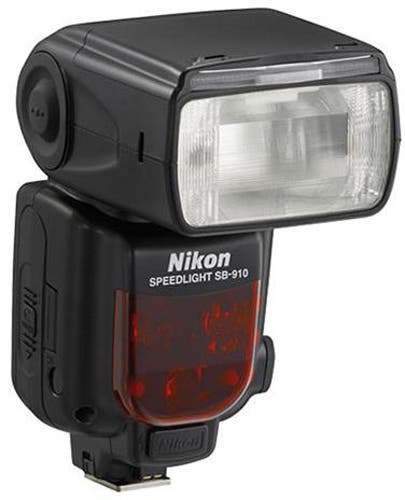
Nikon SB-910 TTL ($546.95)
The most advanced flash Nikon makes, the SB-910 can control up to three groups of remote SB-series Speedlights. It has pro features that include precision i-TTL flash control as well as manual with power ratio, illumination patterns that can be changed depending on the shooting environment, and a streamlined control menu. If you own a pro-level Nikon, this is a must-have flash.
Olympus
As the first company to introduce mirrorless interchangeable-lens compact digital cameras, it should come as no surprise that Olympus users have a good variety of over 20 flashes to choose from. Olympus offers four varieties, from the minuscule Olympus FL-LM2 () to the small, wireless Olympus FL300R (), enthusiast-oriented, wireless Olympus FL-600R () and powerful Olympus FL-50R ($499). In fact, a multi-flash wireless kit using the 50R and 600R can produce pro-level results with most Olympus MILCs.
There’s a small but growing selection of independent-brand flashes for the Olympus system, including the manual YoNgnuo YN560X, the low-cost, dedicated TTL Bower SFD720O ($45), and the advanced, touchscreen-controlled Metz 52 AF1 TTL flash ()
Olympus flash highlight:
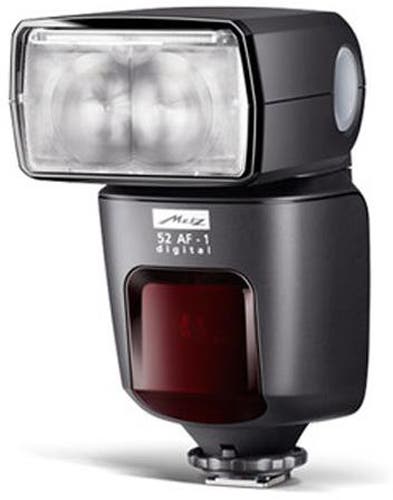
Metz 52 AF-1 ()
With a powerful guide number of 52 ft at ISO 100, the swivel-headed Metz 52 AF1 supports Olympus’s TTL system and can be used as either a primary flash or wireless slave unit. It also has a practical/cool factor: It is controlled via a touchscreen LCD monitor, and has a USB port so its firmware can be updated via the Internet. It is also compatible with Leica and Panasonic Micro Four Thirds cameras.
Panasonic
Panasonic’s on-camera flash system ranges from the basic FL-220 ($109.95) to the highly-rated, wireless mid-range FL360L () and the high-end DMW-FL580L (), with its powerful guide number of 190 feet at ISO 100. The two more adavnced models offer both flash and a built-in LED video light and can be operated wirelessly for off-camera and multi-flash operation.
Bower, with its SFD926C ($93) and Metz, with the Mecablitz 64 AF 1 () are currently the only two indie flash makers to offer alternative models, and they range from simple manual affairs to powerful high-end models with TTL and touchscreen operations.
Pentax
Pentax offers four grades of shoe-mounted flash, and all offer TTL operation as well as manual control. The AF-200FGis compact and costs only $62, offering enough power for fill lighting, while the top-rated Af-360FGZ II () offers both flash and LED continuous light for video, while the high-powered (Guide Number: 177 at ISO 100) AF-540FGZ () is one of the few shoe-mount flash models to boast weather-resistant construction, so you can take it out in the rain with one of Pentax’s water-resistant DSLRs.
There are more than two dozen independent flashes designed for Pentax, including the digital era version of the classic Vivitar DF-283 ($69.95), the P-TTL compatible Metz 36 AF-5 ($129.99), and the super-powerful Sigma EF-610 ($225).
Pentax flash highlight:
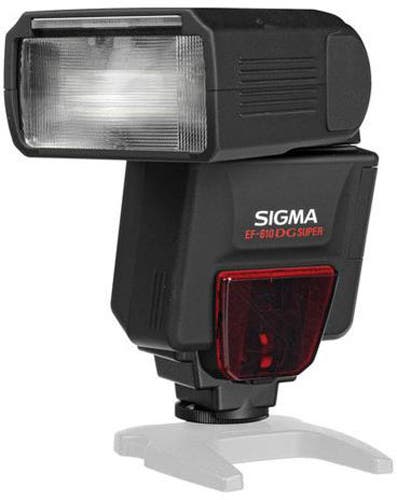
Sigma EF-610 DG ($225)
With a guide number of 200ft and full bounce flash with a 24-105mm coverage range that can be expanded to 17mm using the built-in Wide Panel, the EF-610 offers a lot of bang for the buck, including TTL wireless flash and high-speed flash options, features usually found on models that cost twice as much.
Samsung
Samsung MILC and DSLR have a limited choice of three compatible flashes, the Samsung ED-SEF580A ($499), which offers TTL and manual shooting options, a rotating flash head, and a powerful guide-number of 190 feet at ISO 100.
If the Samsung flash is too expensive, you have to go indie for anything less. The Bower SFD926C ($87.50) is simple but dedicated TTL unit with a guide number of 125 feet at ISO 100, while the lower-powered Metz 26AF-1 ($129.99) is primarily designed as an A-TTL-compatible remote/slave unit.
Sony
Sony has moved from the proprietary flash shoe system it inherited when it bought Minolta’s camera division to the standard mount you can find on all other modern cameras. This allows for the use of manual as well as compatible third-party flashes. However, Sony’s own models rival those of its more established competitors. The four Sony flashes range from the HVL-F20M (), which is designed for TTL exposure control on a Sony DSLR, to the newer Sony HVL-F32M (), with its 32 guide number, high-speed flash sync and wireless TTL control, designed primarily for the Alpha A7series of full-frame DSLRs, as well as the high-output (90 foot flash range at ISO 100) HVL-F60M ($548), which has a built-in LED light for video, auto white balance compensation, wireless multi-flash operation and weatherproof construction.
There are over 35 models available for Sony camera owners, including the inexpensive but powerful Bower SFD-355N (), and the TTL-compatible, rich-featured Sunpak PZ-42X ().
Sony flash highlight:
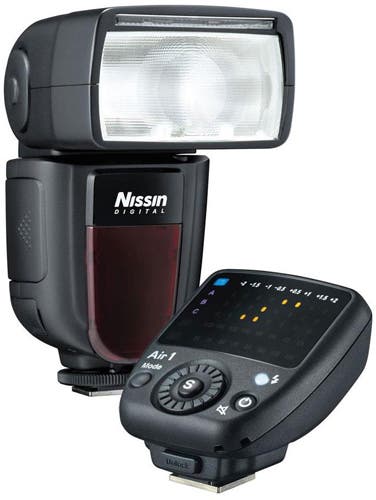
Nissin ND700AK-S ()
Packed with an Air 1 radio remote commander, the Nissin ND700AK-S is part of a new radio-based TTL or manual-based remote flash system that you can add to as you’re ready. The flash itself is powerful, with a Guide number that varies from 28-54 depending on zoom head position, and a focal coverage area of 24-200mm. It can be bounced up 90 degrees or rotated 180 degrees left or right. If you’re going pro and using a Sony MILC or DSLR, this is a system worth seriously considering.
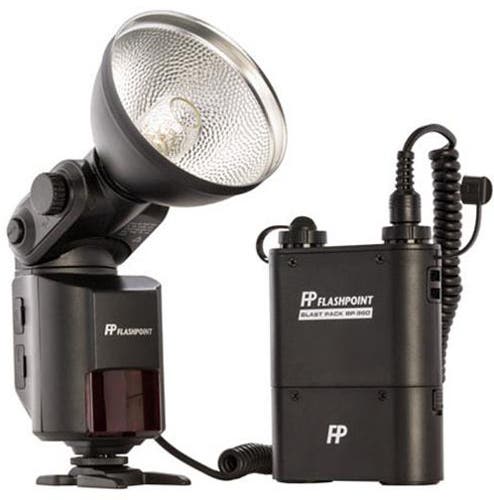
Any Flash Brand
Finally, there are dozens of flashes that are manual only but will work on any camera brand. These include the Flashpoint StreakLight series, available exclusively from Adorama, which is powered by an external powerpack and will last over 1700 flashes at full power before needing to be recharged; The StreakLight 360 kit with the Blast Power Pack costs .