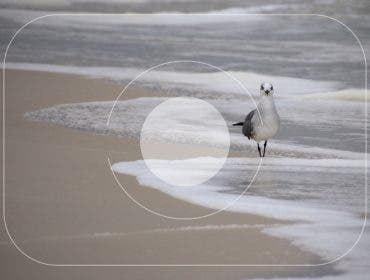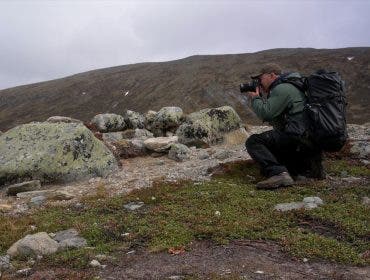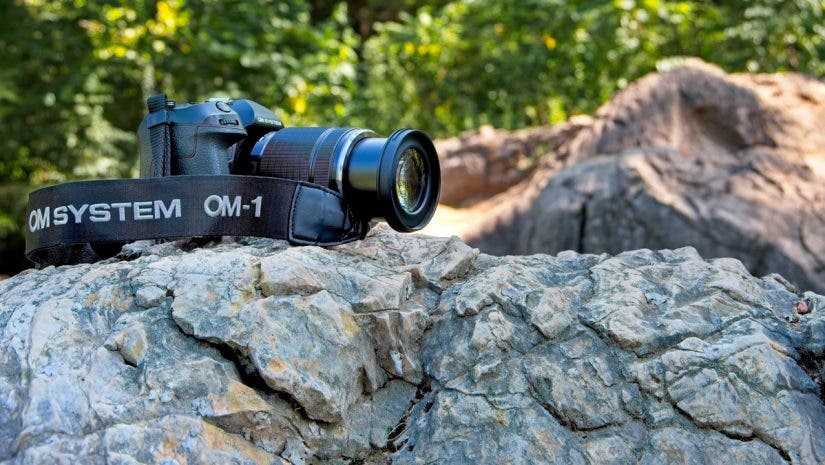
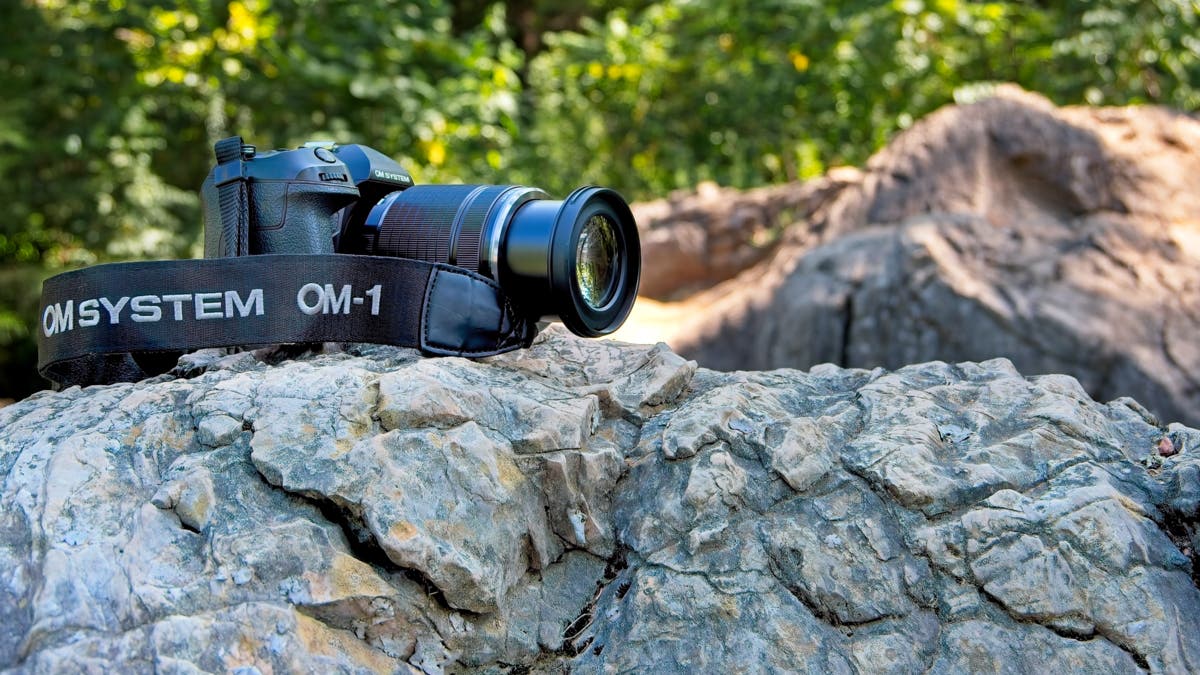
It’s an upstart contender when compared with juggernauts like Canon and Nikon, but OM SYSTEM, originally developed by Olympus, is carving out an ever-larger niche all its own. Focused on big performance from a little sensor, OM SYSTEM does have non-Micro Four Thirds (MFT) cameras, like the compact Tough TG-7, but MFT mirrorless is its main camera focus.
I spent a month with the flagship camera, the OM-1 Mark II, taking it from the tops of waterfalls to backcountry swamps and the trails between. The results surprised me, and OM SYSTEM certainly packs a lot of creative power into exceptionally compact cameras.
Micro Four Thirds vs. Full Frame in Practice

OM SYSTEM cameras primarily exist in the Micro Four Thirds ecosystem. MFT sensors are smaller than even APS-C sensors, and shooting with them can be very different from full-frame cameras. Now, some of that is awesome, some of it takes getting used to, and some is a bit of a trade-off.
Some of the top differences of shooting with Micro Four Thirds are:
- Smaller sensors often help reduce power needs, which gives OM SYSTEM more options for computational features, IBIS for stills and video, and the Supersonic Wave Filter ultrasonic dust-reduction system.
- Micro Four Thirds sensors have a 2x crop factor, so you get double the focal length…ish. Think of it as a pre-crop in-camera rather than a magnification boost.
- Depth of field is roughly doubled from what you’d expect at any specific f-stop with a full-frame sensor with the same composition at the same focal length.
- Noise tends to be more noticeable sooner when raising ISOs.
- Sensors tend to average between 20 and 25 MP, but many systems (including OM) also offer in-camera high-resolution stacking of multiple images.
OM in the Field: First-hand Shooting Experience

When I spent a month shooting with the OM-1 Mark II, it was absolutely a workhorse that made it easier to get the images I wanted to capture. However, it’s not a camera to grab out of the box and start shooting with before customizing settings.
OM SYSTEM definitely checks all the boxes that make a camera a pleasure to shoot with once you get your options set up. The camera’s construction and weather sealing mean not having to be overly protective of the gear, while the ergonomics and lighter weight make it easy to carry and use for longer shoots.
The in-body stabilization (IBIS) worked like a champ, and AF nailed focus quickly even without AI subject detection set. When activated, AI subject detection performs as expected, with good results but some misses as well. Every brand still has a way to go on that feature.
Three things I fell in love with:
- Locking lens hoods: I’ll spare you the photo of me crouched Gollum-style on rocks above a small waterfall chanting “My Precious,” but yeah, it’s like that. The lens hoods lock into place quickly for storage and use, and feature a physical release button to prevent wayward hoods from making a break for freedom down a mountain.
- Automatic sensor cleaning at startup: While I’ll always be a fan of physical sensor shields to prevent dust buildup in the housing, OM’s Supersonic Wave Filter vibrates 30,000 times per second and did an incredible job of keeping the sensor dust-free during my shooting experience.
- Live simulated ND filter, including graduated ND: While it has a few quirks, the built-in ND options are incredibly freeing, especially for gear minimalists like myself, and make it easy to avoid blown-out skies or capture water motion with a tap of a menu option.
Two things that broke my heart:
- Lost highlights: Every system handles exposure computations differently, with some trending towards preserving shadows, and others protecting highlights. It reminds me of an overeager Malinois puppy when let off leash. OM loves a detailed shadow, but it’ll blow right past highlight details if you don’t train it with careful setting choices ahead of time.
- Resetting image numbers: OM’s default numbering system is set to “reset,” which is one of those little things that can cause you to lose track of images when people first switch to the brand. If left on reset, instead of being swapped to “auto,” image numbering starts over every time.
OM Lenses

A big part of any shooting experience is the lenses, and OM SYSTEM’s M.Zuiko digital lenses stepped up big time in my shooting tests. They stood up to every other brand I’ve shot over the years, including Canon and Nikon.
I didn’t see a strong softness issue at the far ends of the f-stop ranges that many Micro Four Thirds lenses struggle with. I tested both the M.Zuiko Digital ED 8-25mm PRO and M.Zuiko Digital ED 40-150mm PRO with great results.
Overall, shots were sharp, lenses didn’t hunt for focus, bokeh texture was pleasing, and they were an all-around great shooting experience.
Portability
OM SYSTEM has positioned itself heavily towards bird photography, outdoor shooting, and travel. A big part of it is the weight savings from lighter bodies and smaller lenses versus APS or full-frame systems.
Beyond weight, there’s a freedom in the camera’s sheer overall smaller size with a lens attached. Even the f/2.8 constant PRO series lens, the M.Zuiko Digital ED 50-200mm (100-400mm equivalent), is only 8.9” long and weighs under 3 pounds. If you tend to shoot in rough locations or hike through tricky terrain as I do, that space savings is as important as the weight savings.
Being able to use a smaller backpack or leave the camera across my chest without the awkwardness of a physically longer lens swinging about feels safer, more convenient, and less tiring.
Computational Feature Highlights

Live ND filters: As I mentioned earlier, I love this feature. However, because it is computational, there are some movement issues to be aware of compared to using a physical filter. You’ll get some crazy temporary preview blurs when getting the composition set up as you adjust camera position, but those go away once you refocus. Also, even a high shutter speed doesn’t mean you can move the camera while shooting and get a steady image. For example, landscape shots with graduated ND turned on to protect the skies while shooting out of a moving vehicle are problematic. Admit it, we’ve all done it while stuck in the passenger seat on a long trip. Those shots will have blurry foregrounds even with very high shutter speeds.
Live composite: A cousin of the live ND filters, Live composite records light changes. Think capturing fireflies without needing to stack dozens of images later. It’s also great for fireworks, light painting, and star trails.
In-camera focus stacking: I typically love anything that reduces my editing time, and OM SYSTEM’s in-camera focus stacking is a fabulous option for macro photography. However, do be aware that not every lens is compatible with the feature. Check compatibility before buying new lenses if you plan to use this feature often.
The OM SYSTEM MFT Camera Lineup

OM SYSTEM’s MFT lineup features a great mix of camera bodies to fit just about every budget and shooting style.
OM-D E-M10 Mark IV
Great for: New photographers, hobbyist photographers, content creators, travel photographers on a budget
An entry-level mirrorless interchangeable lens camera packed with features for new and casual photographers without sacrificing essential tools like IBIS. Advanced Photo (AP) mode, Art filters (ART), and Scene (SCN) presets help newer photographers get started confidently. Plus, for those moving up from cellphones, a selfie-friendly forward-flip LCD screen with SELFIE mode adds fun to a dedicated camera.
OM-5 Mark II
Great for: Adventure travel photographers, street photographers, wildlife photographers, outdoor photography, everyday shooting
A great adventure camera that’s built to survive the elements. Features a high-resolution 2.36M-dot OLED viewfinder, IP53-rated weatherproofing, and a dedicated Starry Sky Autofocus mode. The OM-5 Mark II also includes a wide variety of computational shooting modes, like live ND filter and focus stacking.
OM-3
Great for: Vloggers, travel videography, content creators, street photographers, everyday shooting
A lightweight camera with fabulous vintage styling and tactile controls while still delivering modern quality images. Includes weatherproofing and a high-resolution OLED like the OM5 Mark II and builds on it with 4K 60p video featuring cinematic video profiles and S&Q Mode. The OM-3 also features an easy-access creative dial that makes it quick to access color preferences and art filters without interrupting your shooting flow.
OM-1 Mark II
Great for: Pro photographers, wildlife photographers, portrait photographers, sports photographers, nature photographers, wedding photographers, videographers
OM SYSTEM’s flagship camera built for pro and consumer use. Loaded with computational features like the OM-3, the OM-1 Mark II uses a stacked BSI Live MOS Sensor with TruePic X Processor and features 8.5 stops of IBIS, reducing the need for tripods. The Pro Capture pre-capture feature helps pros never miss a shot with up to 99 frames at up to 120 fps before you ever fully depress the shutter button.
OM-3 ASTRO
Great for: Astrophotographers, stargazers, deep sky photographers, night landscape photographers
Designed with a modified IR-cut filter for better captures of the deep reds in the night sky, the OM-3 ASTRO includes features targeted to night sky photography. Live composite, Starry Sky AF, night-sky tuned color profiles, and a night vision live view mode give night sky enthusiasts the tools they need for stunning night sky captures.
Should You Add OM To Your Camera Bag?

Will you follow the crowd or step out into your own experiences? Taking a leap away from the big three, Canon, Nikon, and Sony, is always going to draw attention and can be a little scary. That said, it’s hard to argue with the results, and OM SYSTEM gives photographers great options for reducing weight and improving portability while still getting the shots they want.
Take a look at what Daniel Norton found when testing OM SYSTEM’s largest PRO lens to see how it looks in hand and in the field.