I had one early-summer wildlife photography mission: To photograph Musk Oxen with newborn calves in Dovrefjell, a mountain range in Norway, and one of the few places in the world where you can find them. Muskoxen are Ice Age survivors and fascinating animals, related to goats but looking like oxen: shaggy, large, and very fast.
The experience was thrilling, technically challenging, and rewarding in every way. Although my main focus was muskoxen, the dramatic Norwegian landscape naturally became part of the story, so I mixed wildlife and landscape photography. Here are my impressions after the amazing Dovrefjell experience and the challenges that follow photographing in these conditions.
How to Photograph Muskoxen
I planned my expedition in Dovrefjell to photograph muskoxen with newborn calves. Calving season lasts from April to June and peaks in May, so I went at the end of May to give myself the best chance.
However, calving season is sensitive because calves are highly vulnerable and their mothers can become highly protective (read: aggressive). The official safety distance is 200 meters to avoid disturbing them. That distance also helps protect visitors, as muskoxen can charge if they feel threatened and can run up to 60 km/h. I definitely can’t win this foot race, so 200 meters it is.
You should also know that Dovrefjell National Park closes in May, specifically to provide a safe place for newborns and their mothers. Arrive too early, and you can’t enter. Knowing this, I planned my arrival for June 1st.
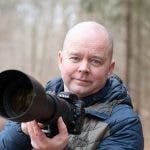
I packed my Nikon Z8 camera and the Nikon Z 600mm f/4 TC lens so I could photograph the animals at a distance of 200 meters. I also packed my Nikon Z6II camera and the Nikon Z 24-70 mm f/4 lens as a backup and for landscape photos. But the primary lens for photographing muskoxen was the trustworthy 600mm.
To my surprise, my first encounter with muskoxen was right on the trail in a birch forest. Aside from the safety distance, I found myself face-to-face with a couple of muskoxen at 30 meters. They were almost too close for my 600mm lens, and birch trees were everywhere. That quickly showed the challenges of wildlife photography in the Norwegian Fjell: getting the composition and focusing right.
Framing and Composition
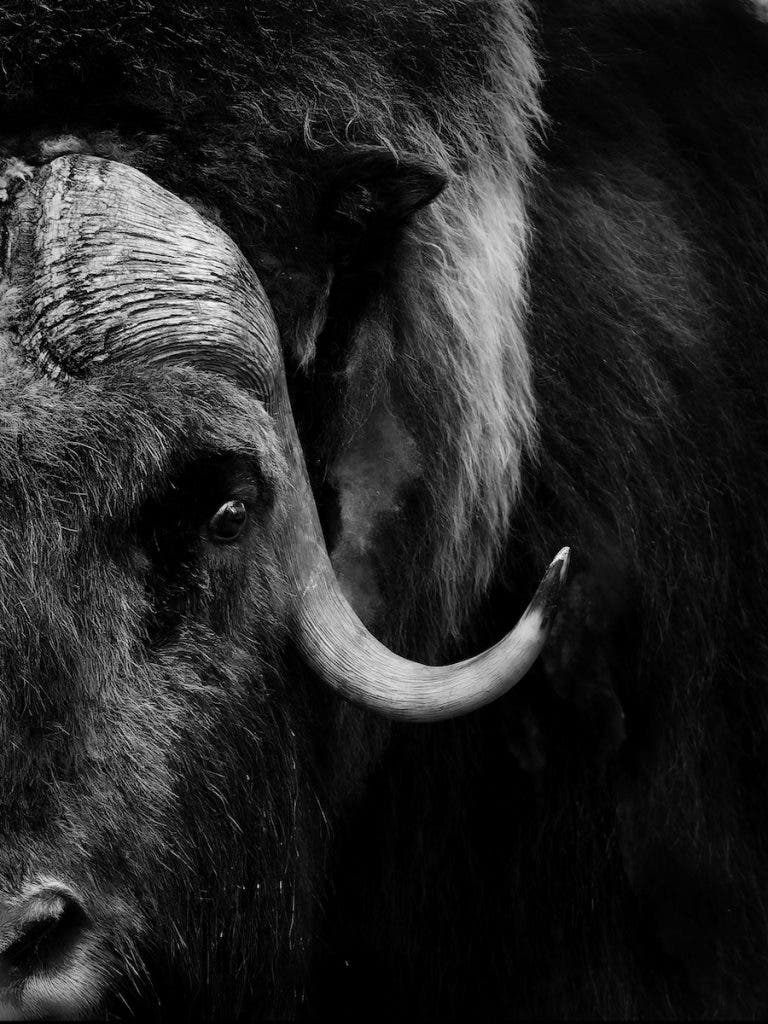
Whilst in the forest, I had little room to look for a nice background or the best camera angle. The animals were closer than expected, moving quickly between the trees, and the trees blocked my view in every direction. So I decided to go for an extreme close-up of a large male musk ox.
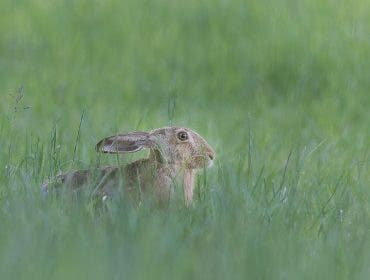
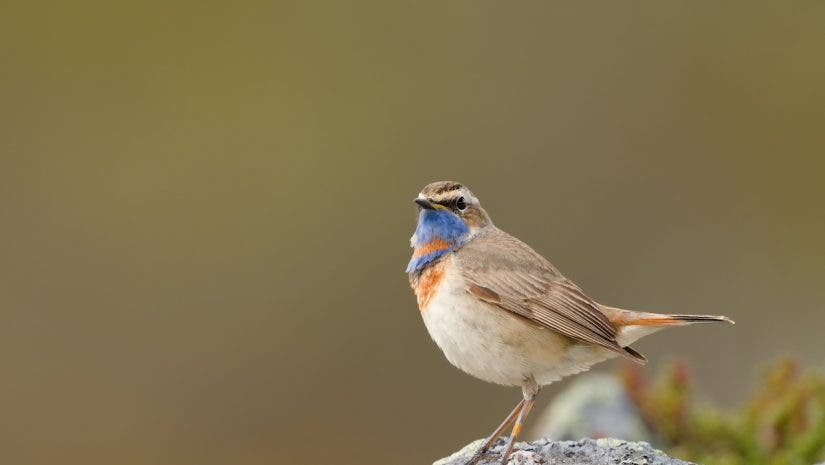
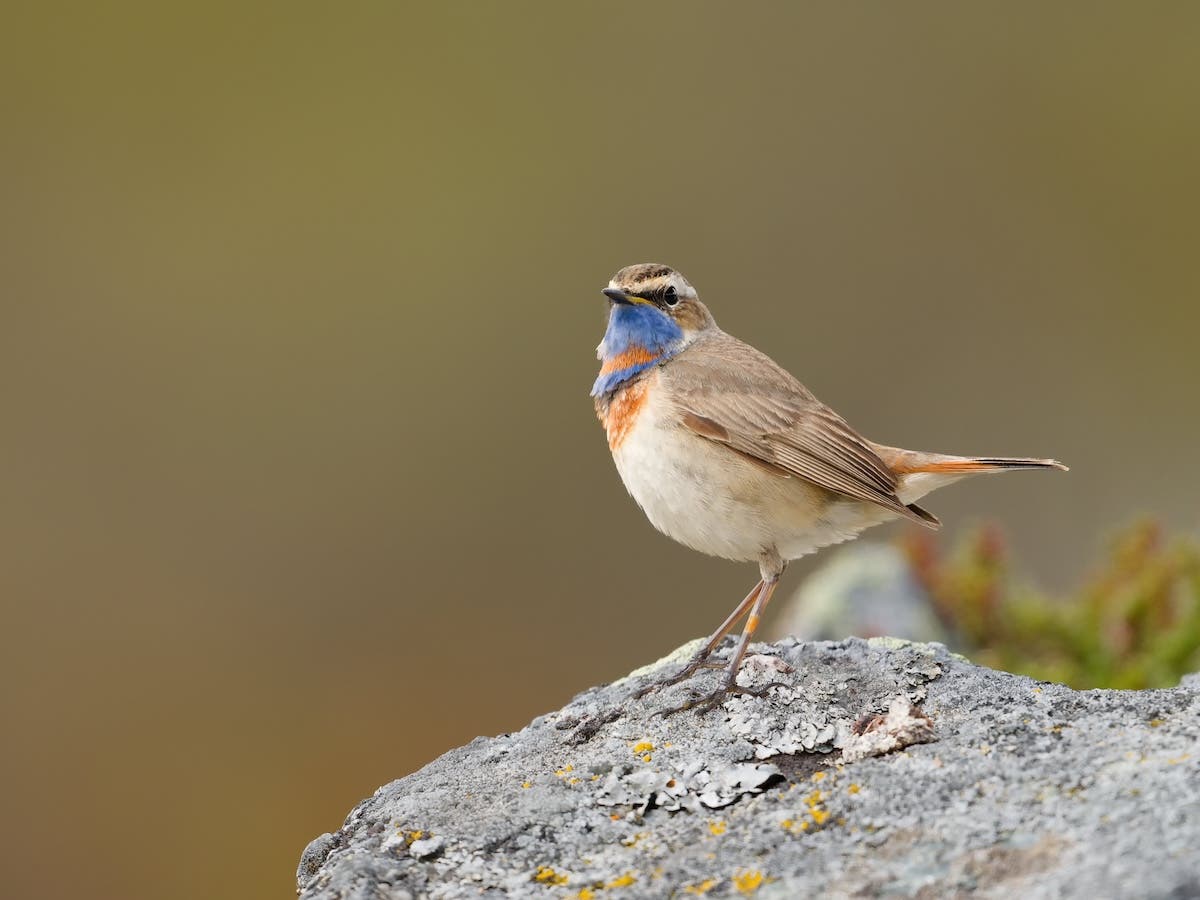
However, there were no newborn calves in the birch forest, so I continued my search for them in the open fjell and took the opportunity to capture a wider variety of photos while tracking. This included a bird or two and other nature scenes, rather than focusing only on wildlife. But more on that later.
Focusing
Focusing was also very difficult in the forest. The camera’s subject detection didn’t always work, so I ended up using mostly single-point focusing in this scenario. In the open field, the transition to easier focusing was immediate. Subject detection worked pretty well, even though eye detection definitely didn’t work at 150 meters.
In the field, the animals were significantly farther away. However, I had my 600mm lens, and I could adjust my position to my liking. The muskoxen were moving slowly or even lying on the ground, which gave me time to look for smooth, non-disturbing backgrounds and settle into composing and storytelling.
Depth of Field and Focal Length
However, at 150 meters, my 600mm lens gave me approximately 15 meters of depth of field even at a large aperture of f/4. At 100 meters, I had only 6.5 meters of field of view. At 30 meters, the distance at which I encountered muskoxen in the forest, the depth of field is only 0.6 meters. A male muskox can reach 1.5 meters in height and 2.5 meters in length. From such a short distance, there is no way to keep the entire animal in focus while shooting with a wide open aperture. But in the open, where the depth of field for portrait shots wasn’t a problem.
However, I wasn’t after individual muskox portraits alone. I wanted to capture their family dynamics and interactions. When you want to photograph a group of animals, you have to be conscious of getting all of them in focus. You can either reduce the aperture to increase the depth of field or change your position so all subjects are in the plane of focus.
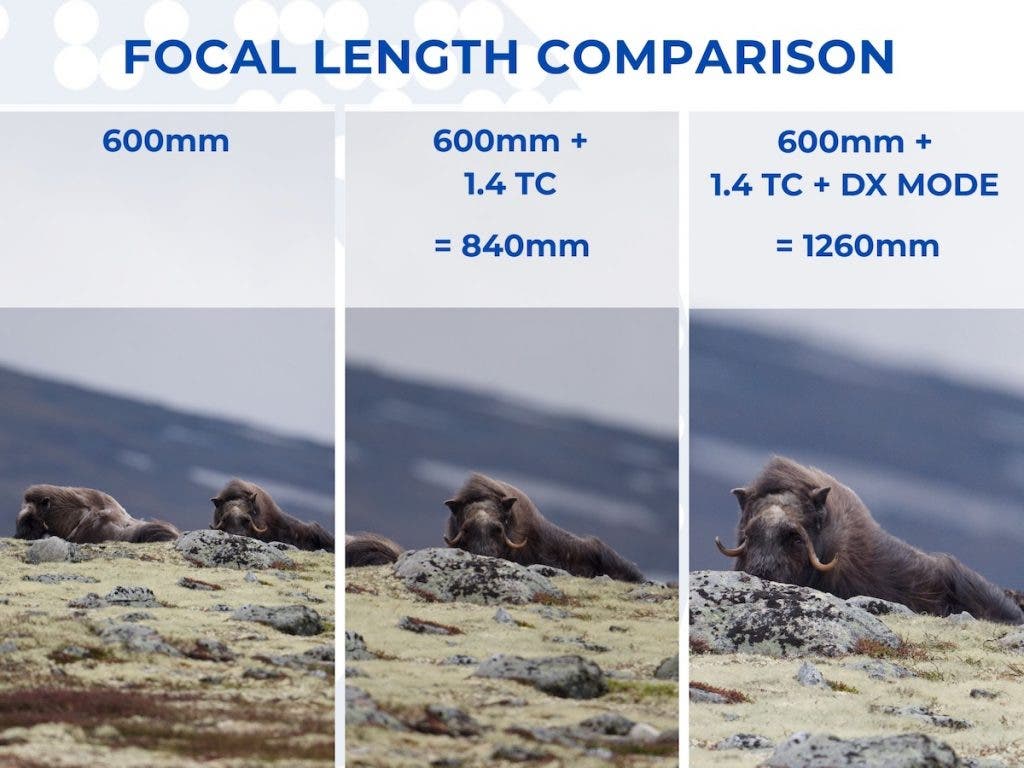
Often while at approx. 150 meters away, I engaged the built-in teleconverter and even the DX mode. This gave me a great variety of shots from the same position. However, one thing to be aware of is that with the teleconverter, the depth of field also changes, so it drops from 15 meters to 10 meters. It can be pretty hard to judge from a long distance whether all your subjects are on the same focal plane.
Seeking Contrast
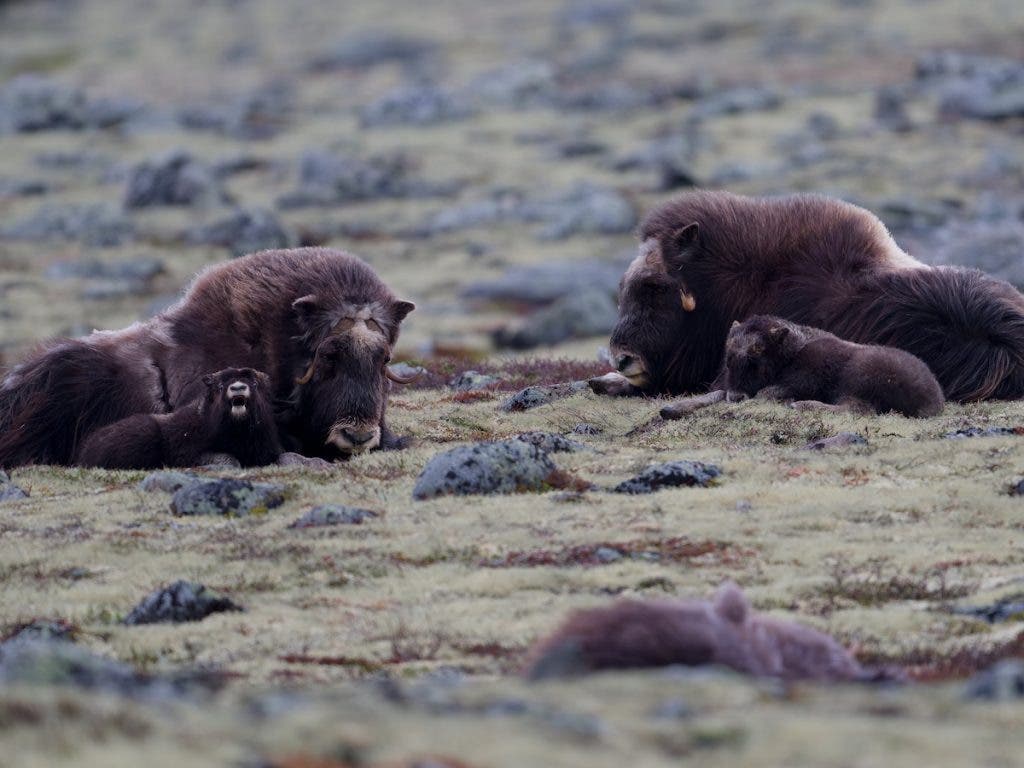
The forest was darker and restricted my moves. So, like with framing, the best decision I could make was to stay in the open.
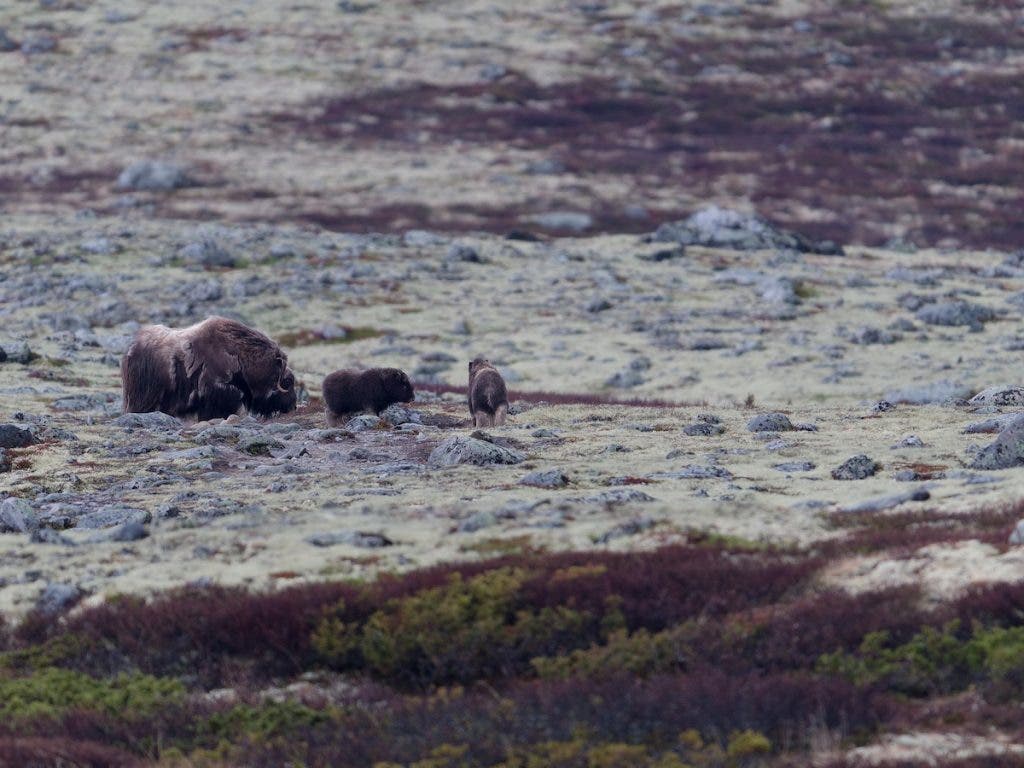
Furthermore, the muskoxen’s fur is notoriously tricky work. It is dark brown with lighter patches on the back, the ideal camouflage for this terrain.
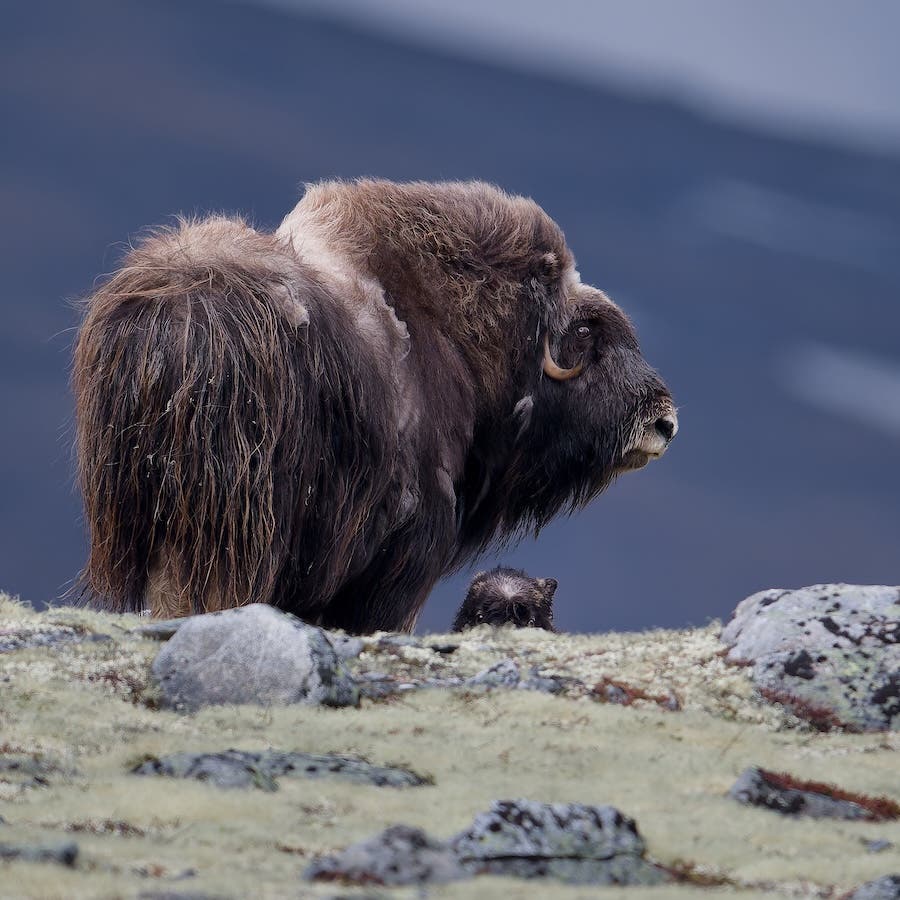
To enhance contrast, I tried to photograph from a low angle and use the distant mountains as a background. Something in the foreground adds depth and makes the subject stand out, even when colors blend in perfectly. This was my way of working with the fjell’s difficult look. I went with the flow. This is the muskoxen’s natural environment, and it’s only natural for them to blend in, but it doesn’t always make for a great photo. Their connection with the land is part of their story. Making sure that you include the environment often tells a better story.
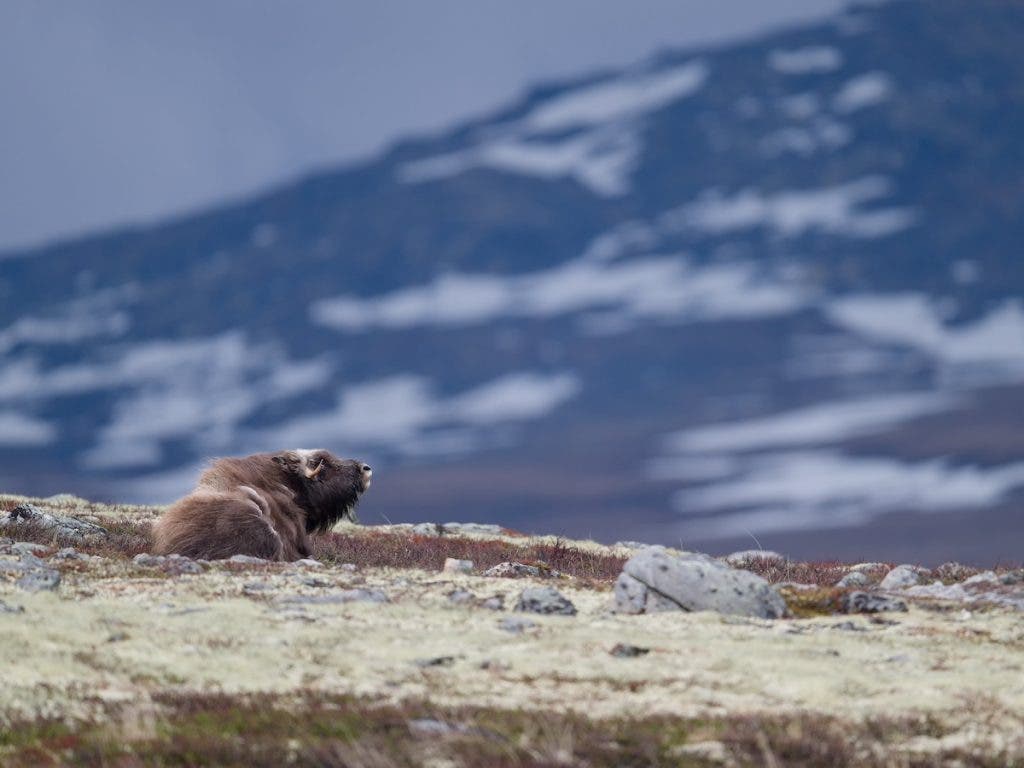
Landscape Photography: The Challenging Norwegian Fjell
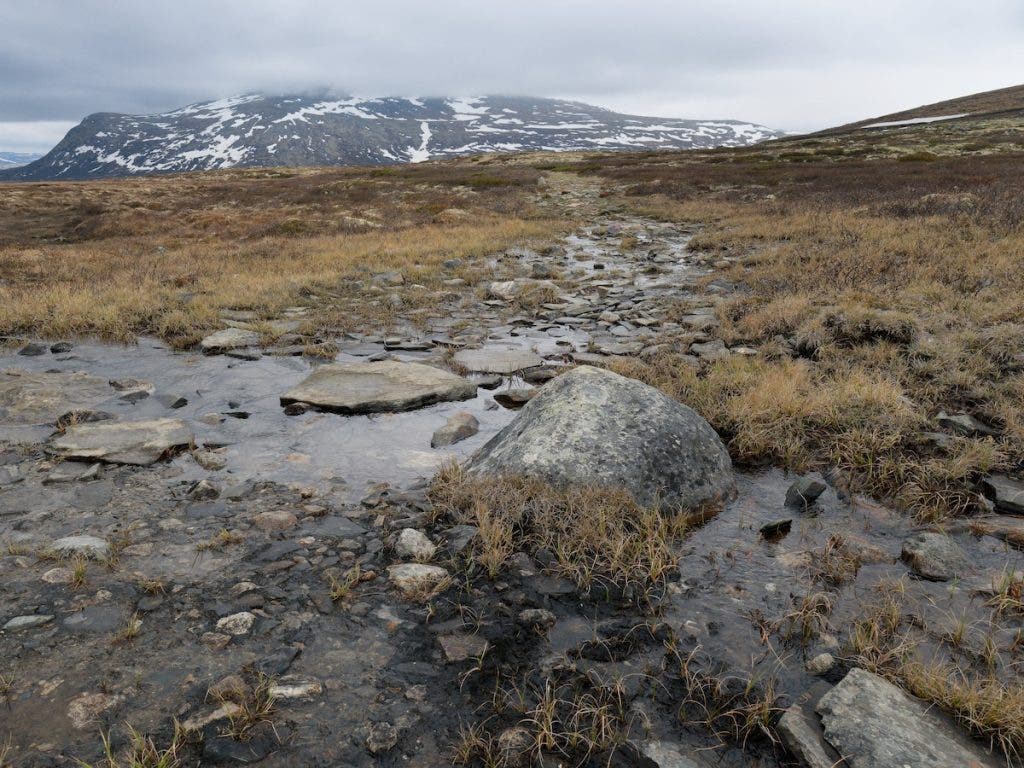
Fjell means mountain or highland, but the area looks nothing like what one would imagine a mountain to be. There are more soft rolling giant hills than steep, jagged mountain ranges. Covered in dark stone, brown vegetation, and bright patches of snow, the open fjell is extremely difficult to photograph. Add a sky that’s almost always a medium shade of gray, and I had one of the hardest contrasts I encountered.
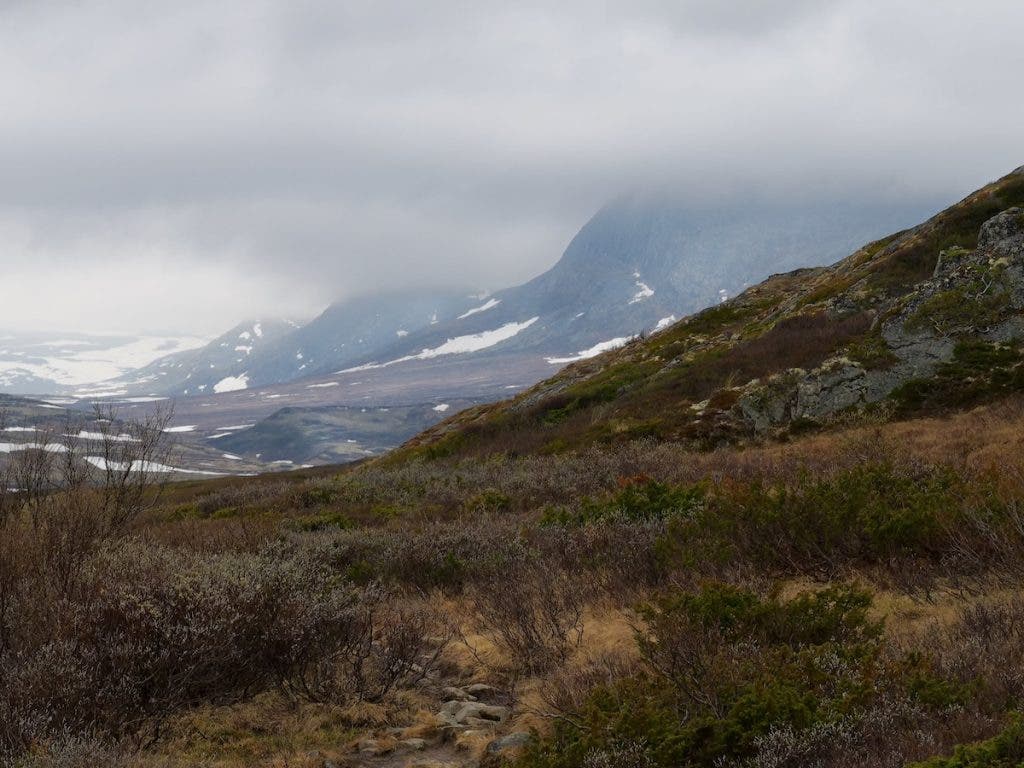
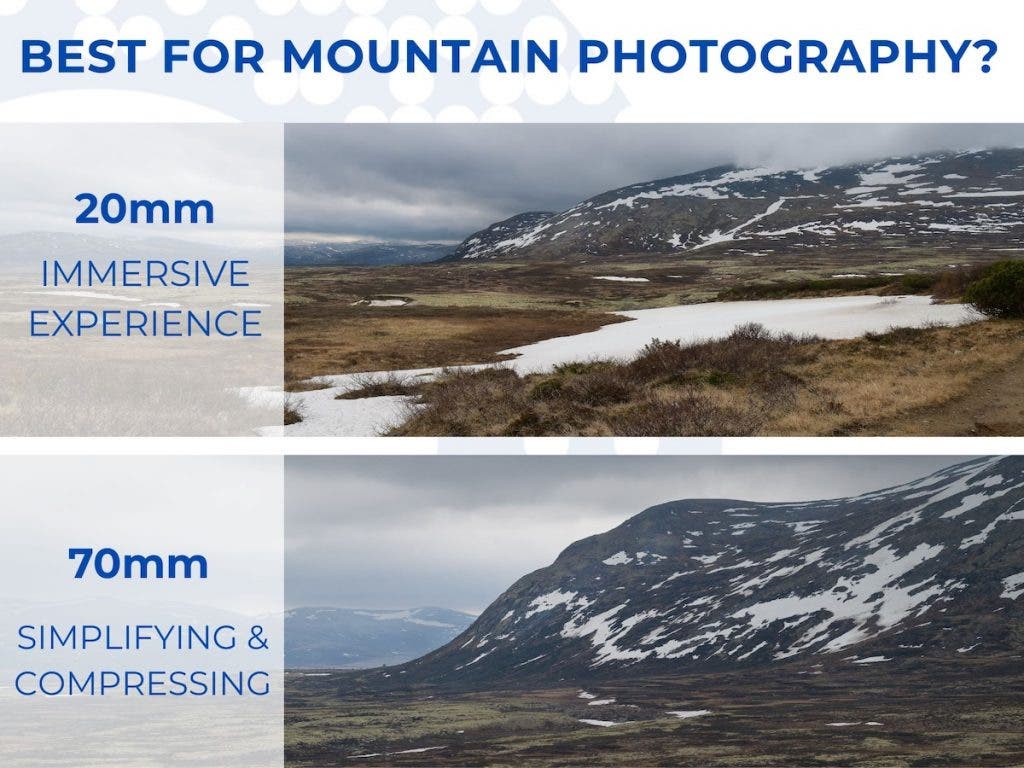
With thick clouds that can seem a bit uniform and lack texture, sometimes the only thing you can do is to wait for the clouds and light to shift a bit and open up near your chosen focal point. With the soft rolling hills, I felt I made more use of the 70mm focal length than the 20mm, as the 70 mm’s compression made the ridges feel closer together. I wished I had brought a 200mm for an even more compressed look.
My Greatest Regret: I Missed My Tripod
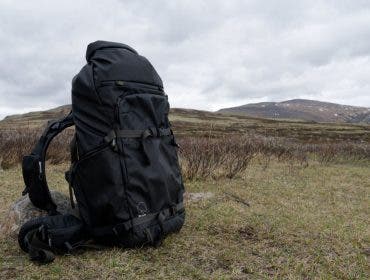
Because I was carrying 20 kg of gear, food, and equipment, I decided to leave my sturdy 4kg tripod at home. I simply couldn’t carry anymore. However, it was the one thing I missed most when trying to handhold the 600mm lens steady in 10 m/s winds. This was even more difficult when I used the built-in 1.4X teleconverter, making the lens an 840mm, or when adding DX-mode to that; handholding an equivalent of 1260mm in strong wind isn’t possible, especially for video. So I used my backpack to stabilize the lens. You get three different heights: One when the backpack is upright, one when you have it on the side, and the lowest is when you lie it flat on the back or front. It worked remarkably well when only shooting stills.

Final Thoughts
From a professional perspective, I found the Dovrefjell experience very interesting. It challenges your technical skills to the point where you realize wildlife photography is more about storytelling and connection and less about taking the perfect shot you’ve learned about in the wildlife photography manual. At the same time, working off the grid in the Norwegian fjell builds endurance and teaches resilience, the two traits that helped the muskoxen survive the Ice Age and still call this difficult terrain home. It was a fulfilling experience, both draining and energizing. I will be back in Dovrefjell soon.