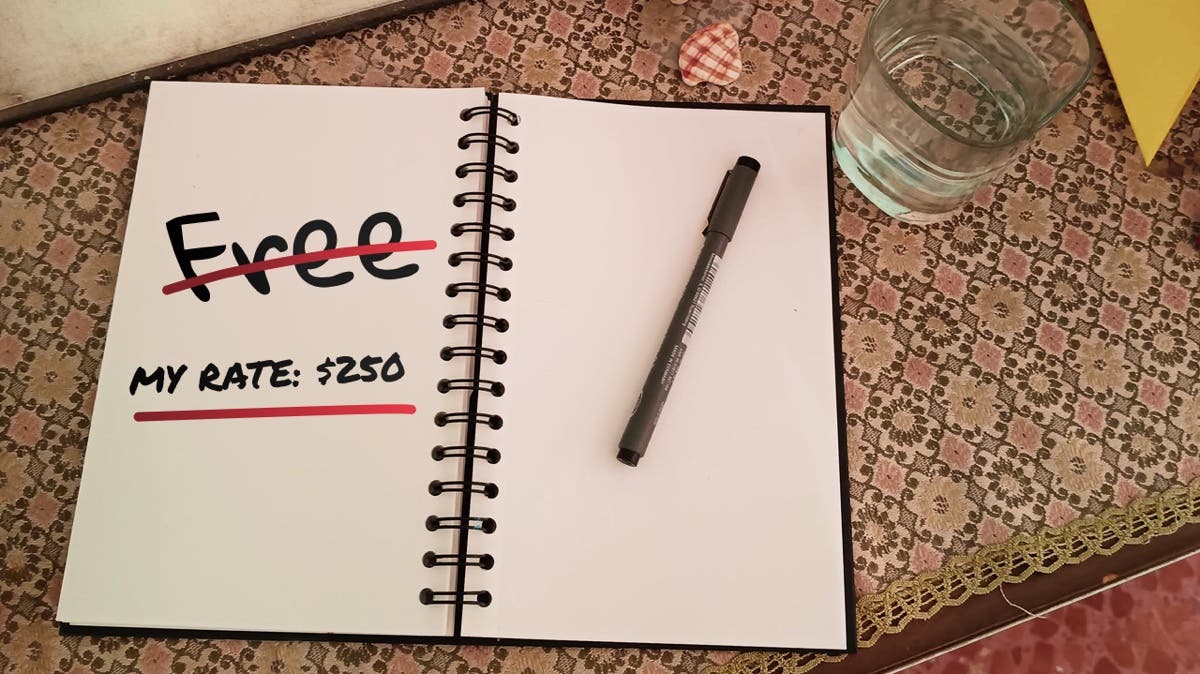
Your portfolio has been in the making for a while now, and you’ve been accepting free assignments to make it better. The idea was to get it “just right” before you started charging.
But every time you move a step forward, the goalpost moves too, and the perfect portfolio stays just out of reach.
Meanwhile, your day job is getting less motivating, and you want to spend more time doing what you love: photography. But the numbers don’t add up. You’ve known for a while that the only way forward is raising your photography rates.
If you’re wondering how to do that, this article is for you.
Why You’re Stuck
Before we get into the strategies for how to start charging for your work, let’s address the elephant in the room, which is the reasons why you’re hesitating to take the first step.
Fear:
Fear disguises itself as:
- “If I start charging, I’ll lose the projects I have.”
- “If I say no, they’ll find someone else.”
This is operating from a scarcity mindset. You need to stop that. The reality is: The right clients will pay you, and the wrong clients will leave. This will make room for clients who value your work.
However, the industry has a specific tactic for this: Exposure.
“We can’t pay you, but it’ll be great for your portfolio.” Or “Think of the connections.”
It’s the oldest trick in the book. Photographer and Adorama contributor Mujahid Ur Rehman says:
“The industry lures you in with exposure. ‘We’ll give you credit in the bottom corner of the image.’ It’s designed to keep you working for free.”
It works because it plays on the fear that if you say no, you’ll miss out.
Obligation:
“I can’t say no.”
You’ve worked for them for free in the past, and now you feel obliged to continue. Maybe it’s a close friend, a family member, or a local charity that you support. Now you feel stuck, and if this has been happening for a while, you might also be resentful.
“I said yes again, and now I’m angry about it.”
This is a clear signal that things need to change.
Doubt:
“I don’t feel ready yet,” “I’m not good enough,” or “I need more experience”
These are the most common reasons why people never start charging for their work. You tell yourself you’ll be ready when your portfolio is good enough, when you have more experience, or when you feel like a professional. But that day never comes, because doubt keeps the goalpost moving.
You don’t need a perfect portfolio. You need one good enough for a client to know you can help them.
But fear, obligation, and doubt all come from the same place: a lack of confidence.
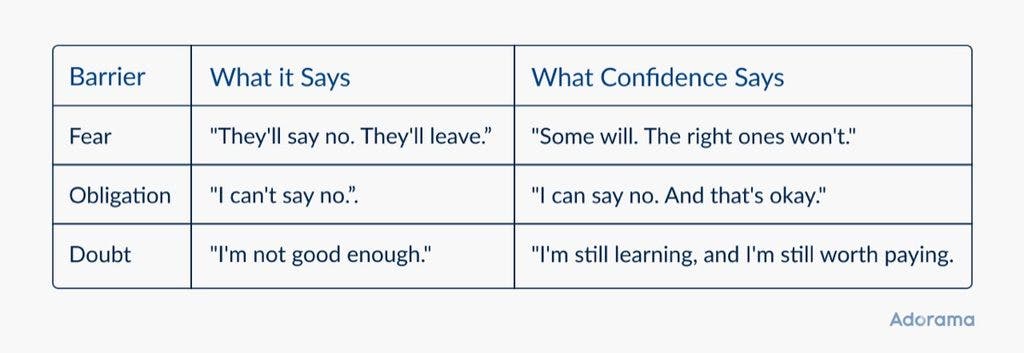
Confidence isn’t the absence of fear, doubt, or obligation. It’s something you build while those feelings are present. You don’t have to wait to feel confident before you act. Act first, and the confidence will follow.
What Breaking Away Means
Breaking away from working for free doesn’t mean saying no to every free request. It means you make the choice, instead of saying yes automatically. The challenge is telling the difference between a yes that serves you and a yes that serves someone else.
When to Say Yes (and When Not To)
A simple breakdown of reasons to say yes to free work, and what red flags to watch out for when you get approached for unpaid work.
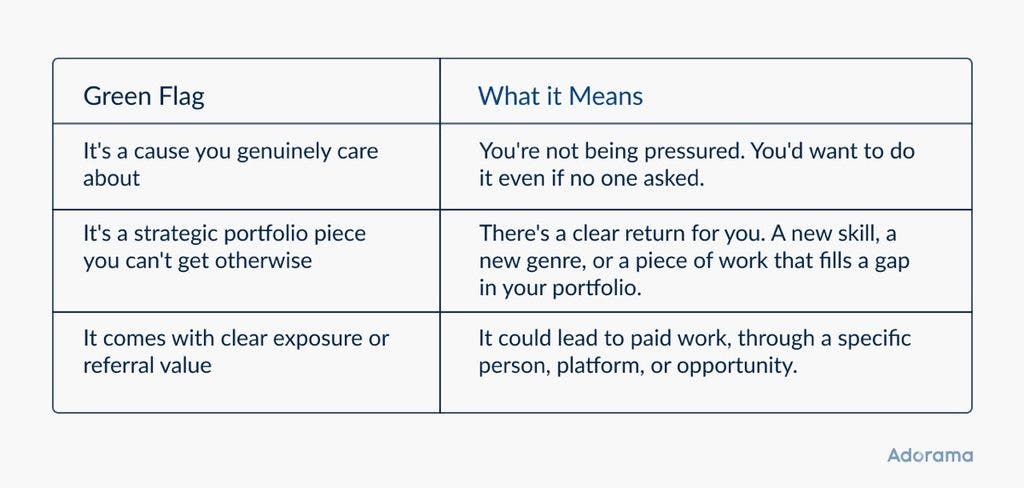
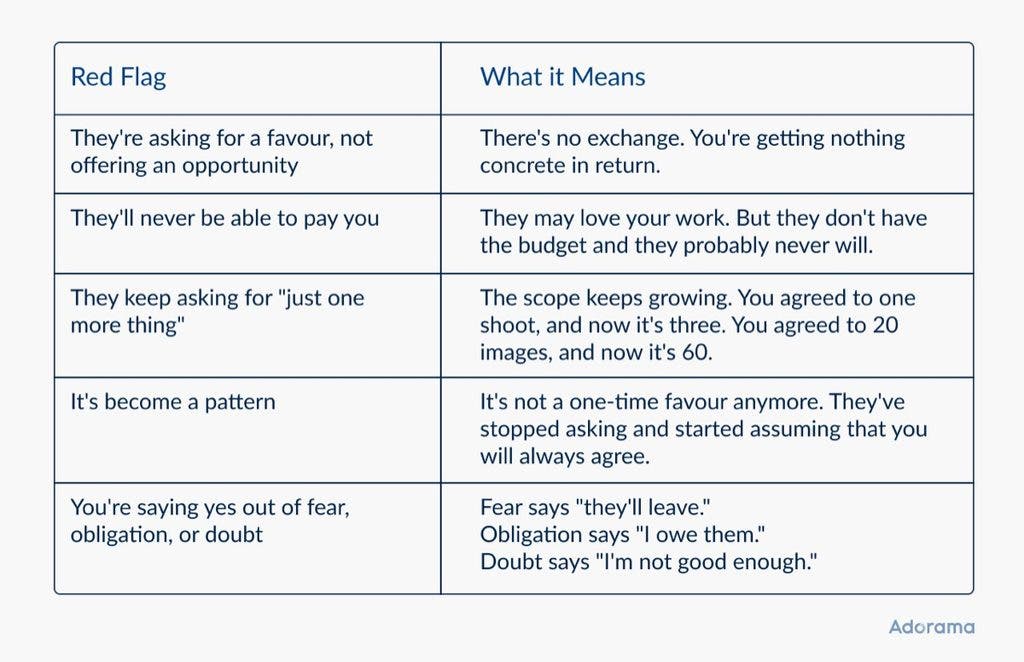
So how do you put this into practice?
How to Stop Working for Free (and Start Getting Paid)
Part 1: Breaking Away from Free Work
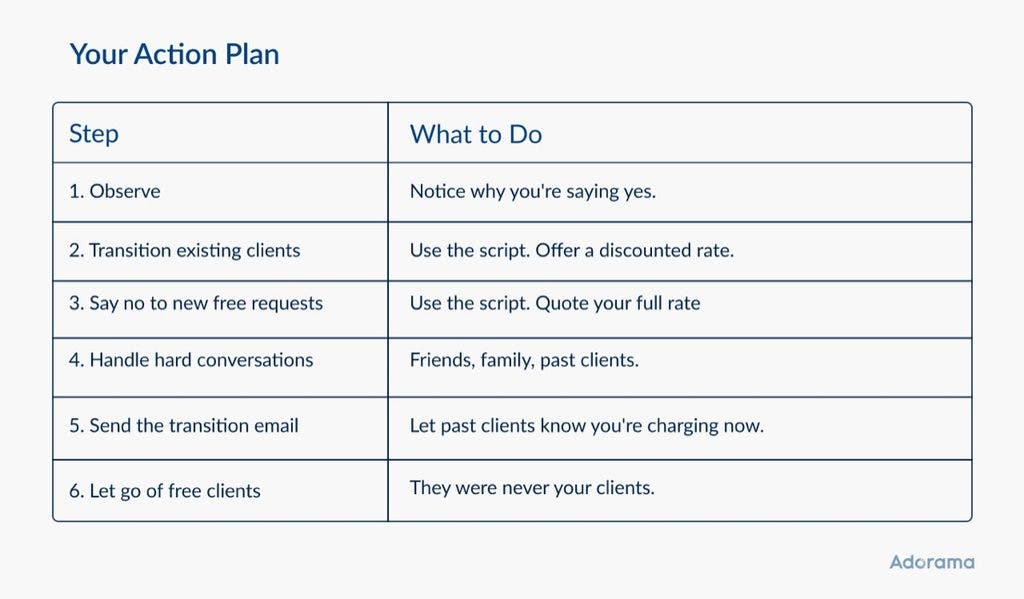
Step 1: Observe.
Every time you get approached, ask yourself if it’s a genuine opportunity. Or is it fear, a feeling of obligation, or doubt?
Step 2: Transition them to paid work.
Then, if it’s an existing client asking for another free project, use this script:
“I’m no longer taking on unpaid work, but I’d love to offer you a discounted rate for this project.”
Step 3: Say No to New Free Requests
If it’s a new inquiry asking for free work, say:
“I’d love to help, but I’m not able to take on unpaid work right now. Happy to share my rates if you’re interested.”
Then offer them a fair, undiscounted rate. If they come back with “it’ll be great exposure,” use this:
“I appreciate the offer of exposure and credit, but I’m not taking on unpaid work. I charge for my time and skill, just like any other professional.
If you have a budget for this project, I’d be happy to send you my rates. If not, I wish you the best with it.”
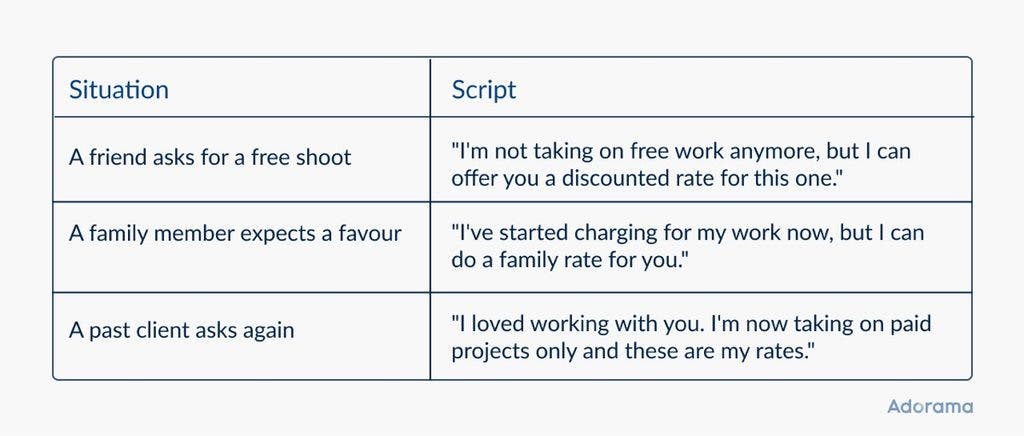
Step 4: Handle the Hardest Conversations
Now, how to handle harder conversations with people you know.
Step 5: Send the Transition Email
This is a simple email to send to your past clients to let them know you’re now charging for your work:
Subject: A quick update from [Your Name]
‘Hi [Name],
I’ve enjoyed working with you, and I wanted to let you know that I’m now taking on only paid projects. These are my rates. If you’d like to work together again, I’d love to hear from you.
Thanks for your support.
[Your Name]’
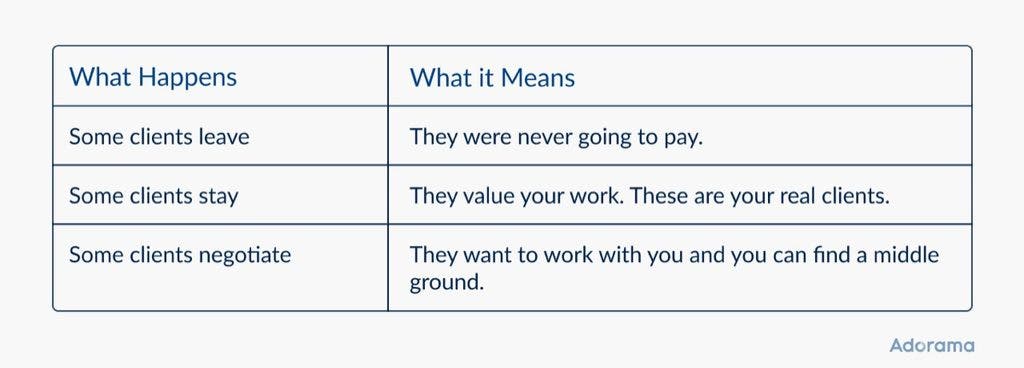
Step 6: Let Go of the Ones Who Only Want Free Work
Some clients will leave because they were never really your clients; they just wanted a free service. The right clients will stay and pay.
Your Next Step
Your journey from free work to paid work won’t happen overnight. And it certainly won’t happen when you’ve finally built that elusive “perfect portfolio.” It starts with identifying the obstacle and following it up with action. You have the right to charge for your work, and you have the right to say no to unpaid work. The moment you start valuing your work, others will too. Now take the first step. Identify where you’re stuck, use one script from this article, and keep going.
Want To Go Deeper?
This is the third article in a series about getting paid for your photography.
If you missed the first two, they are:
- Three Places to Find Your First Paying Clients[Link]: Where to look, who to talk to, and what to say when you reach out.
- Your First Client Contract: A Simple One-Pager You Can Put Together in One Hour [Link]: How to protect yourself and your client.
Read them in order, or start wherever you’re stuck. They’re designed to work together.