You’ve landed your first paying client. It’s time to do a little victory dance. But don’t just wait for the day of the shoot. Take an hour out now to draw up a simple one-page contract. And before you talk yourself out of it, let’s address the elephant in the room. Because I know what you’re thinking:
“It’s just a small job…”
“I don’t want to scare the client away…”
“I don’t want to pay a lawyer…”
All perfectly normal, as you’re already stepping out of your comfort zone by asking to be paid. But the truth is a contract protects both you and your client. Without one, you’re relying only on emails and verbal agreements. And that’s where things can get messy.
The good news is you can put together a simple one-page contract in under an hour, using the template at the end of this article. I’ll show you how, but first let’s start with why.
Why You Need a Contract (Even for One Job)
Don’t think of a contract as a signal of mistrust. Instead, approach it with a mindset of creating clarity. Especially for a Solo Freelancer, a simple contract means faster approvals and fewer misunderstandings.
It protects your time, your income, and your rights to the images you create. It also protects your first paying client by making sure they know what they’re getting, when they’re getting it, and what they’re paying for.
Even a simple one-page contract can prevent payment disputes, scope creep (you quoted for a one-hour session, but the client keeps adding “just one more thing,” and suddenly you’re three hours in, with no extra pay), last-minute cancellations, and unpaid work. It also signals to your client that you’re a professional, so they’ll treat you like one.
Now let’s move on to understanding what to include, and I promise you, it’s all jargon-free.
What Every Contract Needs
Five jargon-free essentials that you must include in your one-page contract.
1. Scope of Work
What are you shooting? Where? When? And for how long?
Use this formula: [Session type] at[location] on[date], for[duration]. The session includes[specific details].
Example: “Two-hour portrait session at Central Park on 13.10.26. The session includes one outfit change and one location.”

2. Deliverables
How many images are you shooting? What format? When will they receive them?
Use this formula: [Number] [type] images delivered via[delivery method] within[timeframe].
Example: “20 edited digital images delivered via a private online gallery within 14 days.”
3. Payment Terms
What’s the total fee? What’s the deposit? When is the balance due?
Use this formula: Total fee: [amount]. A [percentage]% deposit is required to secure the date. The remaining balance is due [when]. Accepted payment methods: [list]. Invoices unpaid after [number] days may incur a [percentage]% monthly late fee.
Example: “Total fee: $300. A 30% deposit is required to secure the date. The remaining balance is due on the day of the shoot. Accepted payment methods: bank transfer, PayPal. Invoices unpaid after 14 days may incur a 2% monthly late fee.”
4. Cancellation Policy
What happens if they cancel or reschedule? What happens if you cancel or reschedule? Be clear about deadlines and whether the deposit is refundable.
Use this formula: Deposits are non-refundable if cancellation occurs within [number] days of the shoot. If [Photographer/Client] cancels, [what happens].
Example: “Deposits are non-refundable if cancellation occurs within 7 days of the shoot. If the Photographer cancels, the deposit will be refunded in full or the session rescheduled at no extra cost.”
5. Usage Rights
Who owns the copyright to the images? How can the client use them? Consider adding a Model Release clause into the Usage Rights if you want to use the images from the session to add into your portfolio.
Use this formula: Photographer retains copyright to all images. Client receives a non-exclusive license for [usage type].
Model Release: Client grants Photographer permission to use images from this session for [portfolio/marketing] purposes.
Example: “Photographer retains copyright to all images. Client receives a non-exclusive license for personal use.” Model release: “Client grants Photographer permission to use images from this session for portfolio and marketing purposes.”
Note: For commercial clients, you may want to specify different terms. But for your first few clients, this simple line is good enough.
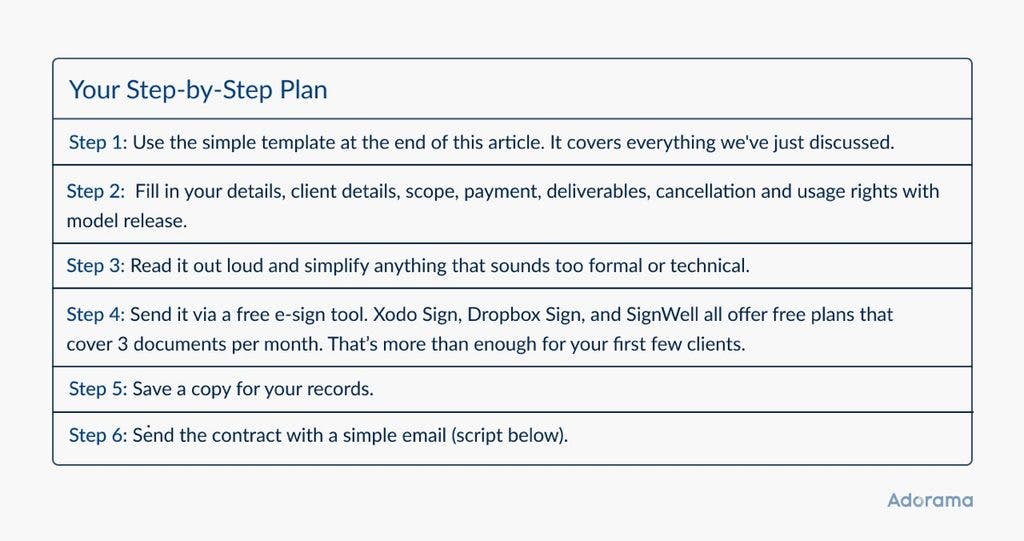
How to Put It Together in an Hour
Now, here’s a simple step-by-step process to walk you through how to get it done quickly and easily, without procrastinating.
The Email to Send It With
Ideally, mention the contract as soon as the client says yes. That way it feels like part of the process and not an afterthought.
But if you forgot, or it felt awkward in the moment, send this simple, low-pressure email before any work begins.
Subject: Your Photography Session Booking with [Your Name] – Contract Attached
Hi [Client Name],
I’m looking forward to working with you on [shoot type/date].
Just to ensure we’re on the same page about everything, I’ve attached a simple one-page contract for you to review and sign. It outlines what you’ll receive, the payment schedule, and how you can use your images.
If you have any questions, just let me know.
Thank you.
[Your Name]
Note: Some clients may not expect a contract and may push back. If that happens, this is how to respond.
“I know the word ‘contract’ can feel heavy, but this one isn’t. It’s a one-page contract, and it protects both of us. You’ll know exactly what you’re getting and when. I’m happy to walk you through it or answer any questions.”
If they still refuse, that’s a red flag. A client who won’t sign a simple agreement may be someone who doesn’t respect your time or your work.
Store It
Once the contract is signed, save a digital copy (and a backup) in a folder on your cloud drive. Label it with the client’s name and the shoot date.
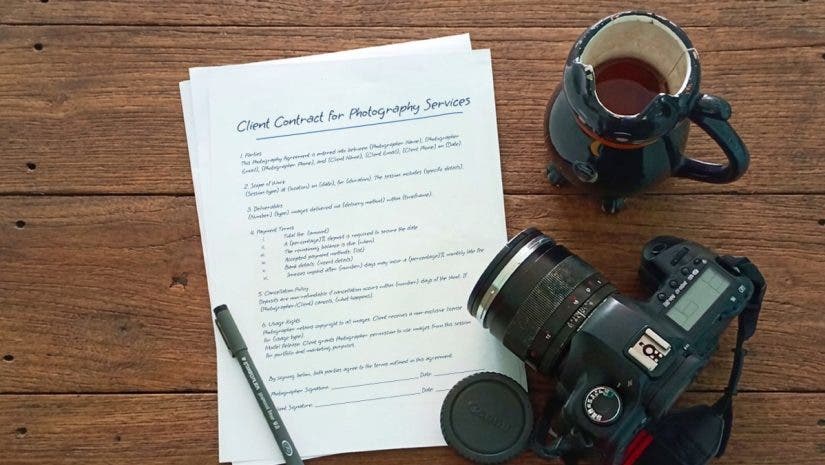
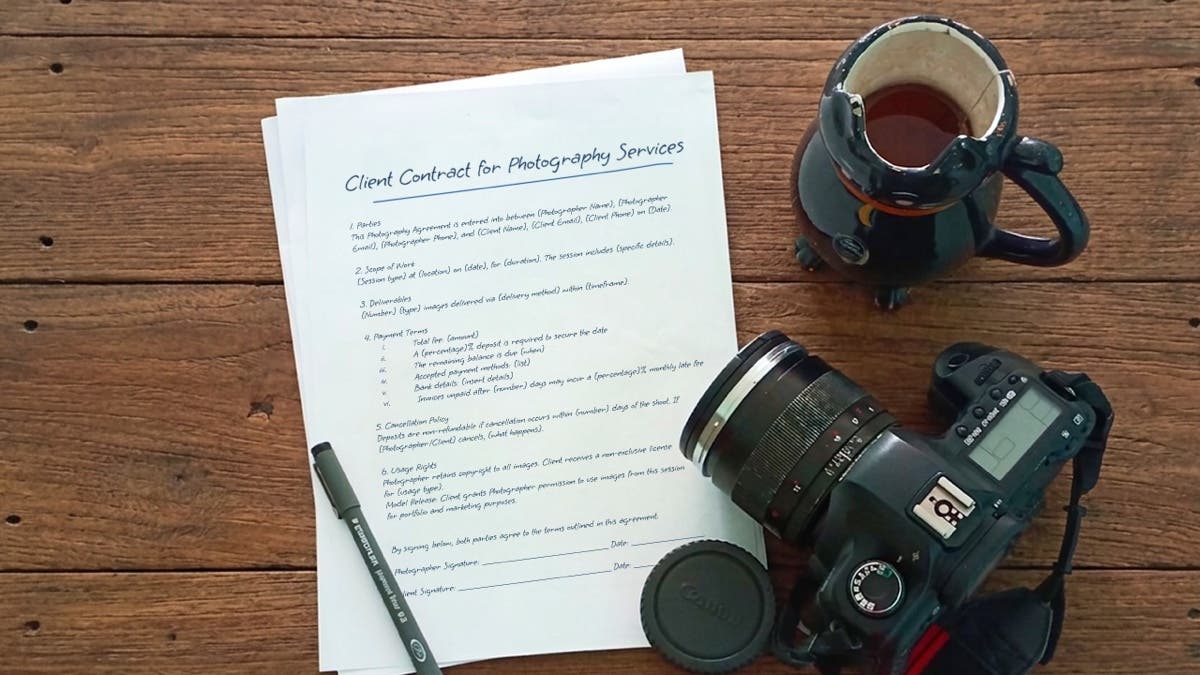
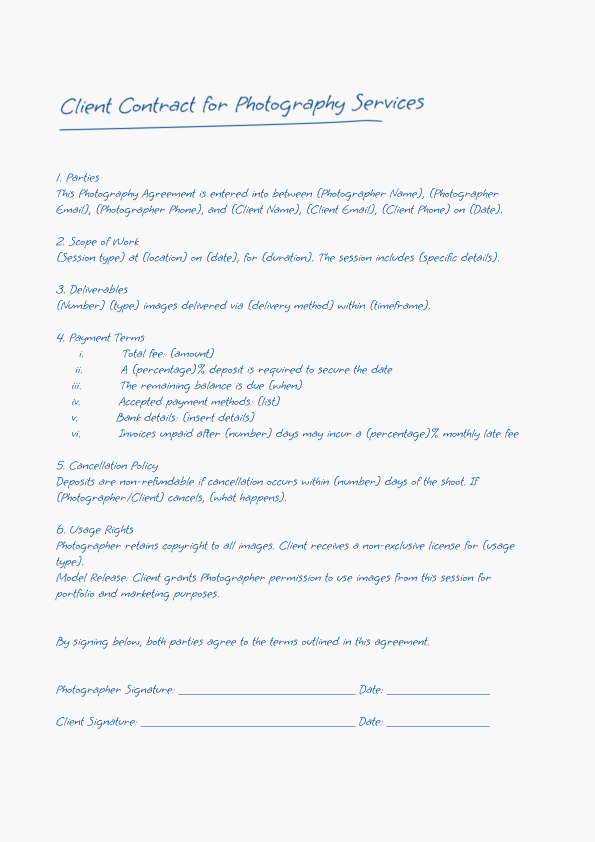
A Simple One-Page Contract Template
This template covers everything we’ve just talked about. Use it as it is, or tweak it to match your tone of voice.
1. Parties
This Photography Agreement is entered into between [Photographer Name], [Photographer Email], [Photographer Phone], and [Client Name], [Client Email], [Client Phone] on [Date].
2. Scope of Work
[Session type] at [location] on [date], for [duration]. The session includes [specific details].
3. Deliverables
[Number] [type] images delivered via [delivery method] within [timeframe].
4. Payment Terms
Total fee: [amount]. A [percentage]% deposit is required to secure the date. The remaining balance is due [when]. Accepted payment methods: [list]. Invoices unpaid after [number] days may incur a [percentage]% monthly late fee.
Bank Details: [insert details]
5. Cancellation Policy
Deposits are non-refundable if cancellation occurs within [number] days of the shoot. If [Photographer/Client] cancels, [what happens].
6. Usage Rights
Photographer retains copyright to all images. Client receives a non-exclusive license for [usage type].
Model Release: Client grants Photographer permission to use images from this session for portfolio and marketing purposes.
By signing below, both parties agree to the terms outlined in this agreement.
Photographer Signature: ___________________________ Date: ___________
Client Signature: ___________________________ Date: ___________
Want to use this template? Download the Word version. It’s yours to edit; just fill in your details, adjust the terms, and make it sound like you.
Note:
This simple one-page contract template is a starting point, not legal advice. If you plan to take photography seriously long-term, it’s worth the investment to have a lawyer review your contract. But for your first few clients, this simple one-pager is enough to set a professional tone and protect both parties. Once it’s signed by both parties, you’re ready to shoot. Do this a few times, and it becomes second nature.
Because a contract doesn’t make you difficult; it makes you professional.
Want To Go Deeper?
If finding clients is still the hard part, I’ve written an article that covers the foundations: Three Places to Find Your First Paying Clients.
It’ll help you uncover the best places to look and what to say when you find them.