Modern cameras are full of electronics, but they’re still pretty dumb when it comes to figuring out your plans for a photograph. Exposure metering modes—evaluative (matrix), spot, and center-weighted—give the camera instructions on how to measure light. That helps you balance shutter speed, aperture, and ISO to get the exposure you want. Every brand handles metering a little differently, but most have some version of those three exposure metering modes. Learning how camera metering modes work helps you get better exposure, even with tricky lighting.
What are Camera Metering Modes?
Camera metering modes are digital settings that tell your camera what parts of the frame are most important when calculating proper exposure. Basically, it’s instructions for what to do with the information from the built-in light meter in your camera. Metering modes let you choose where to place extra emphasis on the lighting in your frame to help offset challenging lighting conditions.
However, bear in mind that the built-in light meter measures reflected light from objects in front of the camera rather than incident light (light striking the subject). To measure incident light, you’d need to use a hand-held external light meter.
18% Gray
In general, cameras try to expose the main subject of a photo to 18% gray, sometimes called medium gray. That’s why if you take a photo of snow, it often comes out dull. Or, if you take a picture of a black chalkboard, it is often severely overexposed. The camera is trying to make both subjects match an 18% gray lighting value. Camera metering modes help you overcome that by telling the camera how to adjust its light measurements.
Are Metering Modes the Same as Exposure?
No, metering modes are not the same as exposure. Metering modes are basically formulas. They help your camera calculate your projected exposure based on your ISO, shutter speed, and aperture settings (the exposure triangle) in different lighting situations. The idea is to help you avoid blown-out highlights and shadows that are too dark to recover.
However, exposure compensation settings, ISO, shutter speed, and aperture (f-stop) settings are what actually change the exposure. In automatic and assisted exposure modes, such as aperture priority or shutter priority, it lets the camera set the automatic portion of your exposure triangle settings, based on available light.
Evaluative Weighted Metering Mode
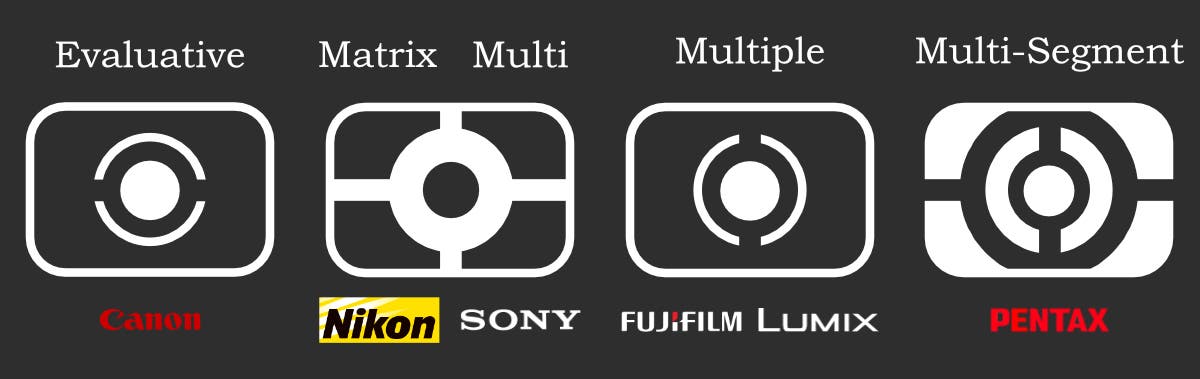
Evaluative metering looks at the whole scene and averages the light for everything in your viewfinder. It’s the default setting for most camera brands, and also the one with the most names. For example, Canon calls it evaluative, but it’s also called matrix metering (Nikon), multiple metering (Fujifilm and Lumix), multi-segment (Pentax), and multi-metering or multi-pattern (Sony).
Evaluative Metering Pros and Cons
Evaluative metering’s overall average works well most of the time. Plus, if you are shooting on fully automatic settings, it’s often the only choice your camera allows. However, it can result in a muddy, dull look or blown-out highlight areas. It’s all about the overall average, and not what you might intend as the focal point. It’s less precise but easier to work with for beginners. For landscapes, street photography, and general outdoor shots, it’s a popular metering style.
Spot Metering Mode
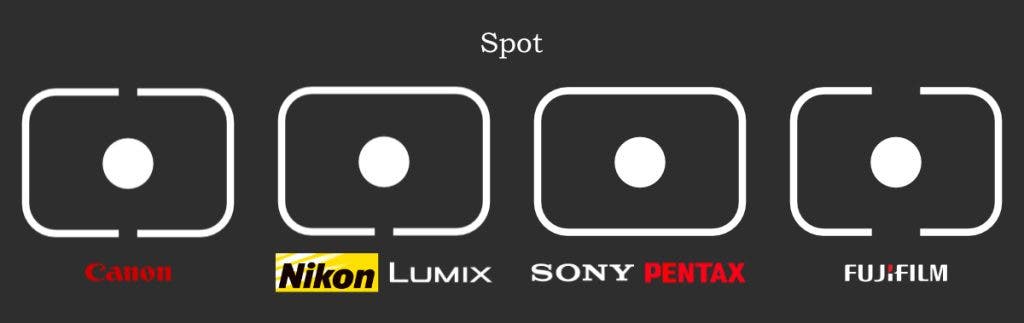
Spot metering looks at a tiny section of your framed scene. Often as small as a handful of the focus points you see in your viewfinder. You can pick and choose which part of your scene spot metering measures. However, which points are available and how you choose the metering spot vary by brand. Think of it as having laser-pointer accuracy, but your camera may have limits on its positioning capabilities.
Spot Metering Pros and Cons
Spot metering gives you very accurate exposure estimates for a specific point. That makes it a great choice in some situations, but not so great in others. For example, metering off a single point to avoid blown-out highlights can also leave the rest of the frame significantly underexposed.
Fast-moving subjects can be problematic as well, as choosing your spot takes time you might not have. Some camera brands, such as Fujifilm, allow linking spot exposure to your chosen AF point in single point focus mode to overcome that issue.
Center-Weighted Metering Mode
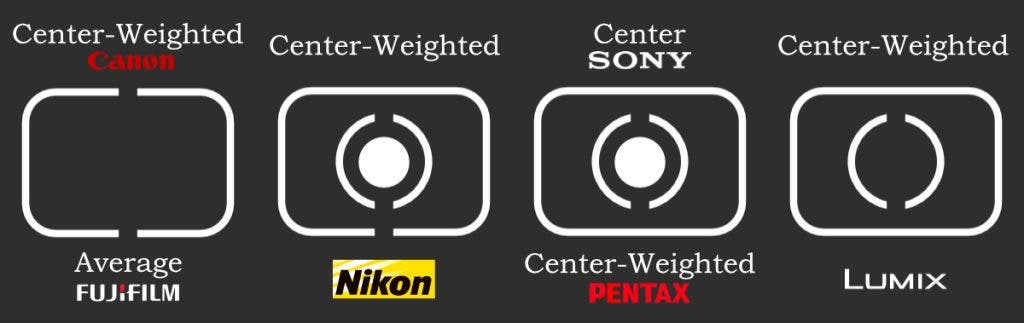
Center-weighted metering places most of the emphasis on the lighting in the middle of your viewfinder. Called average metering by a few brands, it’s more forgiving than spot metering. Center-weighted metering, like evaluative metering, looks at the whole scene, but gives priority to the center of the viewfinder.
Center-Weighted Metering Pros and Cons
Center-weighted metering helps prevent under- or overexposure due to small areas on the far edges of your scene. While it isn’t as useful for dealing with brightly backlit subjects as spot metering, it’s a great choice for most photographers as an everyday generalist metering option.
Center-weighted metering also works well for concerts, street scenes, and environmental portraits. For wildlife photographers who use an AF point close to the center of the frame, center-weighted metering can be a good option as well.
Other Metering Modes
Several brands have additional metering mode options depending on the camera body model. Two of the biggest are highlight-weighted metering and partial metering.
Highlight-Weighted Metering
Nikon, Pentax, and Sony’s highlight-weighted metering modes give strong priority to avoiding blown-out highlights. It uses the entire frame, but will happily drastically underexpose an image to protect highlights. Shadows are usually easier to recover, so this mode is a great safety net in high-contrast, harsh-light situations like outdoor weddings. After all, nothing makes a bride crankier faster than a blown-out wedding dress in the photos.
Partial Metering
Canon’s partial metering mode is a bit of a compromise between spot and evaluative. It uses the idea of spot, but with a larger area used in light calculations. That makes it a great choice when you need to select a specific area of metering but require more range than spot metering provides.
Finding the Best Camera Metering Mode for You
Finding the best metering mode for you isn’t about picking one mode and never changing. The best metering mode is the one that fits your subject, the lighting conditions, your editing capabilities, and helps you overcome obstacles like rapid shooting conditions.
Start by deciding what is most important to you. For example, do you need to preserve highlights, or is the lighting for a specific focal point more important than anything else in the frame? Don’t be afraid to play around and test out different metering modes to find the one that works best for your style, subject, and gear. The more you practice with metering modes, the easier it will be to understand meter readings as you strive for a correct exposure.
Here’s an oldie but goodie – Mark Wallace talks metering modes way back in 2010! We’ve been at this for a long time.