You’ve been charging for a while, and your clients are happy. The work is steady, but even though you’re busy, you’re not profitable. You’ve known for a while that the only way forward is raising your photography rates. So why haven’t you done it? There are two obstacles in your way. One is fear, and the other is doubt. And both are being fed by an industry that profits from keeping you unsure of what you’re worth.
What’s Really Stopping You
Fear: “They’ll leave.”
A client asks for your rate. Once you send it, they reply: “We found someone cheaper.”
Most photographers hear that and immediately start thinking about how to lower their price. But there’s a better move. When a client mentions a cheaper option, they’re not always negotiating. They could be benchmarking, trying to understand why you cost more and what you offer that the cheaper option doesn’t. So instead of defending or discounting, get curious:
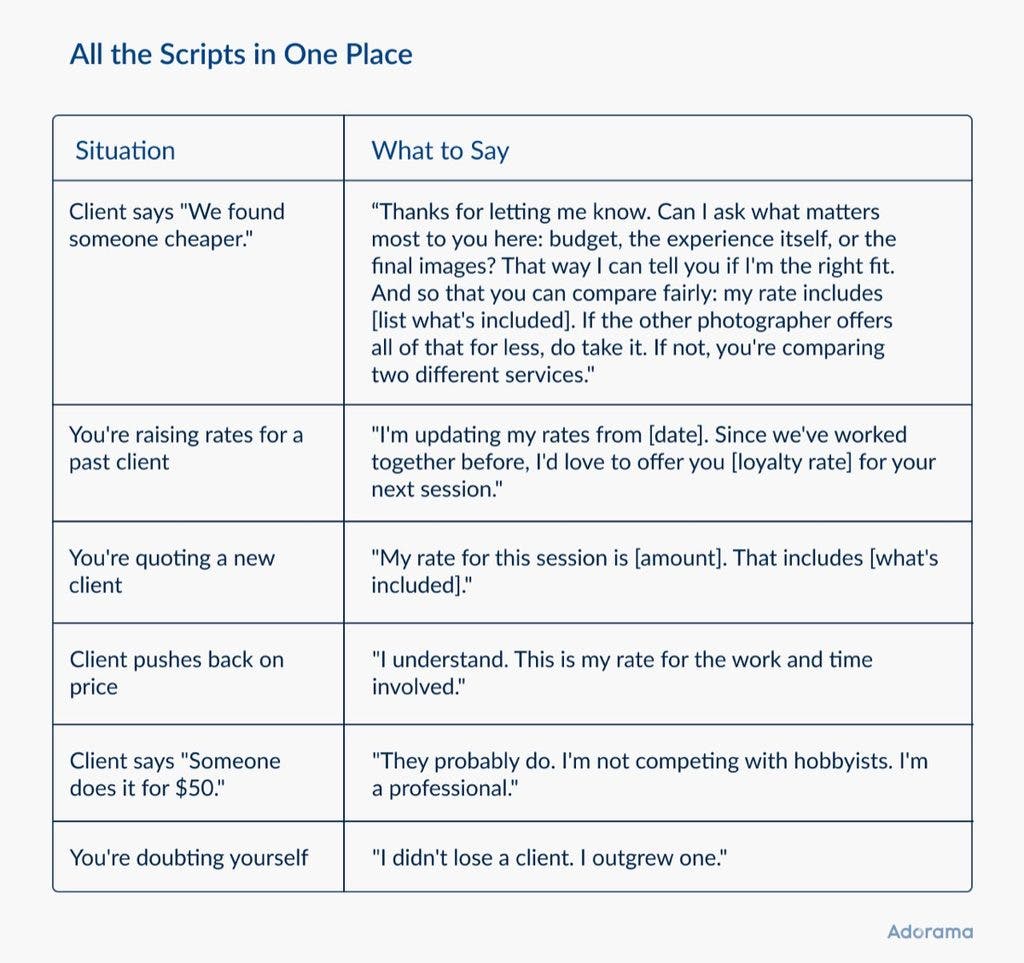
“Thanks for letting me know. Can I ask what matters most to you here: budget, the experience itself, or the final images? That way I can tell you if I’m the right fit or adjust the scope. And so that you can compare fairly: my rate includes [time on the day, edited images, turnaround, licensing, whatever applies]. If the other photographer offers all of that for less, do take it. If not, you’re comparing two different services.”
This shows the client what they’re paying for and invites a fair comparison.
But what if they’re actually good?
Sometimes the cheaper photographer isn’t worse; they’re just cheaper. They may be from a different market or willing to work longer hours for less. And if that’s the case, clarifying your value won’t change their mind.
But sometimes they’re not as good as you.
Cheaper photos might look fine on a phone but fall apart when printed. Low-light shots come out grainy, and candid moments are unusable. None of this is visible until the results arrive, but by then it’s too late. The honest truth is you can’t win every client. If price is their bottom line, they’re not your client.
Sometimes, they come back.
A photographer on Reddit shared a story about a client who canceled a $3,200 wedding booking for someone charging $50. A week after the wedding, she messaged the original photographer, blaming them for not warning her and demanding a free newlywed session to “make up for” the mistake. The cheap photos were unusable.
And sometimes the problem is the gear.
A friend of a friend also hired the cheaper photographer for his wedding. The photos came back unusable because the equipment couldn’t handle the low light, the lenses weren’t right for the venue, and there was no flash gun when it was needed. But even when you know your price is fair, and you’ve handled the conversation perfectly, the doubt stays.
Doubt: “Am I worth that?”
A client mentions they found someone cheaper. Or you see another photographer’s work online, charging half what you do. And you think:
“Am I the only one who thinks my work is worth this?”
You can tell yourself the cheaper photographer uses entry-level gear and doesn’t edit properly. It won’t help because doubt doesn’t listen to logic. The real fear isn’t them; it’s that you’re the only one believing your work is worth more. Remember, undercutting is an industry-wide tactic. Photographers at every level face it; someone cheaper is always out there. The photographer charging $100 worries about the one charging $50. The one charging $2,000 worries about the one charging $1,000.
What helps isn’t silencing the doubt, but taking action despite it.
- Check it against evidence. Do clients come back? Do they refer you? Do they tell you the photos you took mattered to them?
- Talk to a peer. Almost every photographer will say they felt this too before raising their rates.
- Raise the rates anyway. Nobody feels ready the first time.
The doubts won’t disappear, but working on them will make them stop running the show.
How to Know It’s Time to Raise Your Photography Rates
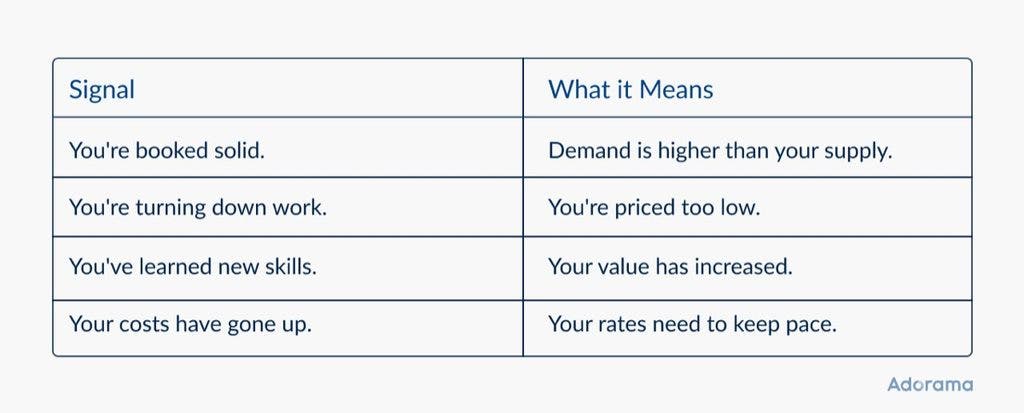
If any of these sound familiar, the time is now. You don’t need to tick all four boxes; one is enough.
The Math Behind Your New Increased Rate
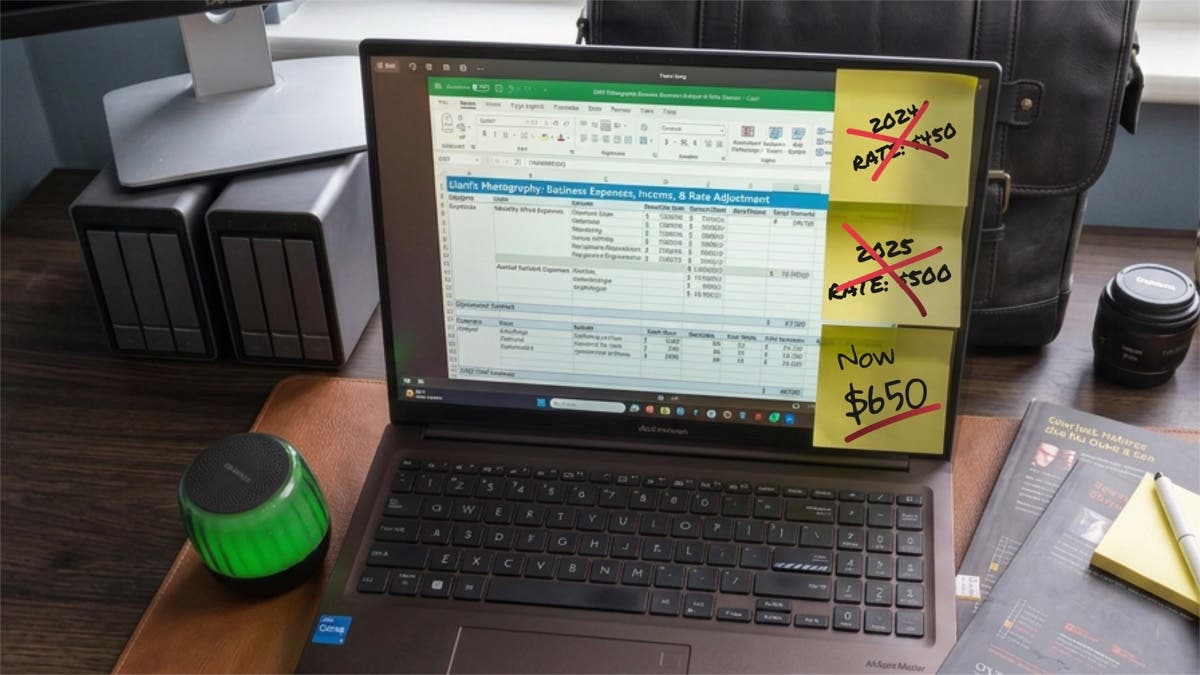
The data is clear that costs are up, but rates aren’t keeping pace because raising them feels risky. The goal isn’t just a bigger number, but a number you can justify when a client pushes back.
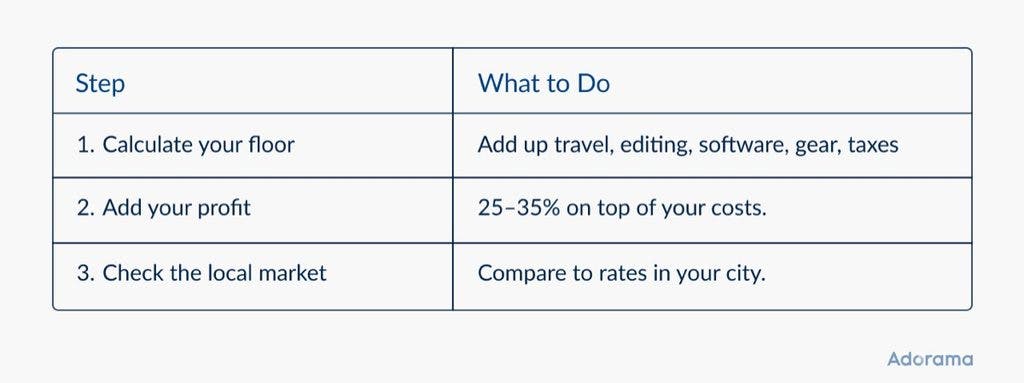
Step 1: Calculate your floor.
What does it cost you to deliver a session? Include travel, editing time, software, gear depreciation, and taxes. That number is your floor, and anything below it is a loss.
Step 2: Add your profit.
For solo photographers in the US, a healthy net profit margin typically falls between 25–35%. Some sources report ranges as wide as 20–50%, depending on niche and operating model. A common rule of thumb is to add 25–30% on top of your true costs to arrive at a minimum viable rate.
Step 3: Check the local market.
Rates vary significantly by region. A headshot session in New York might cost $450–$900. In a mid-market city, $225–$525. In smaller metros, $150–$400. Your rate needs to work for your costs and fit within your local market’s range.
How to Go About Raising Your Photography Rates
Anyone who has a reason to expect your old rate needs to hear about the change. That’s mostly existing clients, but it’s also anyone you quoted recently, or anyone you’re reaching out to after a gap. Give them notice, then offer a loyalty rate as a transition.
“I’m updating my rates from [date]. Since we’ve worked together before, I’d love to offer you [loyalty rate] for your next session.”
This softens the change and rewards their loyalty. The right clients will appreciate the heads-up. The ones who leave will make room for clients who value your work. And don’t forget to update your rates anywhere they’re published, i.e., your website, your socials, your rate card. Otherwise, you’ll be quoting one number while your site says another.
What to Do When You Lose a Client
It’s likely to happen, but instead of letting it get to you, reframe it. Losing a client at a higher rate isn’t a failure. It’s a filter. Keeping a client who was paying your old rate would have meant staying stuck with working hard and making little or no profit. The clients who stay and the new ones who come in at your new rate are the ones who value your work. And they’re the ones you want to build your business with.
The emotional aftermath
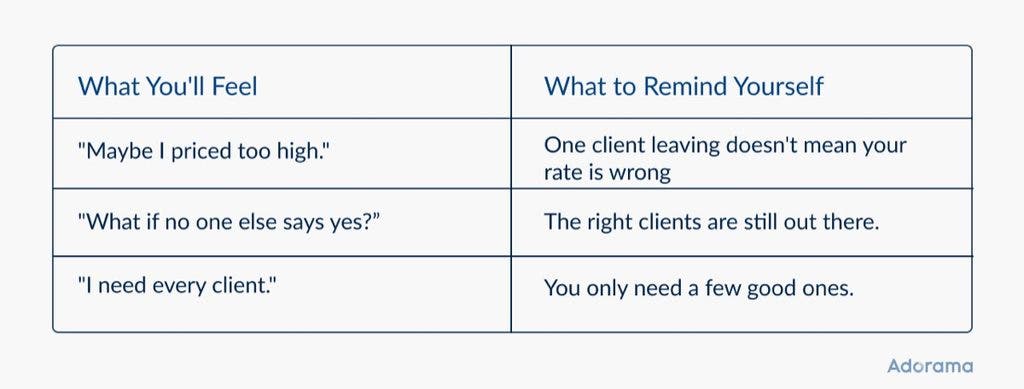
Of course, the doubt will show up: “Maybe I priced too high.” The fear will show up: “What if no one says yes?”
Say this to yourself and then move on:
“I didn’t lose a client. I outgrew one.”
Your Next Step
Raising your photography rates isn’t a one-time event. Review your rates every 6–12 months and raise them when the signals show up. Now take the first step. Pick one script, raise the rate with one client, and keep going.
Want To Go Deeper?
This is the fourth article in a series about getting paid for your photography. If you missed the first three:
1. Three Places to Find Your First Paying Clients: Where to look, who to talk to, and what to say when you reach out.
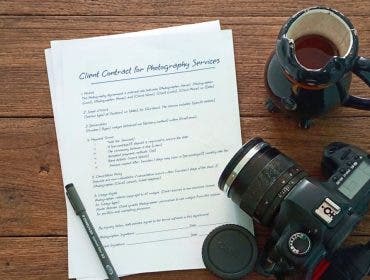
2. Your First Client Contract: How to protect yourself and your client.
3. Breaking Away from Working for Free: How to stop saying yes to unpaid work.
Read them in order, or start wherever you’re stuck. They’re designed to work together.
All Images by: Shailee Jain Noronha