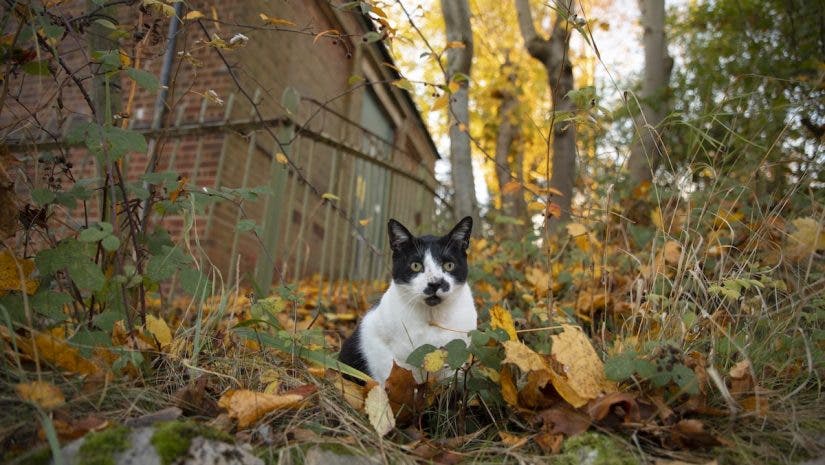
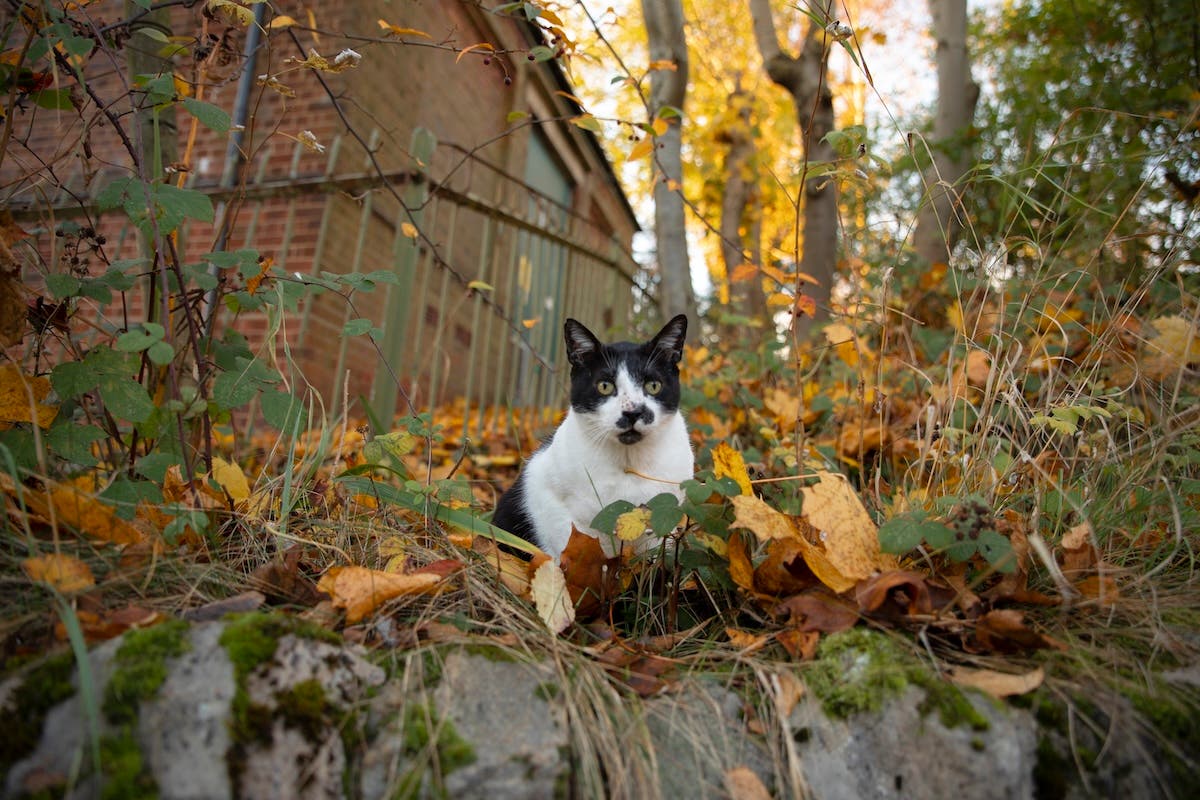
Being from the UK, we get our fair share of cloudy days. You know the ones. Those days where you lose the will to live and everything feels a bit pointless.
No, me neither.
But autumn is genuinely the season I look forward to most. It’s mostly because of the weather everyone else complains about. The mist, the flat grey light, the rain that never quite commits to being proper rain. All of that is far more useful to you as a photographer than another cloudless afternoon.
Here’s how I shoot the best photos in autumn light.
Overcast autumn light is stranger than people think
Overcast days are weird, because the light you get is really soft, and it’s coming from directly above. There are still layers of light in the scene, there always are. However, it’s much less noticeable because the contrast between shadow and highlight is so low.
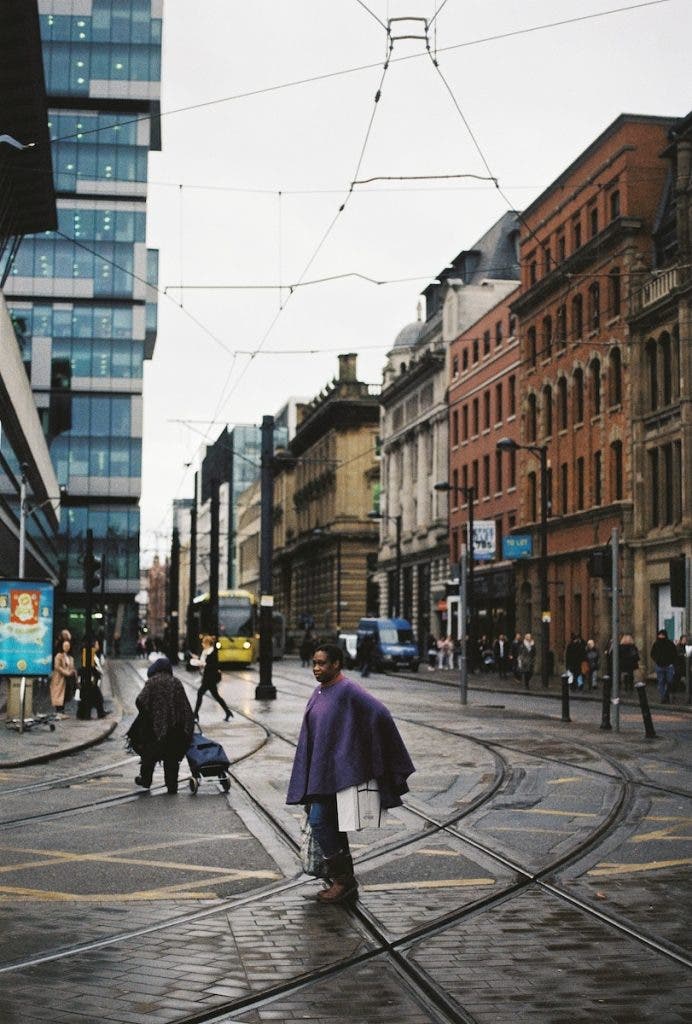
That’s the thing people get wrong. They see grey sky and assume there’s no light to work with. There’s plenty, it’s just doing something different.
First of all, it’s worth thinking about what kind of overcast you’ve got.
Is it cloudy but the sky is still really bright, that sort of glowing white ceiling? In that case, you want to make sure you’re exposing for the shadows, or at least for what’s actually going on in the frame rather than the sky. The sky doesn’t matter. Your subject and the rest of the frame do.
If you meter for that bright sky, you’ll end up with a beautifully detailed cloud and a subject that looks like a silhouette in a witness protection program.
Of course, with digital you don’t need to worry about it quite as much. If your photo is a bit underexposed, you can lift the shadows a long way, and they’ll still look fine. Modern sensors are ridiculously good.
For a film photographer, it’s the other way around. Expose for the shadows and let the rest fall where it wants to. Film will hold onto highlights far better than it holds onto anything you’ve lost in the dark.
Now, if it’s overcast and just grey and a bit dark feeling? That’s one of those rare moments in digital photography where you don’t need to underexpose at all. There’s no point. Everything is going to feel fairly monotonal whatever you do.
And that’s where you want to shift your attention to storytelling. Focus on your subject, your composition, interesting angles, getting closer than feels comfortable. That stuff will do the heavy lifting for you when the light and the depth aren’t doing it.
I’m not a big lover of shallow depth of field, but on a day like that you could drop down to something like f/4 just as a treat.
Mist and fog do half the work for you
Mist is the one I’ll get out of bed early for. And that’s saying something, because I don’t get out of bed early for much.
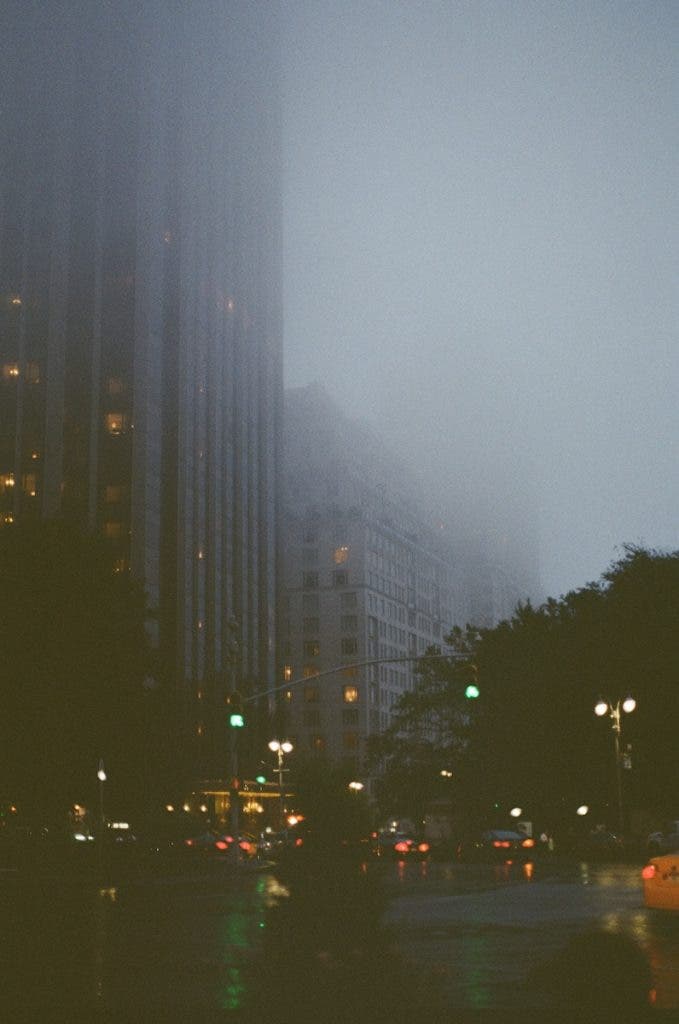
What fog does is separate everything for you. It takes a messy, cluttered scene, a row of trees, a car park, a street full of stuff you would normally have to work around, and fades the background out until you are left with clean layers. That’s compositional depth handed to you for free, and it’s the hardest thing to create on purpose.
A couple of things worth knowing.
Your camera’s meter will almost always underexpose in fog. It sees a frame full of bright grey and assumes it’s looking at something well lit. So, it pulls everything down and you end up with dingy, muddy pictures that don’t look anything like what you saw. Dial in some positive exposure compensation. Plus one is a decent starting point, plus one and two-thirds if it’s really thick.
Autofocus also struggles, because there’s nothing with any contrast for it to grab onto. If you’re shooting into a wall of white and the lens is hunting, find an edge, a branch, a lamp post, a person, and focus on that instead.
Long lenses are your friend here. Fog compresses beautifully, and something around 85mm or longer will stack those layers up on top of each other in a way a 35mm just won’t.
And go towards a light source if you can find one. Headlights, a window, a street lamp, low sun burning through. Fog turns any point of light into a visible beam, and it’s the closest thing to free drama you’ll ever get.
Autumn color and how to not ruin it
Everyone shoots autumn leaves. There’s a reason for that: they’re lovely.
The trap is that soft overcast light and orange leaves are such a pleasant combination that people stop making pictures and start just pointing at trees. A photo of a nice thing is not the same as a nice photo.
What helps is the same as always. Find a subject, put something in the frame that has some scale or some life to it, and treat the color as the backdrop rather than the point.
Overcast light is genuinely ideal for this, by the way. Direct sun on autumn leaves blows out the highlights and turns the color into a mess. Soft light lets the color sit there properly saturated. That is why every landscape photographer you’ve ever met gets quietly excited about a grey forecast.
Fall rain, which is the point of all this
Here’s my honest opinion. Rain is the best photographic weather there is, and almost nobody shoots in it because it’s uncomfortable.
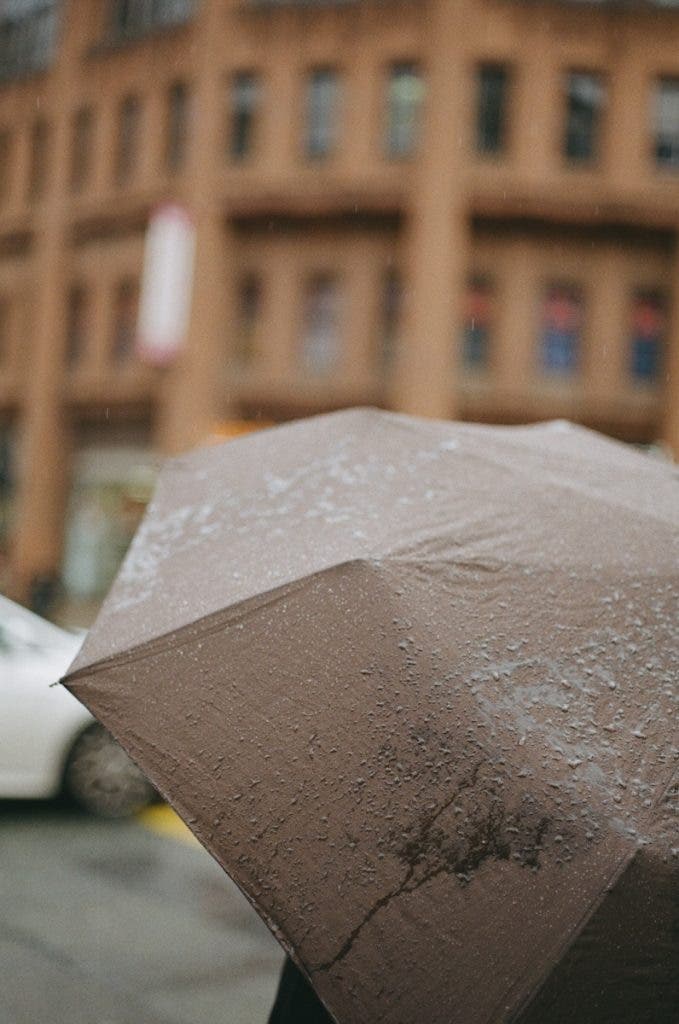
That’s the entire advantage. Everyone else has gone home.
Wet ground turns every light source into a reflection. Puddles give you a whole second version of the scene to work with. Umbrellas give you shape and color and a bit of humanity in the frame. People move differently in the rain; they hurry, they hunch, they cluster in doorways, and that gives you gesture, which is the thing most street photography is missing.
Practically, a plastic bag and an elastic band will keep most cameras alive. A lens hood keeps drops off the front element better than you’d expect. Take a cloth, because one drop on the glass will ruin frames without you noticing until later.
And shoot into the light if you can. Rain is close to invisible against a bright sky and very visible against something dark, so backlighting is what actually makes the drops show up.
The point of taking good photos in fall
None of this is a technique you need to master. It’s mostly a decision.
Autumn light is soft, low, changeable and about four hours long. That could sound like a limitation until you remember the alternative is harsh midday sun for months. The mist arrives, the rain arrives, the light goes flat, and every one of those is a different set of pictures rather than a reason to leave the camera at home.
So put a coat on, accept that you’re going to be slightly damp, and get out while it’s still doing this. It doesn’t last long, and then it’s just cold and dark for ages.
Take care, and go and take some photos.