In the last two hands-on reviews of GoPro MISSION 1 PRO, we looked at its 1-inch sensor and 8K capabilities, while also noting the natural limitations of a fixed action-camera lens: a fixed aperture, a fixed wide-angle perspective, and no ability to focus on close-up objects or create true optical background blur. Even with these limitations, I made the MISSION 1 PRO part of my filmmaking kit for its high-quality video and slow-motion capabilities, and I have since used it in documentary filmmaking.
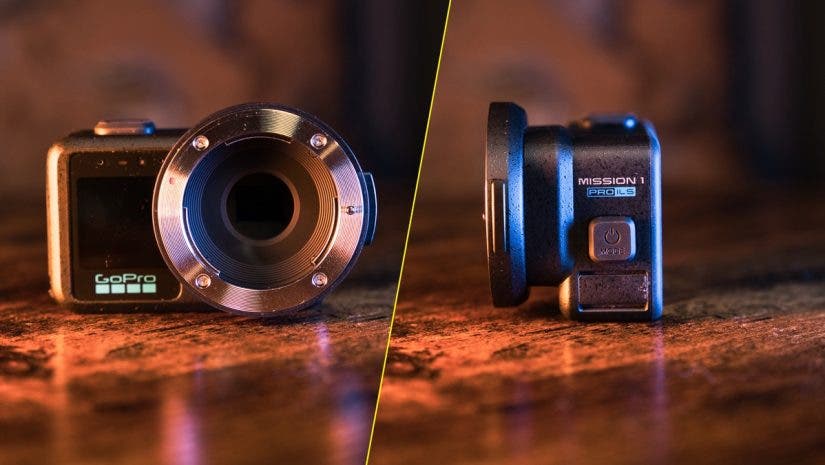
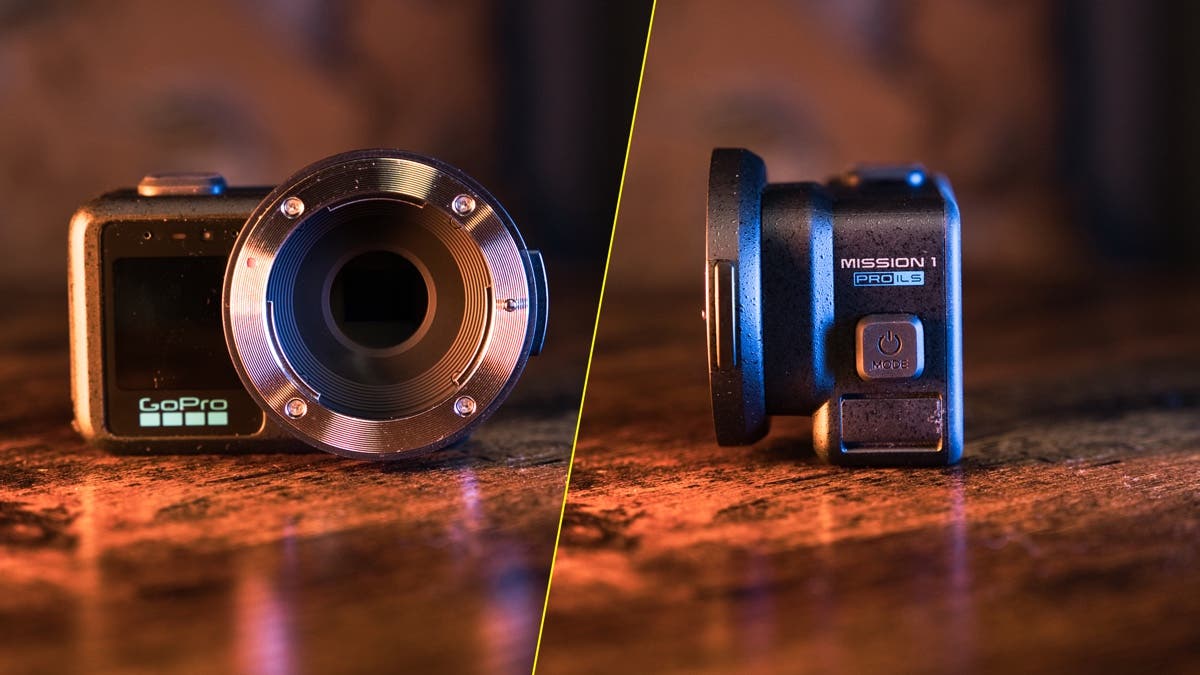
This article explores the GoPro MISSION 1 PRO ILS (Interchangeable Lens System), another camera in the MISSION 1 series. By removing the fixed wide lens and adding a Micro Four Thirds (MFT) mount, GoPro has turned this camera body into a lightweight cinema camera I have carried in my pocket for the past few weeks, and even used to make a short film.
Like any other camera system, the MISSION 1 PRO ILS has caveats, and this hands-on review covers both its features and limitations.
What is MISSION 1 PRO ILS meant for? This camera is a great fit for deliberate filmmaking where you are following a shot list in a controlled setup or a bit of improvisation. You can use it as your main camera body, mount it in tight corners, keep it with you on the go, and rig it up like any other mirrorless camera. It lacks autofocus, so unless you add accessories like a focus motor, do not use it for work that requires quick focusing.
Technical Specs: A Quick Spec Refresher
Because the internal engine of the MISSION 1 PRO ILS is identical to the standard MISSION 1 PRO, I will not repeat the deep-dive technical breakdown here (you can read my full first MISSION 1 PRO article for all the granular details). For those new to the series, here is a quick revision of what powers this camera:
- 1-Inch Sensor & GP3 Processor: Delivers high dynamic range and detailed image capture in an ultra-compact body.
- 8K Open Gate: Captures native 8K up to 50/60fps in 16:9, plus full-sensor 4:3 Open Gate at 8K30 or 4K120 so you can shoot once and crop into both 16:9 horizontal and 9:16 vertical formats without quality loss.
- 10-Bit GP-Log2 Video: Supports bitrates up to 240 Mbps (300 Mbps via GoPro Labs) for serious post-production color grading.
- Extreme Slow Motion: Shoots 4K at up to 200/240fps and 1080p at 400fps (up to 960fps in Burst Slo-Mo).
- 50MP RAW Photos: High-resolution stills with the latitude to push and pull shadows.
Understanding Crop Factor and Manual Glass
Compared to a standard 35mm full-frame sensor, this camera’s MFT setup has a 2.7x crop factor with HyperSmooth off and a 3x crop factor with it on.
I chose three 3 lenses for the classic focal ranges: wide, medium, and telephoto. I kept HyperSmooth on while shooting.
- Laowa 9mm (Wide): A 27mm equivalent – ideal for architecture, interiors, and establishing shots.
- TTArtisan 17mm (Medium): A 51mm equivalent – a natural, classic focal length for environmental portraits and storytelling.
- TTArtisan 50mm (Telephoto): A 150mm equivalent – giving me tight reach and subject compression.

Lens Compatibility
The ILS has no electronic connection with the lenses. If you are buying lenses for the MISSION 1 PRO ILS, your MFT lens must have both a manual aperture ring and a manual focus ring.
Note: GoPro does not make its own lenses, and it comes only as a camera body. The company has published a list of compatible fisheye lenses and standard lenses on their community forum. For standard lenses, you can choose from a wide range of focal lengths from 7Artisans, ArtraLab, AstrHori, TTArtisan, and more.
I also bought a variable ND filter sized for the Laowa 9mm, along with inexpensive step-up rings, so I can share that single ND filter across all three lenses.
Major Limitations Solved by the ILS
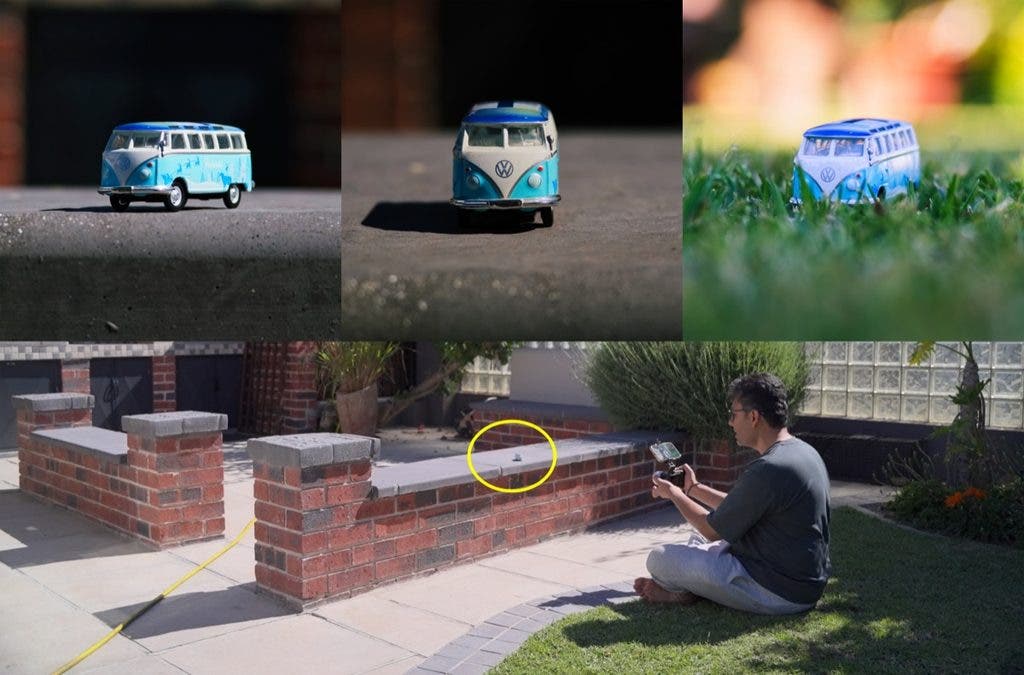
Putting real manual glass on the front of the MISSION 1 PRO ILS immediately eliminated the core constraints of traditional action cameras:
- Goodbye Action-Cam Distortion: On the standard MISSION 1 PRO, even if you switch to Linear or Narrow digital views, you are still working with a fixed wide-angle lens design. With the ILS, built-in camera distortion is gone. Any optical character comes purely from the lens you attach, and you can physically change your field of view.
- Physical Aperture Control: You are no longer locked into a fixed aperture.
- True Manual Focus: Standard action cameras rely on a fixed focus sweet spot, meaning close-up objects go soft and true depth of field is missing. With the ILS, you have full manual focus control, from inches away to infinity.
- Auto-Color Focus Peaking: Manual focus on a tiny screen is not easy, but GoPro has added a feature that auto-colors focus peaking. Crisp peaking lines highlight whatever edge is in focus, and while you can lock in a single peaking color, leaving it on auto dynamically shifts the peaking line color to contrast against whatever subject is in front of the lens. Furthermore, the Focus Assist feature lets you digitally zoom in on the screen and confirm focus.
Note: you can use the MISSION Monitor app as well to use your phone as a monitor. This will enable features like focus peaking, focus assist, and much more. You can also use GoPro’s Media Mod to run HDMI out to a proper monitor.
Are Manual Focus and Manual Aperture a Limitation?
MISSION 1 PRO ILS is for deliberate filmmaking. I will not use it for vlogging or run-and-gun filmmaking, where a filmmaker relies on auto-focus or a touchscreen. This limits the variety of use cases compared to mirrorless cameras with autofocus systems designed for activities like sports, animals, and moving people.
I suggest the following:
- Learn manual focus. Here is a nice resource : Shooting with Manual Cine Lenses: Trial by Fire & Clay
- Pair your MISSION 1 PRO ILS with GoPro Quik or MISSION Monitor apps on your phone for Focus Assist and Focus Peaking.
- Rig your camera with a focus motor for more advanced filmmaking scenarios.
Field Test: Shooting a Short Film at an Art Exhibition
I made a short video for a group of artists. Part of this shoot took place indoors at an art exhibition, where I primarily used the 9mm Laowa and the 17mm TTArtisan. As you will see, the video quality is extremely good, except in very low-light scenarios where the noise levels rise.

Rigging, the GoPro MISSION Monitor app, and Wireless Audio
You can rig the MISSION 1 PRO ILS as heavily or as lightly as you want. I shot some scenes with just the bare camera and lens on a tripod, which attracted photo nerds who smiled at the tiny setup on a rather large tripod. And for some shots, I mounted my phone on the GoPro Point-and-Shoot Grip and paired it with the GoPro MISSION Monitor app to control the camera and focus peaking.

For the interviews, I also used the GoPro Wireless Mic System with noise cancellation in a very busy auditorium.
Note: SmallRig offers many accessories you can use to build a complete rig from scratch for a smoother filmmaking experience.
Recommendations for GoPro
While I am thoroughly impressed with what this miniature cinema camera can do, real-world testing always reveals room for improvement. Here is what I would love to see GoPro refine next:
Wish List
- I understand the Quad Bayer sensor bins down to 12MP in Low Light mode, but I would still like better native low-light performance. Why pack the stock sensor with 50 megapixels to begin with? A native 12MP sensor with physically larger, uninterrupted pixels would still improve light-gathering efficiency and reduce noise better than digitally grouped pixels.
- A digital level and a live histogram on the camera’s screen are missing right out of the box, which are tools I rely on for photography. However, if you do not mind a little tinkering, you can enable both of these features by installing the GoPro Labs firmware.
- The ILS should be able to read the attached lens’s focal length. Every time you change lenses, you have to specify to the camera which lens is mounted. This is annoying when you are in the zone and just want to focus on filmmaking.
- Currently, there is no native option in the menu to input a focal range for zoom lenses. GoPro’s workaround is to treat your zoom like a “variable prime” by manually entering each focal length into the Lens Selector Tool and updating the setting every time you zoom. Keep in mind, this tedious process only works for rectilinear lenses; fisheye zooms cannot be stabilized for video at all.
Usability
- The USB-C plug on the GoPro Wireless Mic’s receiver is slightly too short when the camera is housed in a cage. Extending it would simplify audio rigging if you do not have the GoPro Media Mod.
- Two cold shoe mounts on the grip would allow solo shooters to mount a phone monitor and another accessory simultaneously.
- Making the grip metallic and magnetic would also allow one to snap accessories directly.
- When your phone battery dies, or you want to shoot stripped-down without a phone mount, a tilting or flip screen would facilitate low-angle manual focusing.
Final Remarks
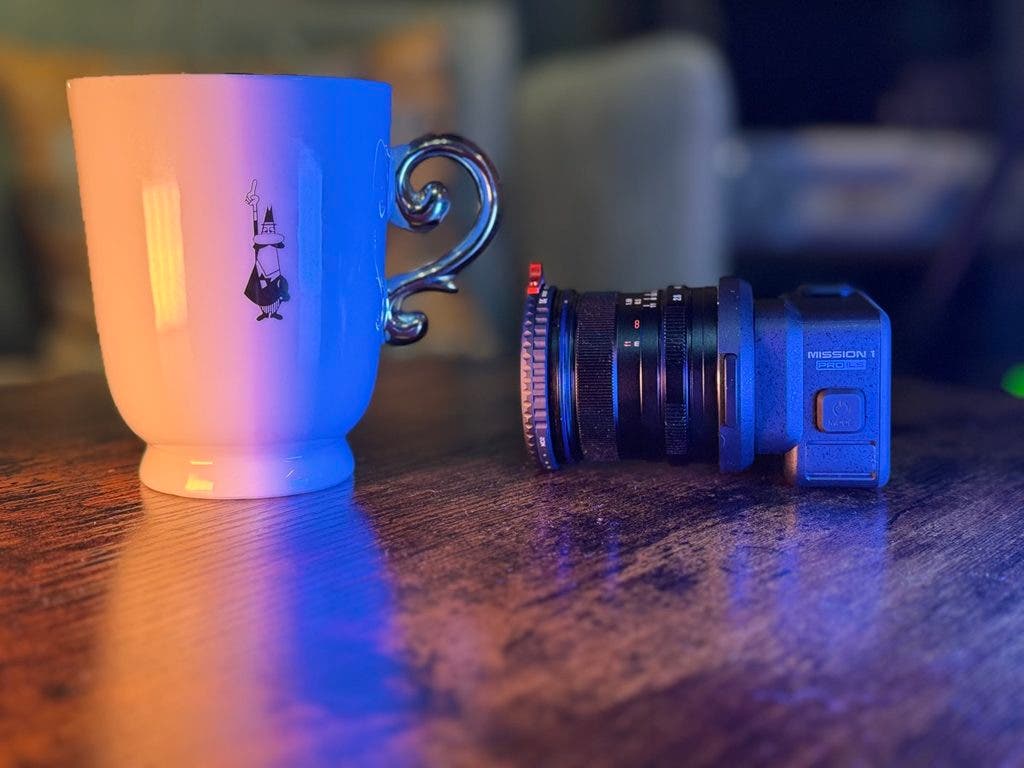
It is surprising how quickly camera technology evolves. We used to celebrate how much lighter mirrorless cameras were compared to DSLRs, and now my mirrorless rig feels heavy next to the MISSION 1 PRO ILS.
For a filmmaker who loves hiking into nature or traveling light, packing the MISSION 1 PRO ILS with tiny MFT lenses takes up no more room than a small lunchbox in a regular daypack. It demands patience and deliberate manual craft, but in return, it puts true optical cinema control in your palm.
Ready to build your own pocket cinema rig? You can find the GoPro MISSION 1 PRO ILS and the full GoPro ecosystem available right now at Adorama.