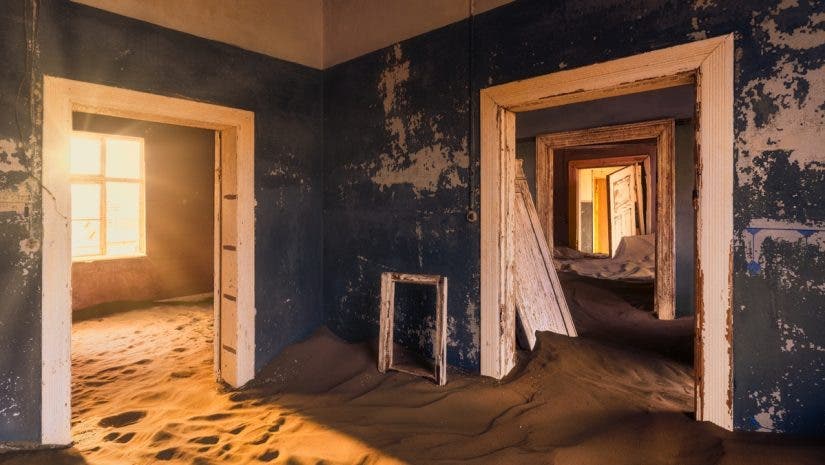
This story begins in 1908 with a single sparkle in the sand. It is said that a worker found a diamond while working near the railway tracks in Lüderitz, a small coastal town in Namibia. Once the German colonials realized that these diamonds were easily accessible, they established a quarry and a flourishing little town we know as Kolmanskop. For a few decades, it was a hub of incredible wealth, but once the diamonds were depleted, the residents left as quickly as they had arrived.
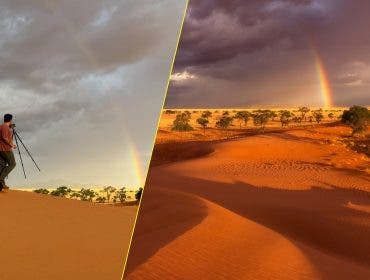
Today, the desert is slowly moving back in, taking back what belongs to it. This “ghost town” is now a tourist hotspot but also a creative puzzle for photographers. I drove 600 miles from Cape Town to visit Kolmanskop, becoming a time traveler, capturing windows and doorways within its decaying walls.
This article covers:
- Technical challenges of wide-angle use in capturing windows and doorways.
- Overcoming light issues in overcast conditions.
- Editing workflow with Adobe Lightroom and Luminar AI.
- The ethics of AI.
Technical Challenges When Capturing Windows and Doorways
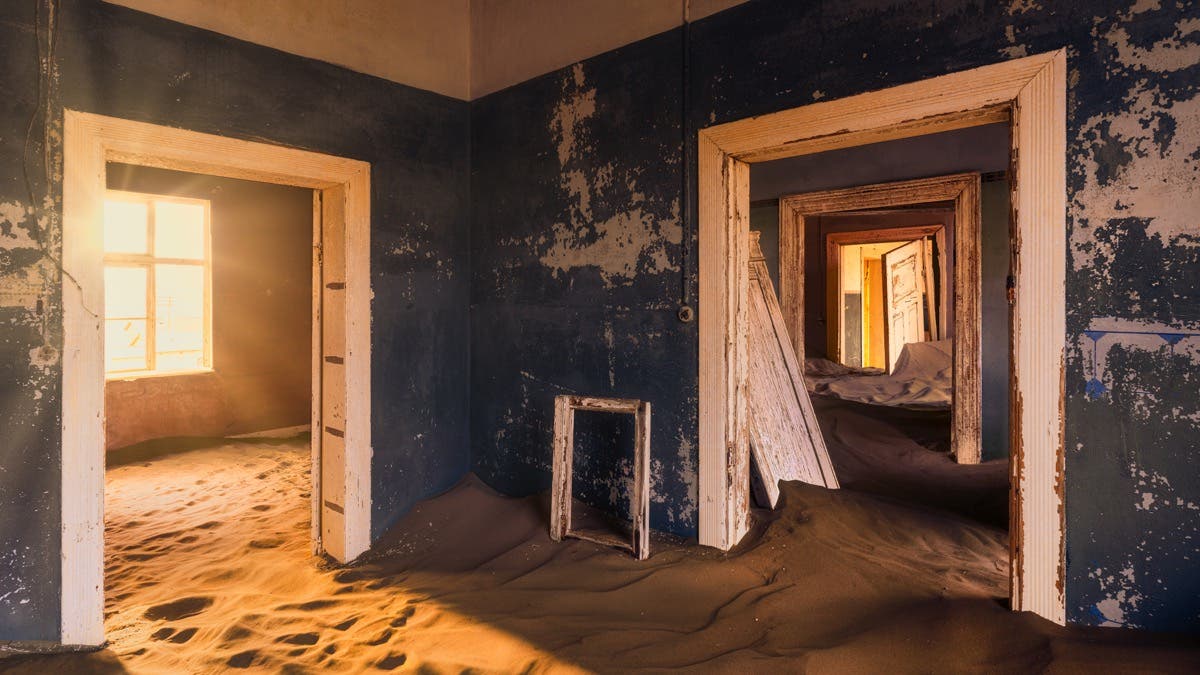
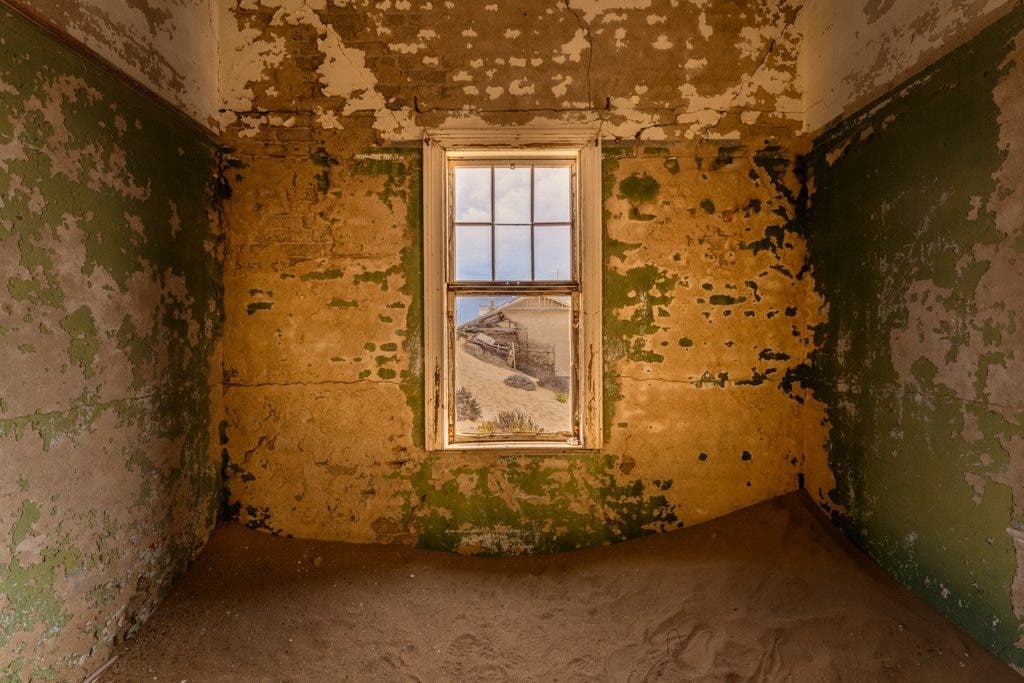
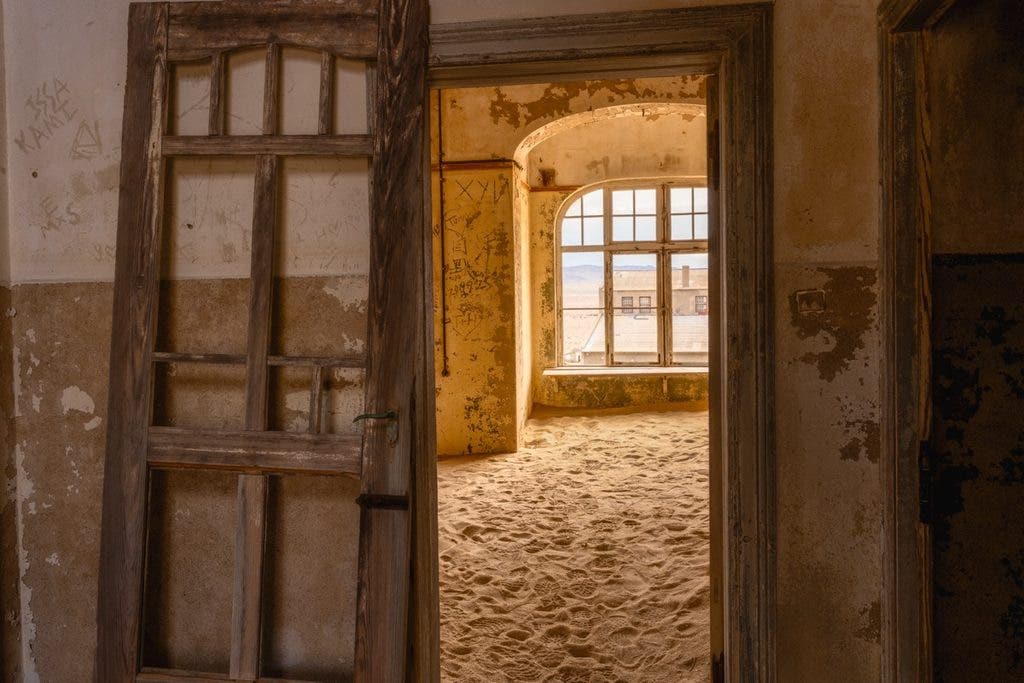
Upon entering these abandoned buildings, the first thing you notice is the creeping decay and the sand slithering in. The pattern and marks in the sand, peeling wallpaper, and the time-worn door frames sunk deep in the sand are a photographer’s creative dream.
Problem: A significant challenge here is shooting these rooms with a wide-angle lens, like my Tamron 17-28mm f/2.8 Di III RXD, you have no choice but to use a wide lens for most shots because of the cramped spaces. While the door frames are not actually warped, the wide-angle lens makes them appear skewed, especially when the frame’s straight line is towards the edge of your composition.
Solution: A way to avoid wooden beams appearing distorted is to shoot them from a front angle, looking directly into them. This is not always a compositional choice I would make. When shooting frames from a side angle, I had to constantly tilt the lens up and down and adjust the focal length while keeping the edges looking natural. It is a technical dance of showing the room’s scale and capturing windows and doorways without losing the structure’s beauty.

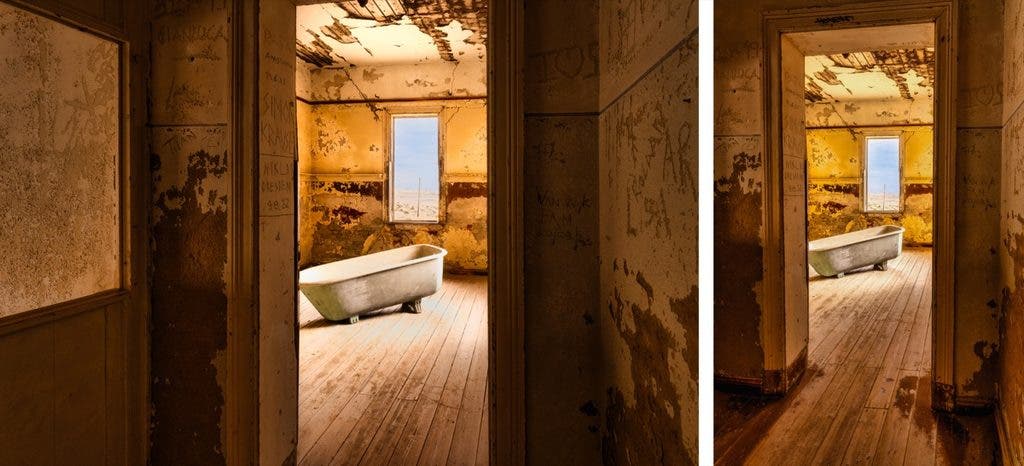
A practical demonstration of how a wide-angle lens warps straight lines.
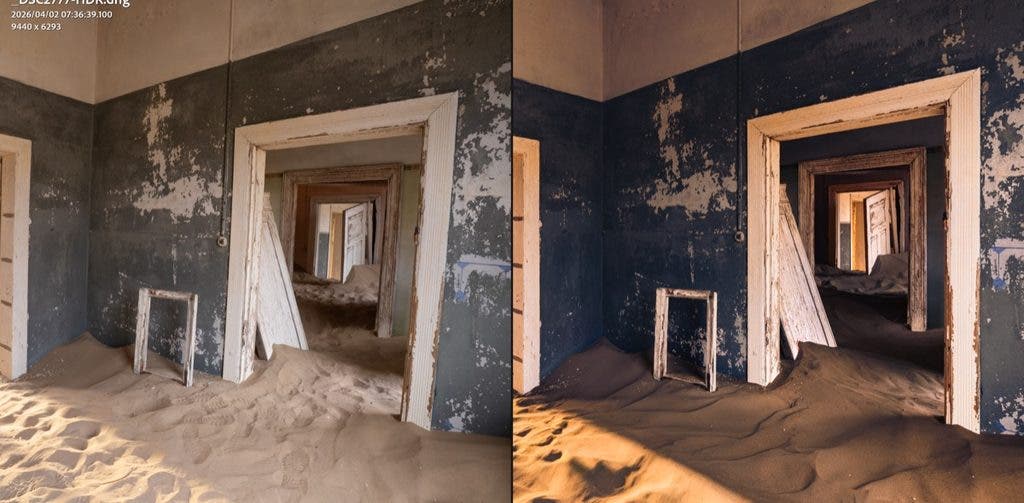
Fixing it in the edit: While I tried my best to choose the most appropriate perspective on location, I ended up using the Transform tool to refine the image further. You do, however, lose precious pixels and parts of the photos.
Here is a before and after using the Transform tool:
Chasing Light

Behind the Scenes: Light creates shadows and highlights, which are key ingredients of a good image.
The best time to capture images here is at sunrise with its slanting rays. Following a recommendation from a fellow photographer, I entered one of the rooms that had potential for sunrise shots. With my Sony a7R IV ready, I was initially disappointed. The clouds prevented any beams from breaking through. Without that essential light, even the most captivating rooms appeared dull from a photographic standpoint, lacking contrast of light and shadow and rendering the sand’s textures flat.
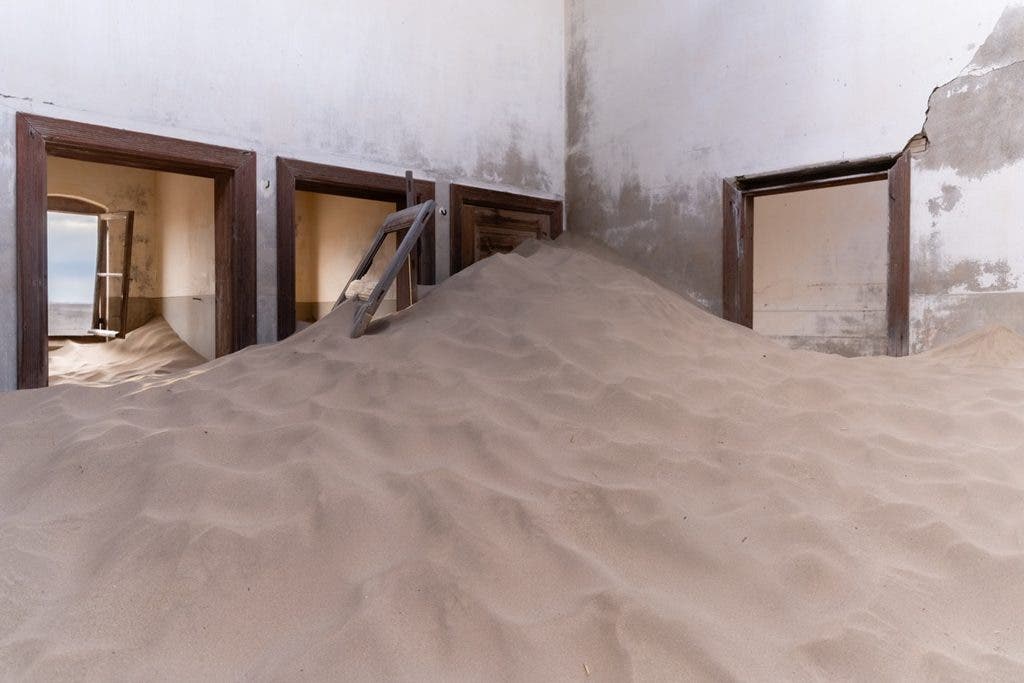
After an hour of sunrise, there was a brief break in the clouds that lasted about 30 minutes. I darted around and captured a few shots with more vertical light that fortunately fell onto a steep sand bank.
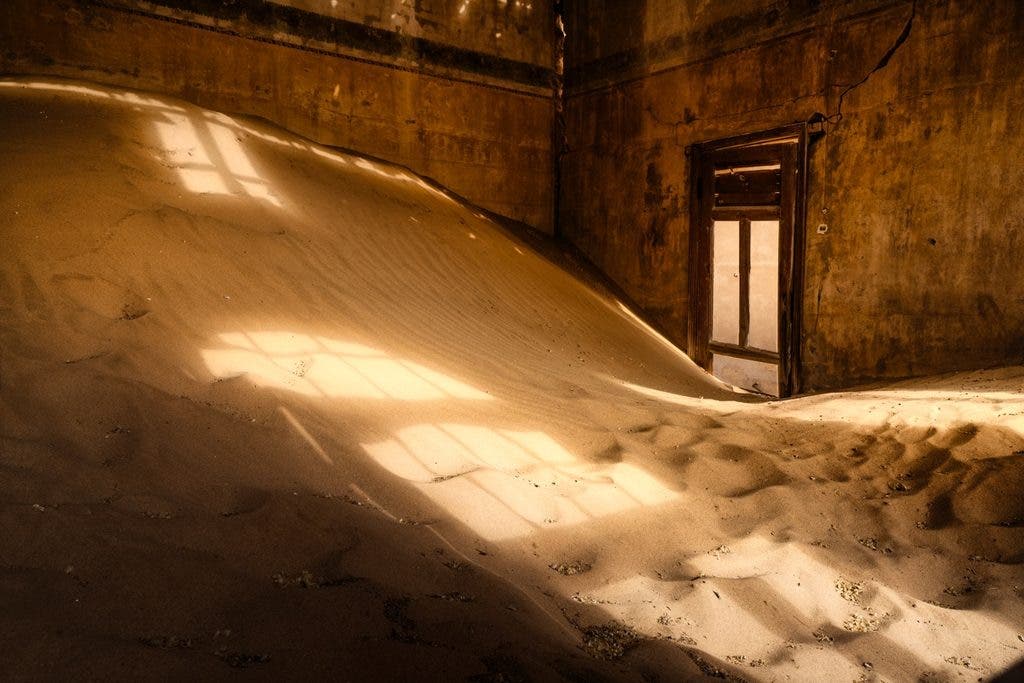
In some images, although the direct light was not present, I enhanced the effect during post-processing to simulate the appearance of light filtering through.
Composition: The Art of Seeing
The following choices were made on location:
Horizontal vs. Vertical: I preferred the horizontal format because it allowed the frame to show more of the story and the environment.
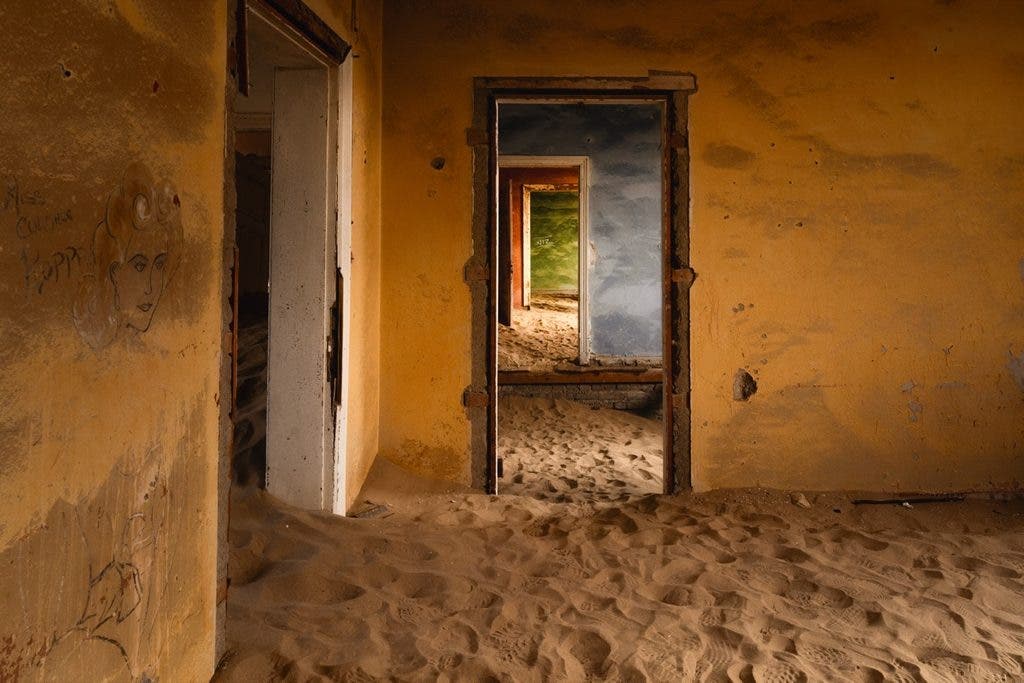
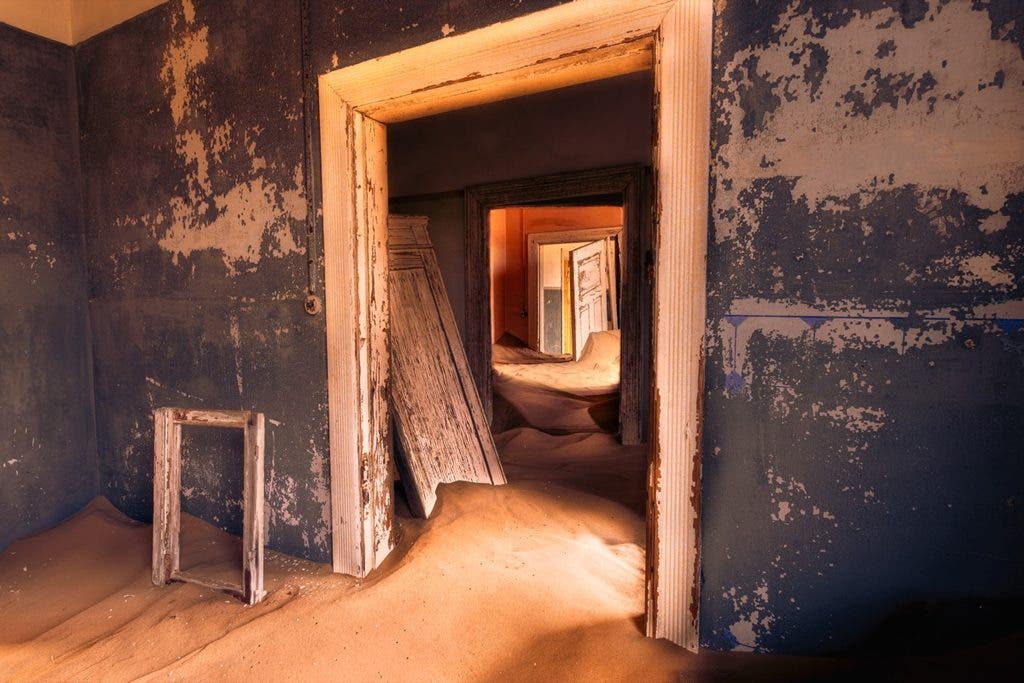
The Inception Shot: The following image is much like a scene from the movie Inception: a door, then another door, and then another; it feels like a dream within a dream.
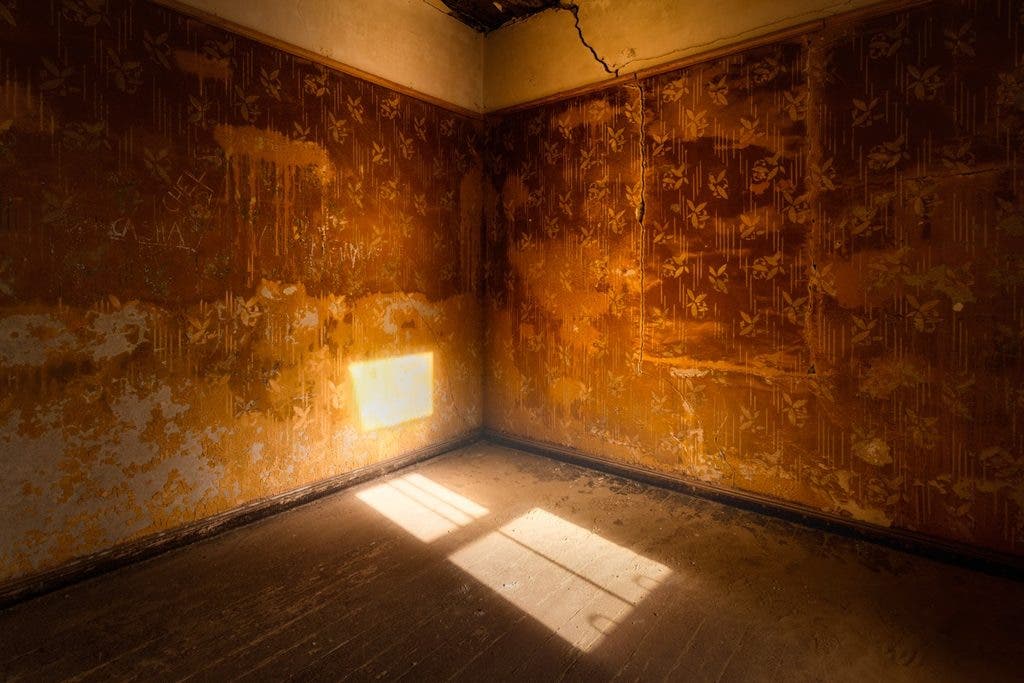
Simplicity: I found that the most effective compositions were the simplest frames.
The Ethics of Editing: My Personal Boundaries
In my usual landscape workflow, I use Adobe Lightroom and keep my AI use very limited, mostly for removing noise, dust spots, or small litter. I avoid sky replacements or adding elements that were not there. For retouching and quick editing of people, I rely on Luminar to significantly speed up my workflow using AI.
However, for this shoot, I broke my rules.
In some photos, footprints were an eyesore. Unless the wind blows hard the day before to clear the sand, they are unavoidable. I chose to largely remove them in post-processing for certain shots, but left them in others.
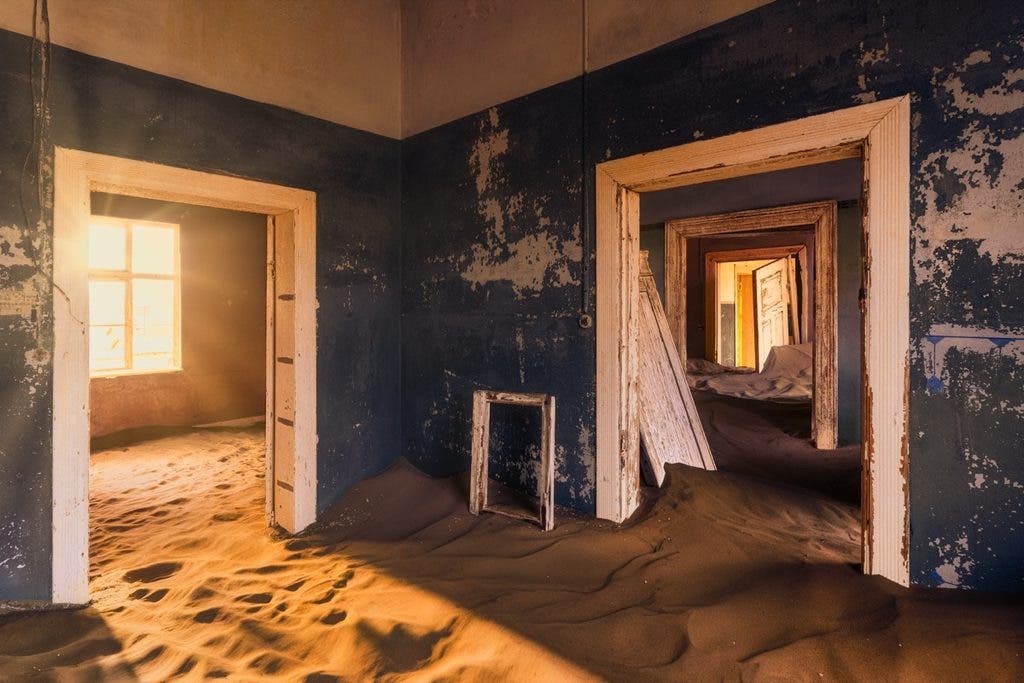
Luminar Enhancements: After basic edits in Lightroom, I used Luminar to:
- Add Sunstar to a few images for drama.
- Use the Light Depth feature to create focus by brightening windows and frames where light is naturally hitting.
- Apply a Glow and Orton effect to add a soft focus, which helps compensate for the poor, flat light.
- Add Layered Fog using the Atmosphere feature to enhance the ghostly mood.
The AI Editing Debate
There are two sides to using AI this way. On the one hand, it is a powerful tool for artistic expression. It allowed me to take a boring photo and turn it into the vision I had in my mind. On the other hand, it pushes the boundaries of true photography.
I believe in transparency. If I were ever to sell these photos, I would declare exactly what was done, whether I removed footprints or added a sunbeam that was not there.
Final Remarks
The way I moved through these ruins, capturing windows and doorways, might have looked like a frantic race against time. But to me, it was never a rush; it was a deliberate process of discovery. I used my Leofoto LS-324CXPRO X Ranger 4-Section Carbon Fiber Tripod with LH-40LR Ball Head to keep the composition level and images sharp.
The final images reflect my mindset and the specific feelings I wanted to express. Some of these frames may not be a literal, true reflection of the scene as it stood that day, but they are an honest reflection of how the place felt to me. In the end, editing photos is also a way to share our internal vision, and in that space, there is no limit to the imagination.