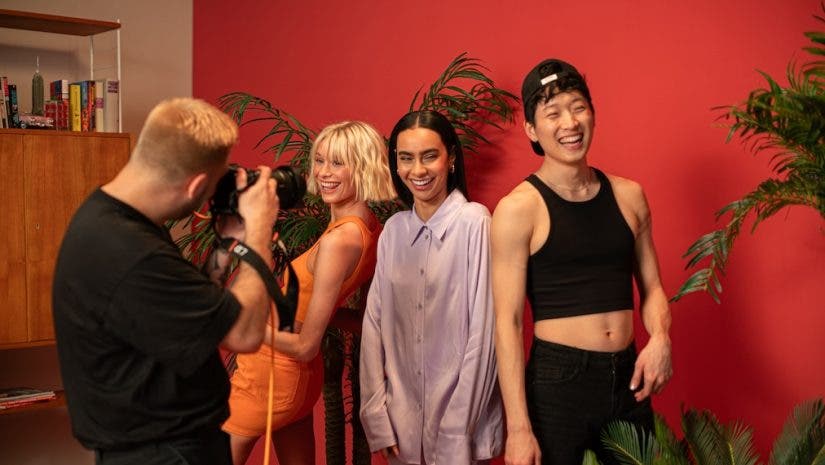
For the last 5–10 years, clients (both small and large) have been asking for double and sometimes triple duty from the same set. They want continuous light for video ads, high-res photos for print or socials, and vertical behind-the-scenes cuts for social media, all captured simultaneously.
As a gaffer, I have to find a way to light a set so that it works as well as possible for everyone. That can be a daunting task given the conflicting technical requirements. Competing interests under heavy time constraints force us to move fast from setup to setup, which often means very little lighting tweak time between units. The solution I’ve found is lighting more broadly with larger sources, allowing both the cinematographer and photographer to move freely within the scene.
The Exposure Gap Between Motion and Stills
If either camera operator steps in front of a hard directional source, it kills the shot. You end up with their shadow across the talent or background. What I needed was a source large enough and soft enough to wrap around anyone stepping into the space without casting a harsh shadow. More importantly, I needed enough raw output to give the photographer genuine exposure latitude.
Film lighting simply doesn’t demand as much output per frame as still photography. The key source needs enough punch not just for a cinematographer shooting at 24 fps (1/48s shutter, ISO 800), but also for a photographer shooting at 1/200s or faster, at a low native ISO, and with a deeper depth of field. Traditional constant lights usually fail to match an effective strobe’s output. However, by running an Aputure 1200D through a 12×12 full diffusion frame, I created a setup that gave both professionals room to work without stopping the floor. It’s not perfect, but it’s a workable compromise.
Why Output Is the Argument
The conversation about continuous LED versus flash for photography usually gets framed as a fundamental limitation of the technology. And for lower-powered lights, that’s fair, but I believe that starting around 1200W, continuous light starts to get close. You’re working with enough headroom that the continuous source becomes genuinely viable for both disciplines. The keyword here is headroom. Modern sensors on cameras like the Sony a7R V are clean to ISO 3200 and beyond. Shooting at ISO 125, the floor of many modern sensors, leaves multiple stops of ISO latitude before you’re even approaching noise that would concern a commercial client.
That headroom is the argument for powerful continuous lighting in a hybrid context where photo and video can operate together.
The Real World: Jotex and The Haus
As gaffer for German furniture brand Jotex, I designed a lighting plan around the Aputure 1200D blasted through a 12×12 full diffusion frame (3.6m²). This massive, wrapping source meant DP Stephan Mühlau cast no problematic shadows, allowing the photographer to shoot freely around video setups without stopping to reset.
I took the same approach on The Haus with photographer Philip Gladsome. At that scale, the source is big enough that anyone stepping in front of it won’t cast a hard shadow—the light simply wraps. Here, softness isn’t just an aesthetic choice; it’s a practical workflow tool.
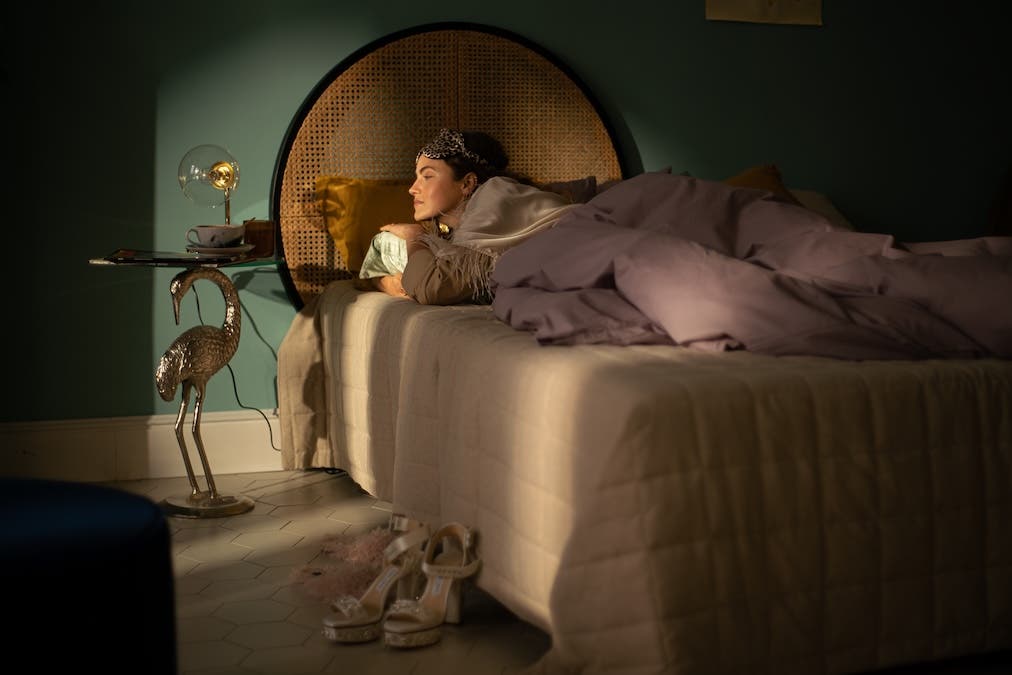
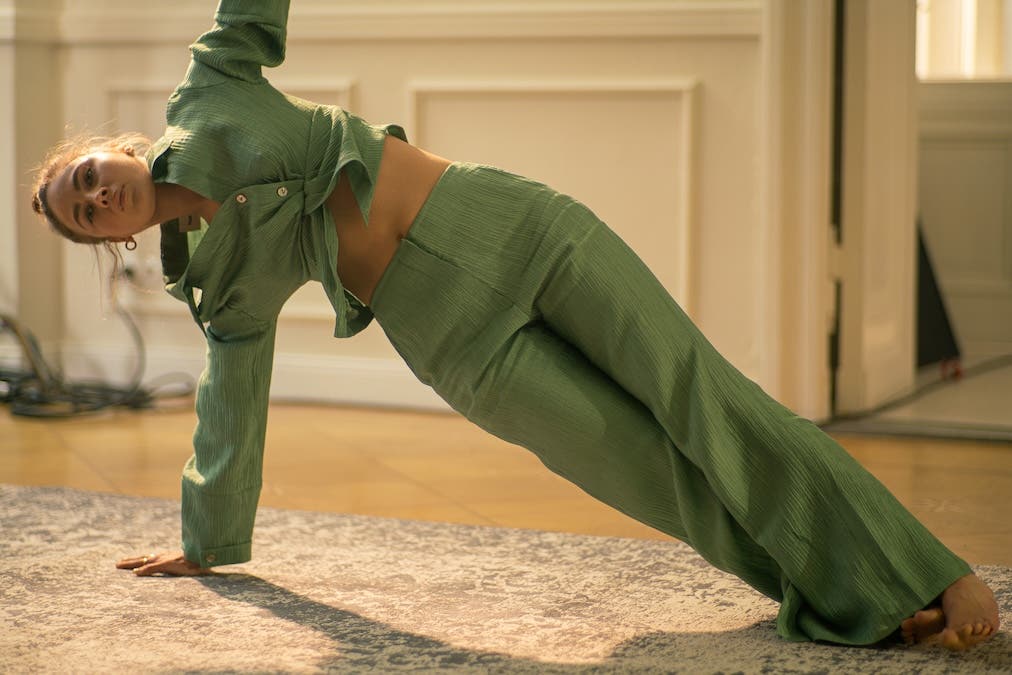
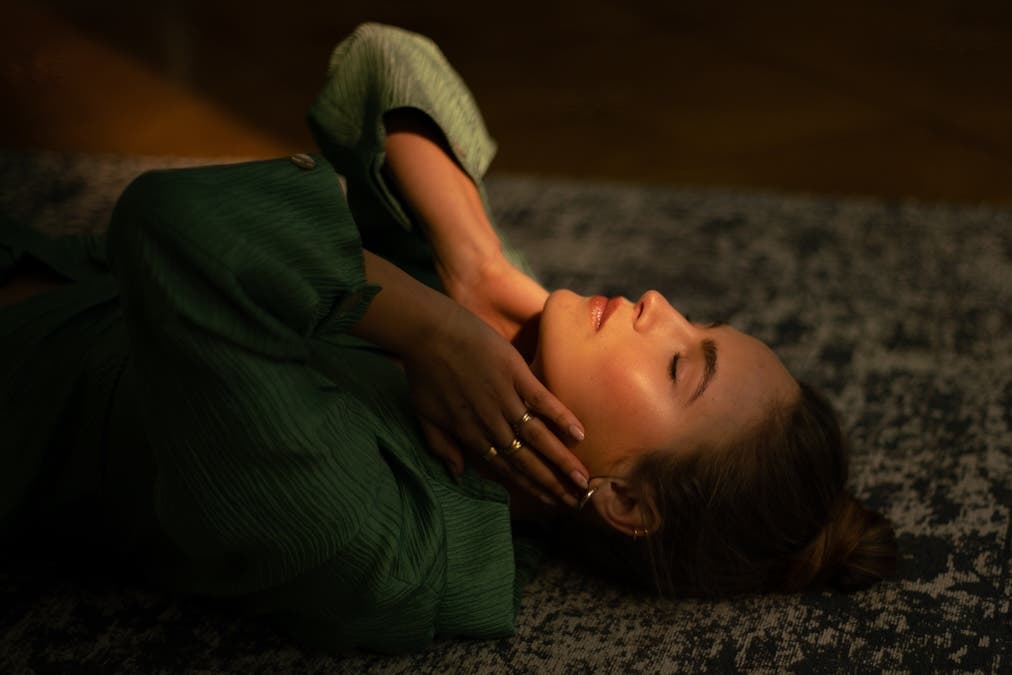
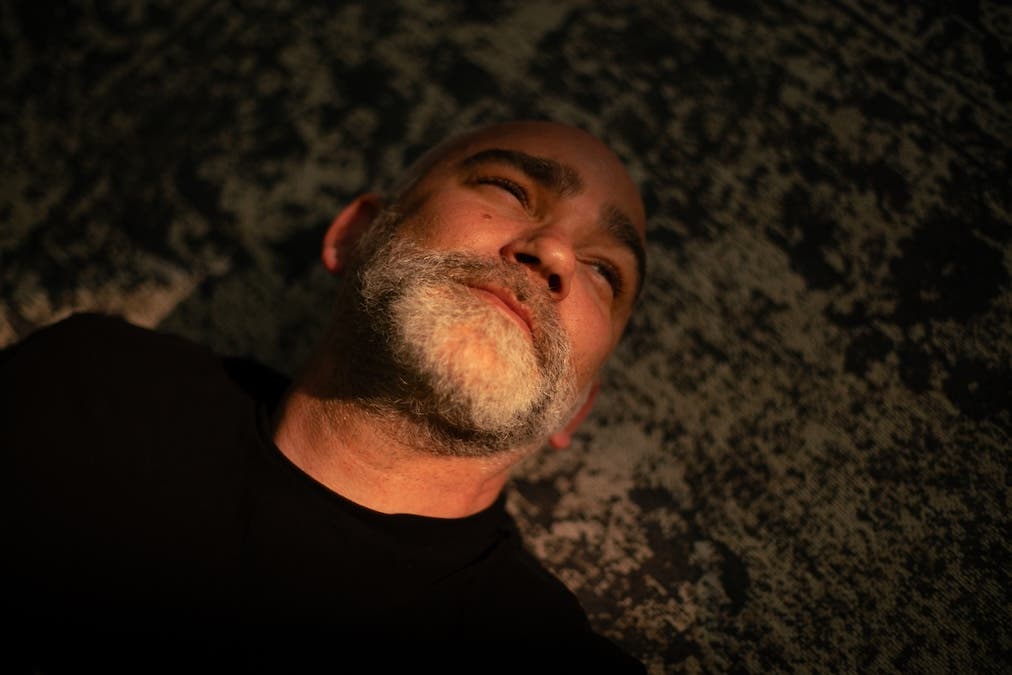
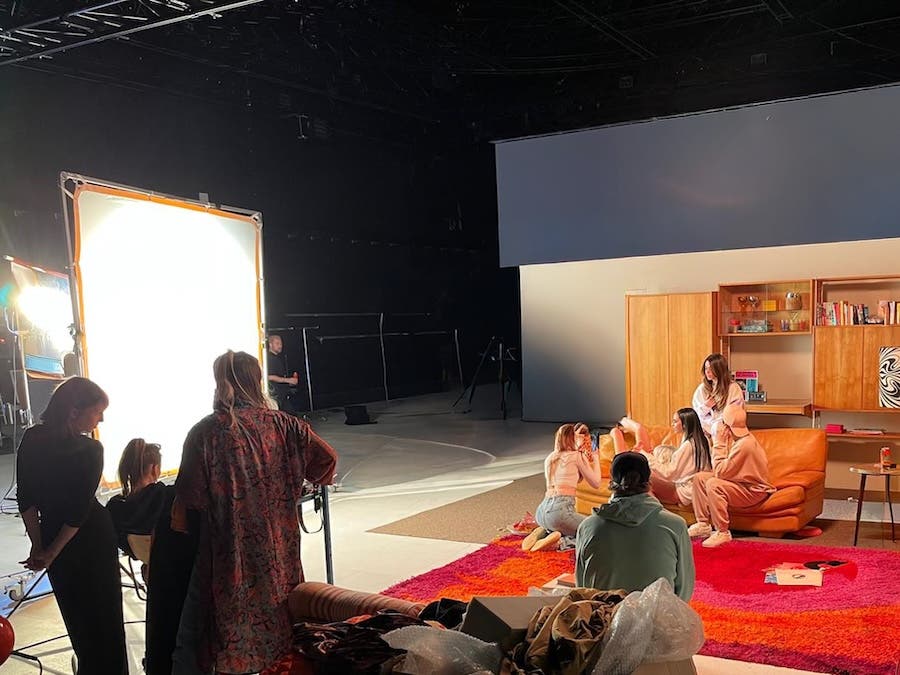
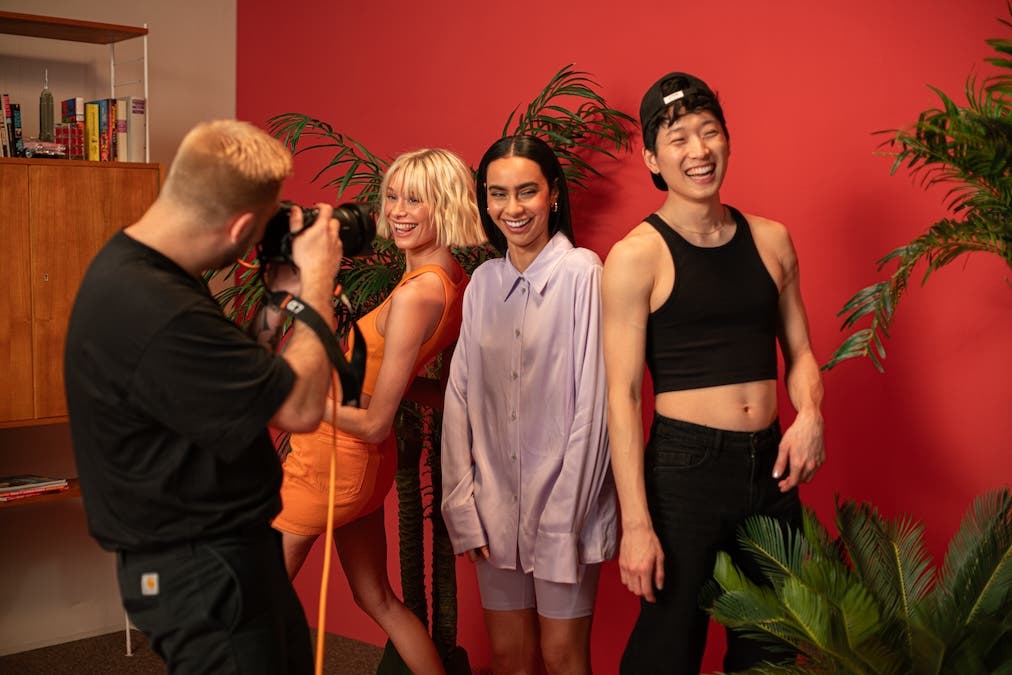
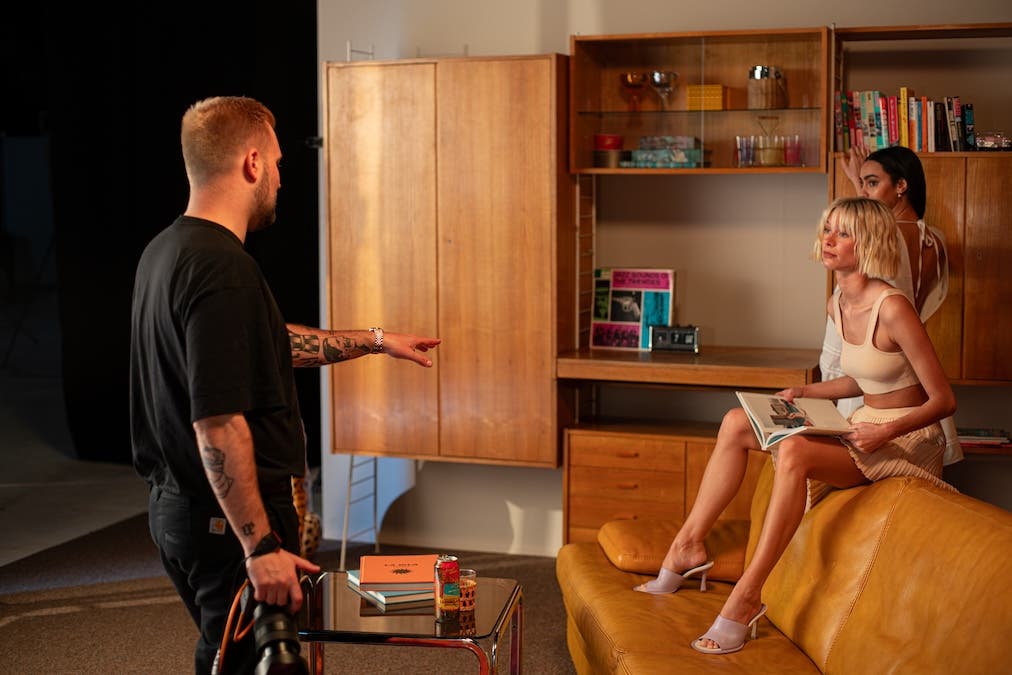
What both productions demonstrated is that the workflow argument for continuous is as strong as the technical one. No sync cables. No triggering. And no flash recycle time to work around. The photographer sees exactly what the camera sees, adjusts accordingly, and moves. On a commercial set where time is money, that simplicity has real value and can be worth the tradeoff the power of a strobe gives you.
The Aputure STORM 1200x
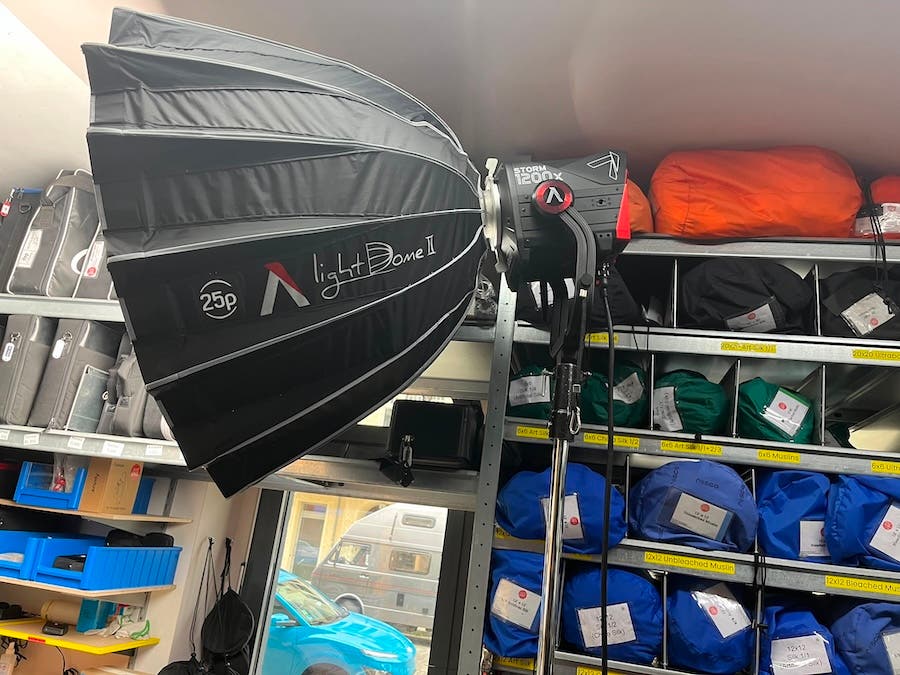
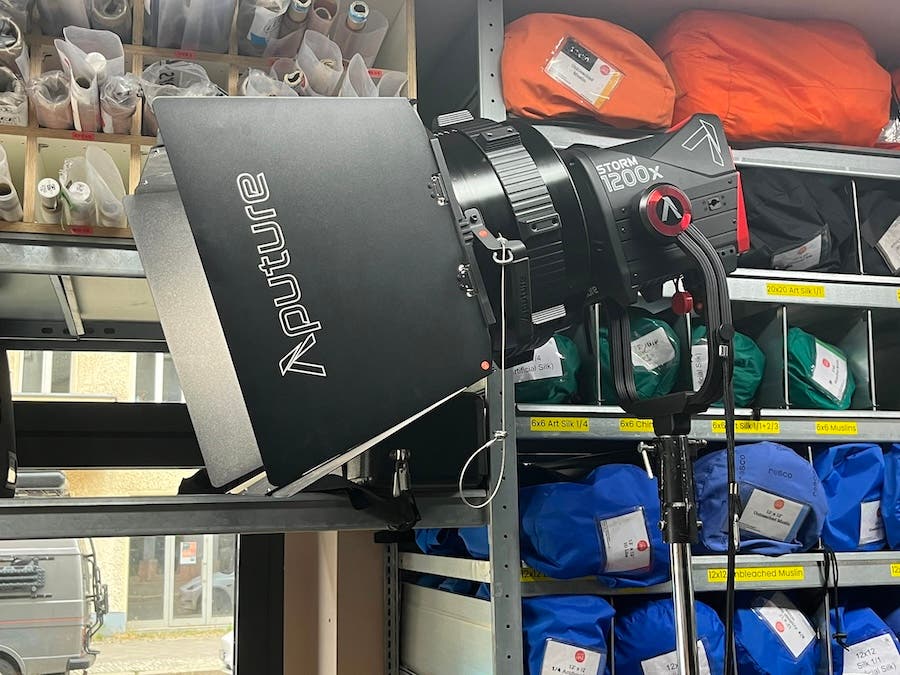
While the previous shots were from sets I worked on where I used the Aputure 1200D, I wanted to see what the new 1200 Watt light from Aputure could do. The light I tested for this article is the Aputure STORM 1200x, the current generation of Aputure’s flagship 1200W fixture.
This is a bi-color light that has a wide CCT range of 2500–10,000K with full green/magenta correction, making it genuinely usable for matching mixed sources on location. Output is rated at 22,500 lux at 3 meters with the 45° reflector at 5600K, numbers that independent testing confirms hold up in real conditions. It’s IP65 weather-resistant, accepts Art-Net and CRMX for console integration on larger productions, and dims steplessly from 0.1% to 100% with color accuracy maintained throughout. The ProLock Bowens mount accepts much of Aputure’s range of modifiers, as well as many third-party Bowens accessories.
It can only run off of AC power, which at this power is expected. On the sets where this light makes sense, power is available. If you need it in the field, there are power generators that can be used.
Testing the Numbers: What the 1200x Actually Gives a Photographer
Big thanks to the excellent film and photo rental house, Rent One in Berlin, which always treats me super well. They were kind enough to let me run some tests of the STORM 1200x in the back of their shop. For every shot, the light was at 100% power at 5600k; I used the same subject at two different distances, the ISO was kept at 125 throughout, and I only changed the modifier, each time noting the aperture and shutter speed required to achieve a balanced exposure. These are clearly not ideal studio conditions, but they should give you an idea of what is possible.
Here’s what I found:
| Modifier | Distance | ISO | Shutter | Aperture | Notes |
|---|---|---|---|---|---|
| Wide reflector | Far (~5m) | 125 | 1/400s | f/4 | Strong, directional |
| Wide reflector | Near (~2.5m) | 125 | 1/400s | f/4 | |
| Narrow reflector | Far | 125 | 1/400s | f/4 | Focused, harder source |
| Narrow reflector | Near | 125 | 1/400s | f/4 | |
| CF12 Fresnel (flood) | Far | 125 | 1/400s | f/4 | Shapeable soft beam |
| CF12 Fresnel (spot) | Far | 125 | 1/400s | f/4 | Tight, precise pool |
| Light Dome II* | Far | 125 | 1/100s | f/3.2 | Large, wrapping source |
| Light Dome II* | Near | 125 | 1/100s | f/3.2 | |
| Ceiling bounce | Far | 125 | 1/100s | f/2.8 | Ambient lift, loses a lot of power as is to be expected. |
| Ceiling bounce | Near | 125 | 1/100s | f/2.8 |
*Light Dome II tested with inner baffle and 1-stop front diffusion panel, the most light-hungry configuration of this modifier.
What these numbers mean in practice:
The reflector and Fresnel shots, ISO 125, 1/400s, f/4, are legitimately strong photographic numbers. A photographer shooting at these settings has genuine latitude to work with. Stop the light down, increase distance, add diffusion, you’re still in usable territory. The 1/400s shutter speed is sufficient to freeze people in a commercial shooting context: walking, posing, moderate movement. It is not going to freeze very fast motion without compensating by upping the ISO, but for the vast majority of commercial photography scenarios it’s workable.
The Light Dome II numbers require more thought. At 1/100s, a faster-moving subject will show some motion blur. But remember that these numbers are at ISO 125, the floor of the sensor. Push to ISO 400, and you can shoot at 1/400s, f/3.2, back at the edge of motion-stopping territory, with two full stops of ISO headroom remaining before you approach noise that would concern a commercial client on a modern Sony, Canon, or Nikon body. The inner baffle and front diffusion panel are also removable or changeable; strip the baffle or use a less heavy cloth, and you gain back some output at the cost of some softness.
The ceiling bounce numbers represent the weakest scenario for photography. At 1/100s and f/2.8, you’re really relying on ISO headroom if you want to freeze action. For static subjects or deliberately ambient-lit scenes, it works. This could be good for event work.
The honest caveat:
These tests were conducted in a controlled interior environment at the rental house. Take this light outdoors in direct sunlight, and unless the light is right next to your subject, the continuous source loses the argument. 1200W is not even close to the power a strobe can give you when you need to work against the sun. That’s not a limitation of this light specifically. For exterior work in direct sun, a strobe with HSS is the right tool.
The Broader Point: Where Continuous Is Headed
The 1200W threshold is significant not just because of what it enables today, but because of the future that LED is moving towards. LED technology has been improving in output-to-size ratio consistently. What required an HMI and a generator a decade ago now fits in a single portable fixture. As that trajectory continues, the exposure latitude argument for continuous in hybrid contexts gets stronger, not weaker.
For hybrid shooters working at smaller scales, corporate video with photography, branded content, or events, the same principle applies at lower power levels with modern sensors. A 400W LED like the Aputure STORM 400x won’t give you the same numbers as the 1200x, but on a modern mirrorless body with clean high-ISO performance, interior controlled environments become increasingly viable for both disciplines from a single continuous source. The compromises are real: outdoor direct sun remains the hard limit, and fast action requires careful ISO management, but they are shrinking as both LED output and sensor sensitivity improve.
The future of hybrid lighting on professional sets is not a flash in the bag alongside a video light. It’s a single powerful enough continuous source that renders the flash unnecessary for the majority of scenarios a commercial production encounters indoors.
Final Thoughts
I started this process looking for a light that could serve both a video camera and a photographer on the same set without asking either of them to compromise too heavily on their workflow. What I found is that the answer isn’t a hybrid product or a clever system; it’s simply output. Bigger lights than the 1200X are out there, and the lights that today draw 1200 watts will get brighter in the future for the same power draw.
Get the output high enough, diffuse it through a large enough frame, and you create a lighting environment flexible enough to serve both disciplines from a single source. The 12×12 diffusion setup on Jotex and The Haus proved that in commercial practice. The STORM 1200x numbers at Rent One showed that in controlled testing.
The limitations are real and worth respecting: outdoor direct sun, fast-moving subjects without ISO management, situations where a strobe’s instant freeze is genuinely irreplaceable. But for much of interior commercial production work where both video and photography are required, and time is of the essence, a powerful continuous source is a clean solution.