
A wireless microphone system offers undeniable advantages to artists, speakers, and large production sets. They get rid of unnecessary wire clutter, are easy to set up, and allow users to move freely while performing. Since its introduction, many innovations have given rise to powerful wireless microphone systems that rival and even surpass their wired counterparts.
Modern technology grants us with a wide array of choices that fit specific needs and situations. While an abundance of options makes for great flexibility, it’s easy to feel overwhelmed when shopping for the right gear. Many wireless microphone systems claim to be the best for all around use, while others go for a more targeted approach when presenting their specs.
No matter how enticing advanced features may sound, choosing a wireless mic system that is most suited to your needs all boils down to the following questions:
- What are you going to use it for?
- Are you looking for specific features?
- What is your budget?
To better illustrate how these three questions come into play as you make your decision, keep on reading below:
Things to Consider When Buying a Wireless Microphone System
Analog Versus Digital Wireless Systems
Analog and digital wireless microphone systems have long been pitted against each other by audio enthusiasts and professionals. In terms of sound quality, it may be said that digital wireless microphone systems produce better audio in general if you base it off of dynamic range and frequency.
Whereas analog systems need to compress and decompress audio signals before producing their output, digital systems operate without companding, thereby eliminating signal degradation. Modern analog systems, however, have improved their companding efficiency, closing the gap between audio quality with respect to signal degradation.
Recommended Digital Wireless Microphone System with Crisp Audio Quality:
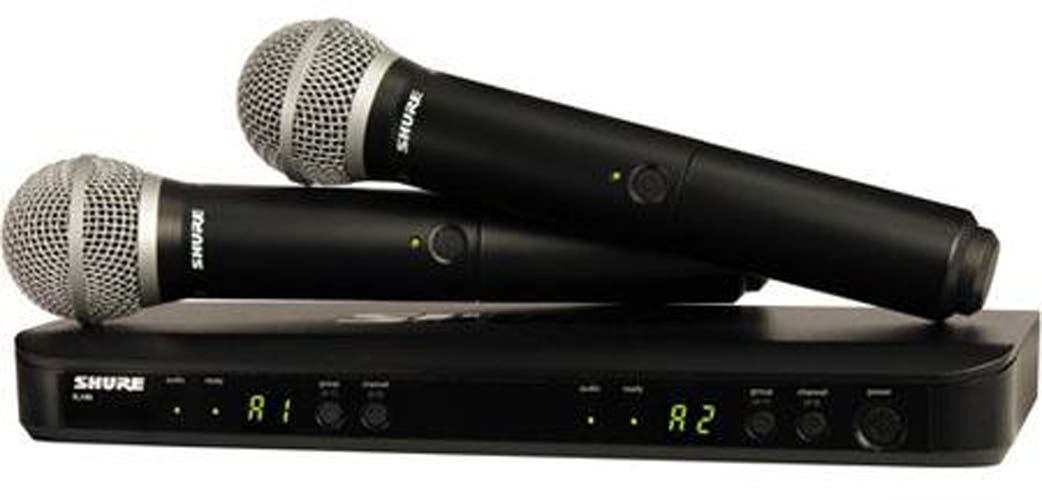
- Shure BLX288 Dual-Channel Handheld Wireless System 2 PG58 Handheld Mics, J10: 584 – 608 MHz Frequency Band ()
- Sennheiser ew 135-p G3-B Wireless Kit with EK 100 G3 Diversity Receiver ()
Latency

While latency is another key point in the dispute between analog and digital wireless mic systems, it’s important enough in itself to merit its own section. Defined as the amount of time it takes for a signal to come out as an audible sound, latency greatly impacts performers. Musicians, for example, may complain that the sound they hear on stage is smeared, making it harder for them to stay in tune and in tempo.
Analog wireless systems boast virtually zero latency since they make use of signals traveling at extremely fast rates directly. On the other hand, digital modules need to convert analog signals to digital before getting processed by microcontrollers. As innovations in companding have led to a more level playing field in terms of sound quality, advanced engineering has allowed high-end digital wireless microphone systems to have latency rates below five milliseconds.
Wireless microphone systems with latencies of up to 15 ms are enough if you’re only using them for conferences and symposiums where slight delays are negligible. But if your production banks on more artistic routes (such as theater, filmmaking, and music), you’d be much better off investing in high-quality wireless microphones with the lowest possible latency rates.
Recommended Wireless Microphone System with Low Latency:
Diversity Circuitry
Diversity refers to a wireless microphone system’s ability to combat signal dropouts due to multipath — an effect of indirect waves reflected from the environment weakening the target signal below the receiver’s muting threshold. Wireless microphone systems equipped with this feature have two antennas at different locations to receive inputs from a single transmitter. Coupled with an automatic switching reception circuit, the antenna which receives the stronger signal is instantly selected to carry out operations.
True enough, not having to worry about audio loss or noisy reception are things you’d want to have no matter what sort of production you’re aiming to do. However, diversity wireless systems generally cost more than non-diversity microphones, putting a hurdle in what should be a straightforward decision.
If your budget can accommodate it, get a diversity wireless microphone system. It will no doubt outperform its rival non-diversity models and make your life a lot easier. You’ll get the most out of the gear if you intend to use it in places that have many obstructions that contribute to signal blocking and deflection. But if your budget is constrained, you can make do with non-diversity systems, especially if you’ll only be using your wireless microphone system in open locations, making signal dropouts due to multipath naturally less likely.
Recommended Wireless Microphone Systems with Diversity:
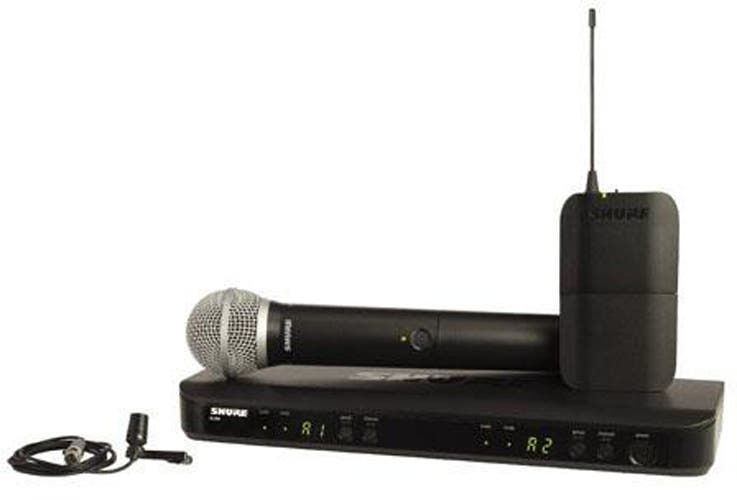
- Shure BLX1288/CVL Dual-Channel Combo Wireless System, Includes BLX1/BLX2 with PG58, BLX88, CVL Mic, Power Supply, Clips, Windscreens, J10:584-608MHz ()
- Shure ULXS124/85-G3 Wireless Combo Microphone System, Includes ULXS4 Receiver, ULX1 & ULX2 Transmitter with SM58 Mic, WL-185 Mic, G3/470-505 MHz ()
Frequency Agility & Automatic Frequency Selection
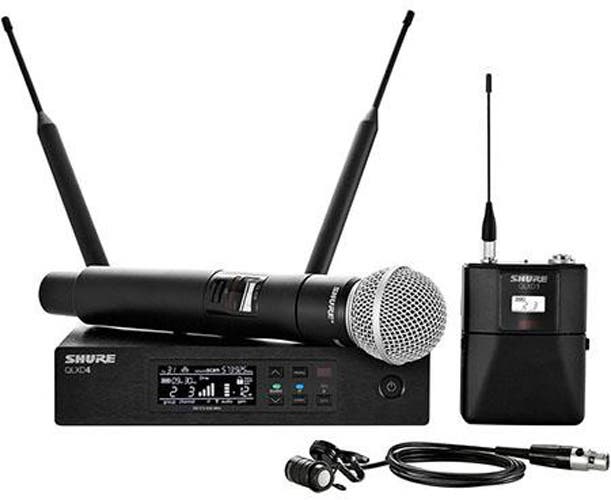
Wireless microphone systems that are said to be “frequency agile” are those which offer users an array of frequency paths to work with. This is particularly important when your production set requires multiple wireless systems operating at the same time, or when it is stationed at a location where there is a multitude of competing signals coming from other wireless devices.
Frequency agility in wireless microphone systems ensure smooth transmission and reception by giving you several frequency paths to choose from, lessening intermodulation interference and giving you the flexibility to work with the clearest available transmission frequency in a given location.
A handful of wireless microphone systems today have a feature called automatic frequency selection, which readily scans the area for channels and automatically picks the best one. This is especially advantageous to users who do not have a lot of experience manually configuring their wireless systems. Situations that call for multiple system resets on the day of production, as with multi-stage performances, also greatly benefit from automatic frequency selection. Instantaneous scanning and lock-in allow for seamless and hassle-free production.
In general, frequency agility and automatic frequency selection are two convenient features that should be sought after. If your intent is to utilize your wireless microphone system in multiple locations with a lot of other wireless devices nearby, having these two specifications is essential. But if you’re simply looking for a wireless microphone that’s meant for confined use, you can easily get by on models that lack such functions.
Recommended Wireless Microphone Systems with a Broad Frequency Range:
- Shure QLXD124/85 Combo Wireless Mic System, H50/534-598MHz, Includes QLXD1 Bodypack Transmitter, QLXD2/SM58 Handheld Transmitter, QLXD4 Receiver, WL185 Mic ()
- Shure ULXD4-G50 Single Digital Wireless Receiver with PS41US Power Supply, 1/2 Wave Antenna & Rack Mounting Hardware, G50/470 to 534MHz Frequency ()
- Shure ULXD4Q Quad Channel Digital Wireless Receiver, Up to 64MHz Tuning Range, H50: 525-572MHz ()
User-Friendliness & Display
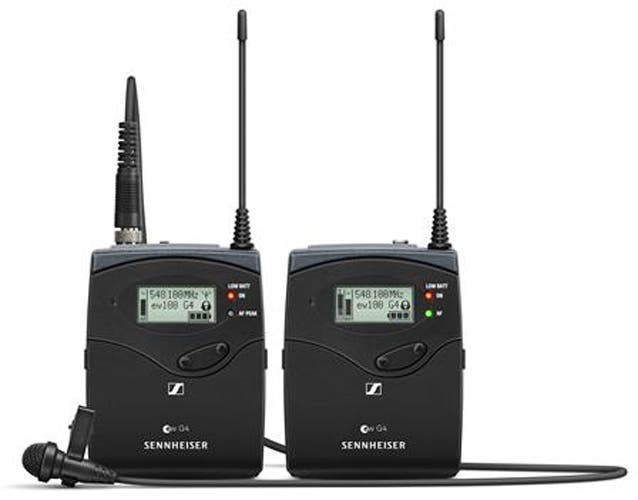
Having advanced specs is fantastic until you realize you don’t know how to use them. Ease of operation should always be considered when buying any kind of gear, especially when you’re expected to work for hours on end. A user-friendly interface will help you troubleshoot much faster and prevent complications, while an ergonomic design will minimize fatigue on the job. This also covers how compact you want the wireless system to be, whether you want it handheld or bodypack, etc.
You’d also want to be well-informed regarding your equipment’s status. Checking for battery level, signal strength, and selected channel, among others, is vital in ensuring you can arrive at the end of production without any hitches. Pertinent information is typically displayed on the transmitter, but some wireless microphone systems are designed to have them both on the transmitter and receiver for convenience.
Recommended Wireless Microphone Systems with a User-Friendly Interface:
- Sennheiser ew 112 P G4 Camera Lavalier Set, Bodypack Transmitter, ME 2 Lav Omni Mic, A: 516 – 558 MHz – Bundle With 4 AA NiMH 2900mAh Batteries/Charger, SKB iSeries Waterproof Case, Pro Optic Cleaning Kit ()
- VocoPro UDH-8-ULTRA 8-Channel UHF/DSP Hybrid Wireless System, Includes 8x Channel Receiver, 8x Handheld Microphone, 8x Body-Pack Transmitter, 8x Headset Microphone, 8x Lapel Microphone & 8x Instrument Cable ()
Now that you’re armed with the basic knowledge on how to choose the best wireless microphone system, browse our extensive inventory to select the right system that meets your needs and specifications.