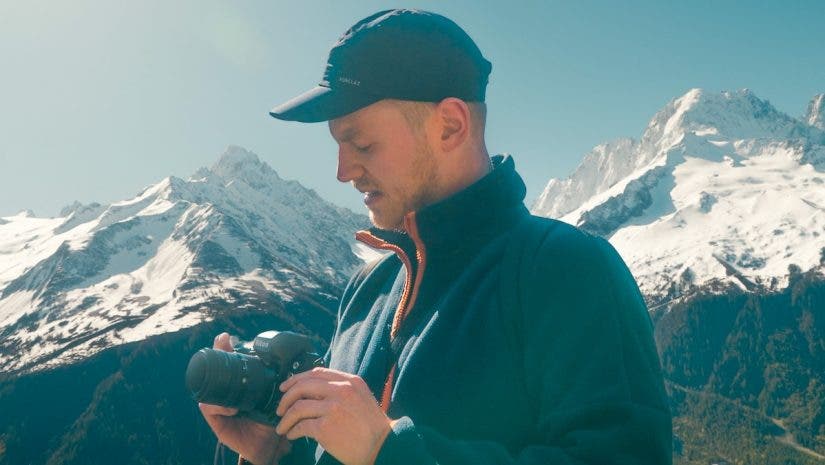
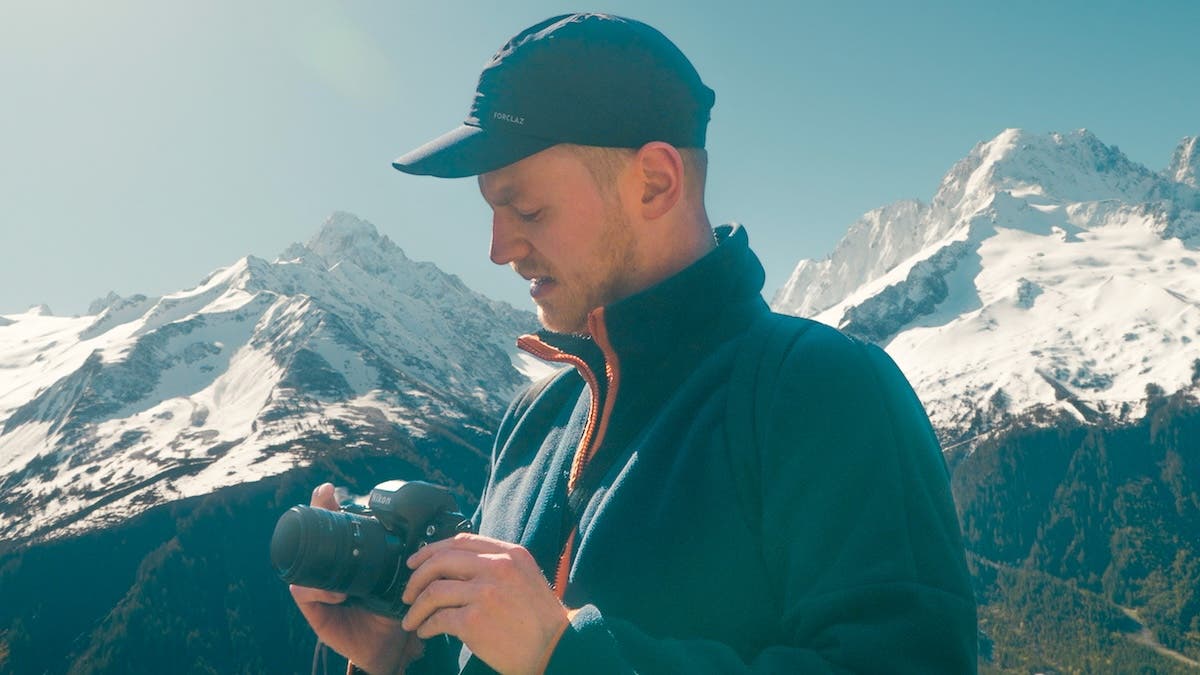
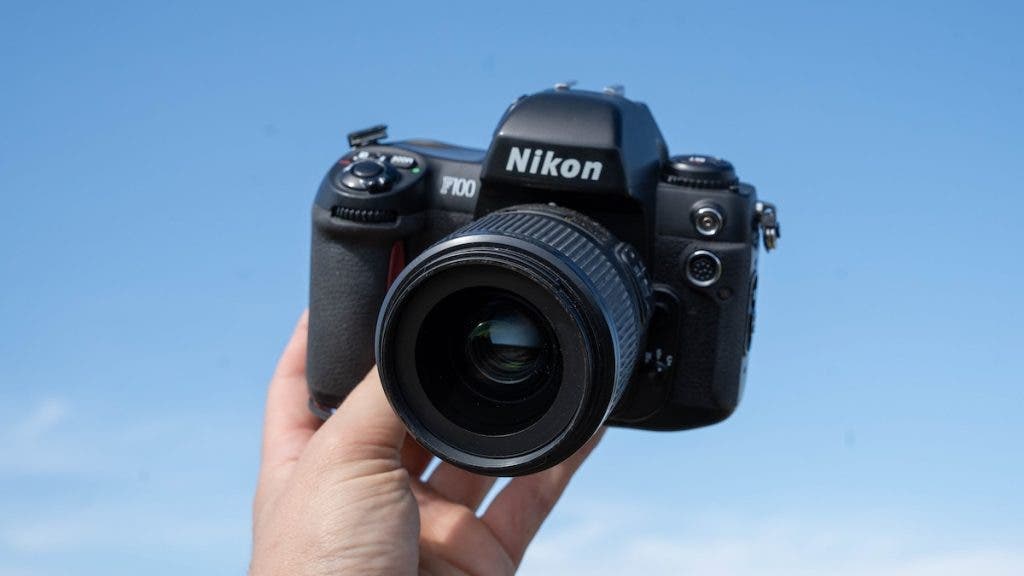
After years of trying out all the top cameras, I came to a conclusion I probably should have reached a lot earlier. They weren’t making my photography any better. Not even slightly. And in the end, I settled on a standard and budget-friendly camera: $200 Nikon F100.
That camera turned out to be a defining part of how I rediscovered what made me love photography in the first place, even if it did make me look like a Dutch dad on holiday in 2001 in the process.
There are obviously downsides in choosing a budget-friendly camera, and I’ll get to those. But first, what it actually does.
It does everything, and then some
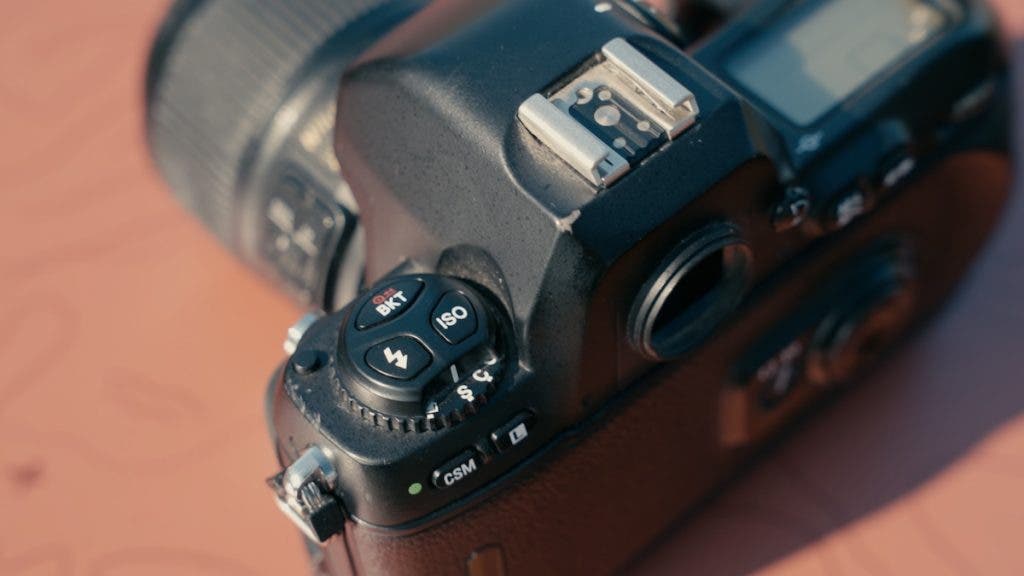
Shutter speeds from 30 seconds to 1/8000th of a second. Exposure compensation. Auto everything if you want it. Exposure lock, focus lock, double exposures. It did everything I needed and a fair bit more.
I’m not planning on shooting fighter jets any time soon, so I don’t really need an eight thousandth of a second. But it’s there if I ever change career.
The one that mattered most to me, though, was aperture priority.
I shot fully manual for a long time, and slowly realized I was missing moments because I was fumbling to get the exposure right. The shot would be happening, and I’d be looking down at a dial.
This might seem like a small thing, but in film photography I think some people believe you get extra points for exposing something manually, when really it makes almost no difference at all to the final image. In fact, my exposures are more consistently accurate now, and I’m not messing about missing those one-off moments.
I can’t wait for someone to tell me that’s just a skill issue.
The camera isn’t doing the work anyway
Anyone who shoots film for long enough will tell you the same thing. The camera doesn’t really matter. It’s the lens and the film.
What makes a body more valuable is the settings it gives you access to, not some magical jump in image quality. That’s genuinely different in digital, where the sensor does a huge amount of the work. In film, your lens is doing the heavy lifting and the body is basically a light-tight box with a good clock in it.
Once that clicked, I started looking at this budget-friendly camera differently, because the Nikon F100 can house some seriously good lenses.
The 35mm f/1.8 AF-S is an absolute unit of a lens, or at least that’s what Ken Rockwell reckons, and he’s the original camera reviewer, so I trust the OG. That lens was made in 2014. It’s multicoated, it’s sharp, and it works perfectly on a body from 1999.
That’s just not possible with the older, fully mechanical SLRs. You can’t stick a modern autofocus lens on one of those and expect it to do anything clever. On the F100 you can.
Also, sorry to be the one to tell you this, but 2014 wasn’t last week. It was twelve years ago.
Autofocus that actually helps
There’s another big thing here, and it’s decent autofocus.
I shot a Nikon FM2n for ages and loved that camera. But a real problem I had was missing photos because I was fumbling for focus. Not every photo. I’m not completely useless. Just enough that it started to bother me.
The Nikon F100 with that 35mm on the front basically eliminated the problem overnight.
And yes, I know, autofocus isn’t new. Autofocus has existed for longer than I have. That isn’t the point.
The point is that when you first get into photography, you assume the best shots come from the best or most expensive camera. That’s the story you get sold constantly. But I’ve tried most of them now, and there were real periods where my photography got worse while I was using so-called “better cameras.”
What took things to a different level was working out the small things my photography actually needed.
The mental block nobody talks about
When I started trying out expensive cameras, I noticed a problem creeping in.
I didn’t feel like I could take them everywhere. Most places, sure. But every so often something would stop me. What if I break it? What if someone nicks it? What if it rains?
There’s a mental block that comes with carrying something you’ve spent thousands of pounds on, and it goes completely against what’s important to me about photography.
Because I want a budget-friendly camera I can take absolutely anywhere. Up mountains. Into grim little pubs. Out in the rain, which is more or less constant where I live.
The F100 removed those barriers. Now I actually shoot everything I want to shoot, rather than spending half my energy worrying about the thing hanging round my neck.
You might be seeing the theme here.
Your F100 might not be an F100
The camera you use should be about the kind of photography you want to do and the kind of photographer you are. That’s the whole thing.
If you Google what’s the best camera, it’ll tell you the Nikon Z8. I haven’t got a clue why. If you Google what’s the best film camera, you’ll see the Leica M6 come up more often than not.
And look, if you’ve got money like that, go ahead, try it out. I’m not going to stop you.
But part of figuring yourself out as a photographer is working out what makes a difference to your pictures, rather than what makes a difference to how you feel in a camera shop.
Your Nikon F100 might be a Canon A-1, or a Fuji X100, or something nobody’s ever heard of. It doesn’t really matter.
What matters is that it completely complements the way you shoot, so you never miss the moment, and you’re always ready.
Because those little things add up into something big. It’s the difference between taking your camera everywhere you go and leaving it at home in case it gets damaged. It’s the difference between getting the shot and fumbling around until the moment has gone.
It’s not perfect, obviously
So while I think the Nikon F100 and cameras like it, the Canon EOS-1n or whatever Willem’s shooting lately, are genuinely great, this is a personal journey, and you’ll land somewhere different to me.
And as I said, it isn’t perfect.
It’s not very sexy. It doesn’t feel the same as shooting a classic SLR, that whole ritual of doing everything yourself, the sound of the shutter. I do miss it sometimes.
Then again, maybe I’ve shot for long enough now that I know what matters more to me, which is getting the shot I want with nothing getting in the way.
So if you think a big, expensive new camera is going to turn you into a really good photographer, you’re in for a shock. Get the camera that suits what you actually shoot, and you’ll be making your best work.
Right, that’s your lot. Take care, enjoy the summer, get outside and take some photos.