The chaos of an urban environment is one of the most difficult subjects for a photographer to capture. Whether the goal of your photos is to accurately document a scene and tell a story, or to simply find beauty and create art from the clutter, the results of urban photography can be well worth the effort!
It is indeed a difficult task, though, and there is no guarantee that you’ll achieve your vision every single time. This article will help you in many ways, because it covers everything from what you’ll encounter, what to look for, how to approach your subjects, and how to think creatively amid unpredictable conditions.
With that being said, let’s dive in!
The Best Gear For Urban Photography

Let’s start off with some great news! For walking around a city and snapping random pictures, whether cityscapes or street portraits, you don’t need an expensive camera, nor an expensive lens. In fact, my personal preference is to choose a kit that is actually downright unassuming at a glance. My go-to setup is a crop-sensor camera that either looks like a “total beginner” camera, (see the shiny red Nikon D5300 above) …or a retro style film era SLR-like mirrorless camera, such as the Nikon Z fc. (See below)

Whatever your preferences may be in outward appearance, I recommend something compact, lightweight, and visually unassuming. Why be “incognito”? Because being inconspicuous is a creative advantage, as well as a matter of safety.
You just don’t want to attract attention in most situations, for various reasons. For something like portraits, for example, I’d rather have a compact 85mm f/1.8 or 50mm f/1.8, than an f/1.4 or f/1.2 prime. This would put my potential subjects at ease.
For all other subjects, I would take a similar route: An f/4 zoom with stabilization is easy enough to hand-hold in low light, and a lot more compact than an f/2.8 zoom. Also, f/4 and variable aperture zooms often offer better zoom ranges, which can give you yet another creative advantage.
So, I’d rather have a 14-35mm f/4 instead of a 16-35mm f/2.8 for cityscapes and casual walk-around documentary photos. I’d rather have a 70-300mm instead of a 70-200mm, and so on and so forth. I might even recommend a 24-200mm superzoom, as well, depending on how many different types of photography you’re interested in.

The same goes for the camera body itself. You don’t need a large, heavy full-frame camera; sensor technology has progressed so far these days, and so has stabilization! Having said that, entry-level full-frame mirrorless cameras are getting more and more affordable, too.
Last but not least, if you’re interested in cityscapes, especially at sunrise, sunset, or night, then of course a lightweight tripod is in order. However, hand-holding at very slow shutter speeds such as 1 second are now possible with stabilization. Plus, achieving excellent image detail at higher ISOs such as 800 and 1600 is possible even for traditional landscapes where you might have never before considered leaving your base ISO of ~100.
Urban Photography Subjects
Now that we’ve got that relatively simple topic out of the way, let’s talk about the creative opportunities you may encounter in urban photography! You may find that one of these is youre sole interest. Or you may feel creatively inspired to pursue them all!
Abstract Details

Abstract images, or at least simple, clean compositions, are one of the most beautiful ways to create art in an urban setting. Usually, this requires zooming in to a specific frame, excluding a lot of surrounding clutter, and creating a balanced composition.

Your goal is usually to create a sense of not just simple aesthetic beauty, but also peace and tranquility. Also, details that help describe the essence (AKA the “vibe”) of a city. In the above images, both feature elegant curves and flourishes in completely opposite ways.
Portraits

Creating a portrait in an urban environment can be a deeply personal experience. It connects people in a very meaningful way, as human beings.

You can either photograph someone “doing their thing” in their urban surroundings, or you can ask people to pose for a portrait. Either way, your goal is once again to not just capture a smile, but to portray the feelings of that urban environment as well as the peopel themselves.
Of course, asking a complete stranger if you can take their picture is a delicate matter, and we’ll talk more about it later, but here is my general rule: You may be in a public place where you’re free to photograph anyone’s face, but that’s not an excuse to be impolite or disrespectful. Either politely ask permission, or in the instance of a street performer, you can expect to offer at least a little compensation for “allowing” you to photograph their likeness.
Action/Activity

Whether it is a street fair, or the cutest dog at the dog park, photographing action is one of my personal favorite subjects in urban photography. It’s a perfect opportunity to capture the “soul” of a city.


Nature

Nature isn’t always present in urban environments, but they certainly abound if you are able to explore outside downtown hubs and get into more suburban neighborhoods. Lakes, parks, and other areas where urban wildlife may gather make beautiful subjects.

One of my favorite things to do is to capture seasonal changes in or around a city. Sometimes they are as simple as a single tree flowering in an urban jungle, and other times they are as dramatic as an entire hillside exploding with wildflowers
Social & Environmental Issues

This can be a bit of a sensitive subject, but this article would not be complete without mentioning social and environmental issues. Around the world, different concerns exist, related to everything from basic equalities and civil rights, to critical environmental emergencies.
All around Southern California, for example, wildfires are a devastating issue that we struggle to deal with.
Urban Photography Rule #1: Be Friendly And Respectful

Now, let’s move on from which subjects you may encounter, and talk about how you might photograph them. First, the rule number one for all of urban photography is, of course, to be respectful.
This is a very important and complicated subject, but here’s what you need to remember: Be friendly to strangers. You may be in a public place, but it’s usually best to ask before taking someone’s picture. Be ready for any reaction; if you think a stranger is beautiful or handsome enough that you want their picture, remember that flattering them with a compliment along those lines may not always get the reaction you’re hoping for. If they don’t want you to take their picture, that’s okay, move along!


The same goes for physical property. You may see a beautiful scene, or just a collection of urban textures, and it may be in plain sight for you to photograph. However, if a store owner or other property owner isn’t happy and comes to chase you off, don’t press your luck. Communicate respectfully, and if they are firm or even aggressive in their disinterest in your photography, that’s okay, move along!
Find A Unique Perspective

Another one of my favorite things to do in urban photography, whether I am documenting people in everyday life, or observing a city from afar, is to put in the effort to find a unique angle. Often, this will involve climbing a few flights of stairs, or a nearby hilltop. Other times, all you need to do is crouch down and get a literally ground-level perspective.


Scale And Juxtaposition

Photographing everyday life, up-close and personal, can be very exciting, but what about the more dramatic, grand moments?
With a little bit of planning, you can photograph a city in a truly unique way that very few others will ever witness! One of my favorite reactions to urban photography is, “wow, I’ve lived here my whole life and never seen THAT!” This is one of the reasons why we do what we do as artists in a city environment.

The Decisive Moment

Another type of photo that requires a little planning and also a little luck is what is known as “the decisive moment”. The classic Henri Cartier-Bresson example is simply a stop-action image of an active subject at the peak of motion, such as hopping over a puddle.
Today, high-speed digital cameras are capable of letting you pick your exact moment of compositional balance after the fact using high FPS, (frames per second) or use a specialized camera trigger to capture something as fleeting as a bolt of lightning.

Urban Photography | Color VS Black & White

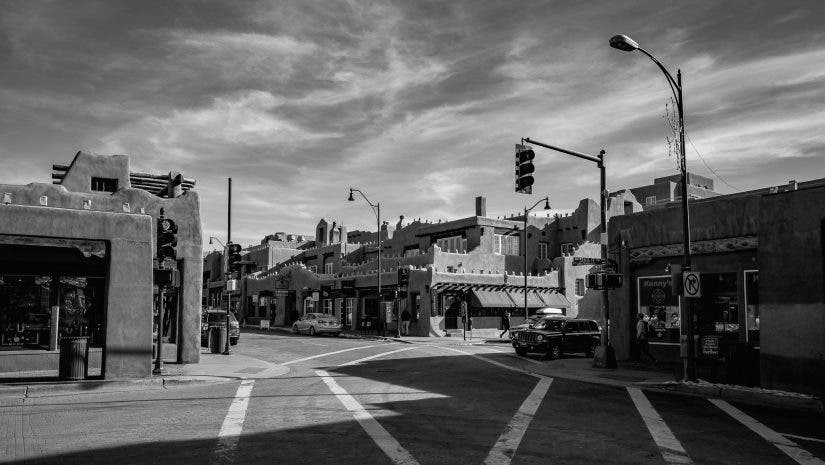
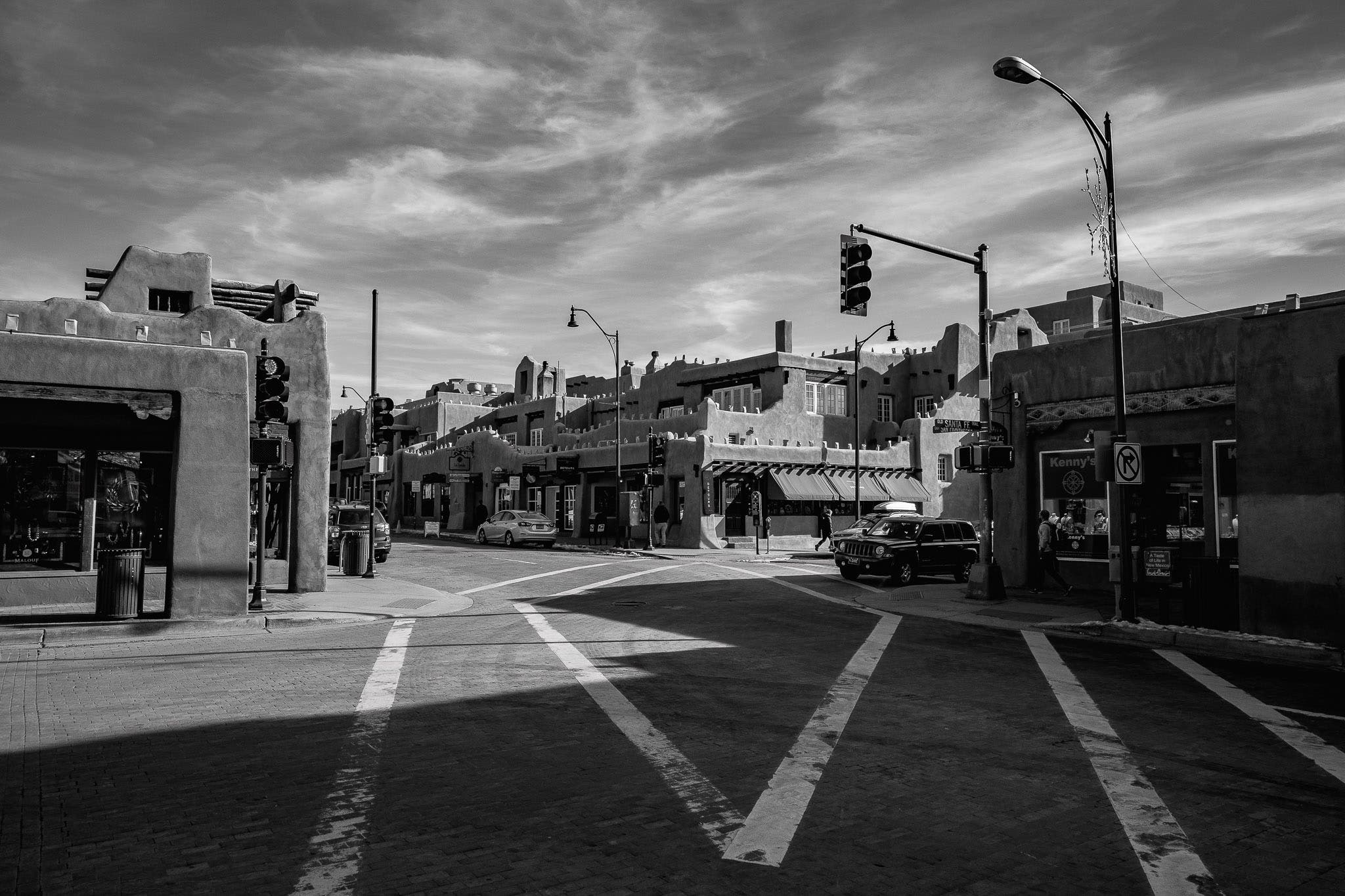
One creative suggestion I often make to aspiring photographers is to always see their world in both color and black and white. Sometimes, a scene lends itself beautifully to both mediums of capture! Other times, color is just distracting from the strong shapes, lines, and textures in a city scene.


A fun challenge is to try and capture both vibrant colors and simple B&W imagery in the same city area, and still capture the essence of the city in each image!
Light, Time, & Weather

Whenever the weather gets dramatic, I always think of how such natural beauty might juxtapose with the grit or texture of different urban areas. As you may be starting to notice, by now I am combining a lot of the other tips, such as thinking about B&W, and/or creating juxtaposition or a dramatic, deceive moment of serendipity.

Urban Photography Safety

This has been hinted at already a few times, but it bears repeating in its own category. Be safe out there, folks! A lot of popular urban photos of passing vehicles, trains etc. might be truly unsafe to capture. You might be tempted stay out late after sunset at a viewpoint overlooking a city skyline, or you might be attracted to that dark alley that looks like it’s right out of a movie set.
Every part of every city is different, of course, so just do your research before you go out to explore any urban area. If you’re in a totally unfamiliar place, it might help to use a local guide who knows their way around. If you’re in your hometown, stay current on the news; know where it is safe to be and when.
Lastly, as I mentioned, be respectful of other human beings. Some folks may be struggling to make ends meet or just survive, and asking them for a photograph could seem like you’re taking advantage of their plight. These situations, and the communication skills required, are a whole subject by itself, so, hopefully this article gets photographers to at least discuss such matters.
Urban Photography | Conclusion

Grab your camera and explore your city or urban area! You can find visual beauty everywhere, whether it is moonlight over the water of a beach city, or the brutal grind of rush-hour traffic.

Hopefully this collection of inspiration and urban photography tips will get you started on your journey. Be safe, be creative, and share your imagery with the rest of the world!