Feelings run deep when you talk about Micro Four Thirds (MFT), and there’s a ton of technical talk out there, but let’s be real: does it pass the vibe check? There’s a sweet spot to find between technicals, output quality, and fun to use.
MFT cameras from Olympus and Panasonic stand out as great equalizers for gear minimalists, budget-conscious shooters, and solo filmmakers. Plus, it makes photography more accessible for many facing physical disabilities. Still, it’s not always the right choice in every type of photography.
What Is the Micro Four Thirds System?

We’ve been chasing more in photography for decades. More pixels, more battery life, more dynamic range, and more lens options. Micro Four Thirds ticks a lot of boxes, but not all of them.
Micro Four Thirds was the brainchild of Olympus and Panasonic over a decade ago, and uses a shared lens mount for wider lens availability.
At 17.3 x 13.0 mm, MFT sensors are much smaller than full-frame sensors or even APS-C at 23.5 x 15.6 mm (22.2 x 14.8 mm for Canon) and have a 2x crop factor. This effectively doubles the reach of lenses, affecting depth of field and bringing in some diffraction issues. Also, MFT sensors are in a 4:3 ratio instead of 3:2.
Generally, MFT cameras have fewer megapixels than their full-frame cousins. Still, they use a lot less power, and cameras are often packed with extra goodies using that surplus power, like the Lumix G9II’s amazingly advanced IBIS.
That smaller sensor also means more noise and diffraction challenges, however. Like most things in photography, that’s not a deal breaker; it just means adjustments have to be made. In the words of Genie in Disney’s Aladdin, “Phenomenal cosmic powers! Itty bitty living space.”
The Vibe: The Experience of Shooting MFT

As a confirmed gear minimalist, I love Micro Four Thirds for an everyday carry camera. They are typically lightweight and small enough to leave slung over my shoulder or tucked in whatever bag I have for the day, and with the 2x crop, carrying an emergency zoom for random birds is easily doable. For me, MFT is a great way to find the joy in shooting again.
Weight
I got into photography way back in the land-before-time days of manual film cameras, so I’m no stranger to heavy cameras. Back then it was metal everywhere, and your gear doubled as a self-defense bludgeoning weapon.
Cameras have gotten leaner and meaner, but MFT takes it to a new level of portability. From compacts small enough for your pocket, like the Panasonic Lumix LX100, to more robust DSLRs and mirrorless bodies, weight is minimal.
Not only is that great for an everyday carry camera or saving weight on a long hike, it also makes photography much more accessible for folks with physical challenges.
A lighter body and smaller lenses mean less strain on wrists and shoulders, and many MFT bodies are compact enough to operate comfortably one-handed, something that matters a great deal if arthritis, tremor, or limited grip strength make a full-size DSLR or full-frame mirrorless kit exhausting to hold up for a full shoot.
Unobtrusive and Overperforms Against Perception
Smaller, lighter MFT gear works fabulously for street photography as well. Your gear is far less obtrusive and draws less attention, making it easier to get shots without fielding a million questions from passersby.
The downside is that you don’t necessarily look like a pro to the untrained eye at events. When there’s a line of shooters using giant lenses on monopods, and you stroll up and start shooting handheld with a lens about the length of legal paper, like the 150-600mm OM M.Zuiko, you get a lot of side-eye. And I mean a LOT.
The Extras
Smaller sensors mean less power needed to capture images and process them. With that extra power, Olympus and Panasonic are packing tons of extra features into cameras. For example, in-camera LUTS (like Leica Monochrome in the Lumix G9II), built-in neutral density filters (ND), and high-resolution composite shooting.
One of the features really benefiting from that power surplus is outstanding IBIS. Some MFT cameras have powerful enough IBIS for up to around 1 second handheld images in some situations. And that’s something my gear-minimalist heart just loves. Anytime I can leave the tripod at home and still get the shot, I’m a happy tog.
The Tech Bits: What MFT Technical Concerns Affect Your Photos

Like any camera system, there are ups and downs to shooting on Micro Four Thirds. Whether it’s for you depends on what you are shooting and the type of output you need in those situations. For me, the biggest technical adjustments with Micro Four Thirds landed squarely at crop factor, depth of field, diffraction, noise, dynamic range, and lens availability.
The MFT Sensor: 2x Crop Factor
Micro Four Thirds is very much an equivalent system. It leans into the 2x crop factor of the smaller sensor, complete with fewer pixels than many full-frame cameras on the market. Lumix cameras tend to run in the 25MP range while OM trends around 20MP. But paired with the crop factor, which doubles the lens reach, it works.
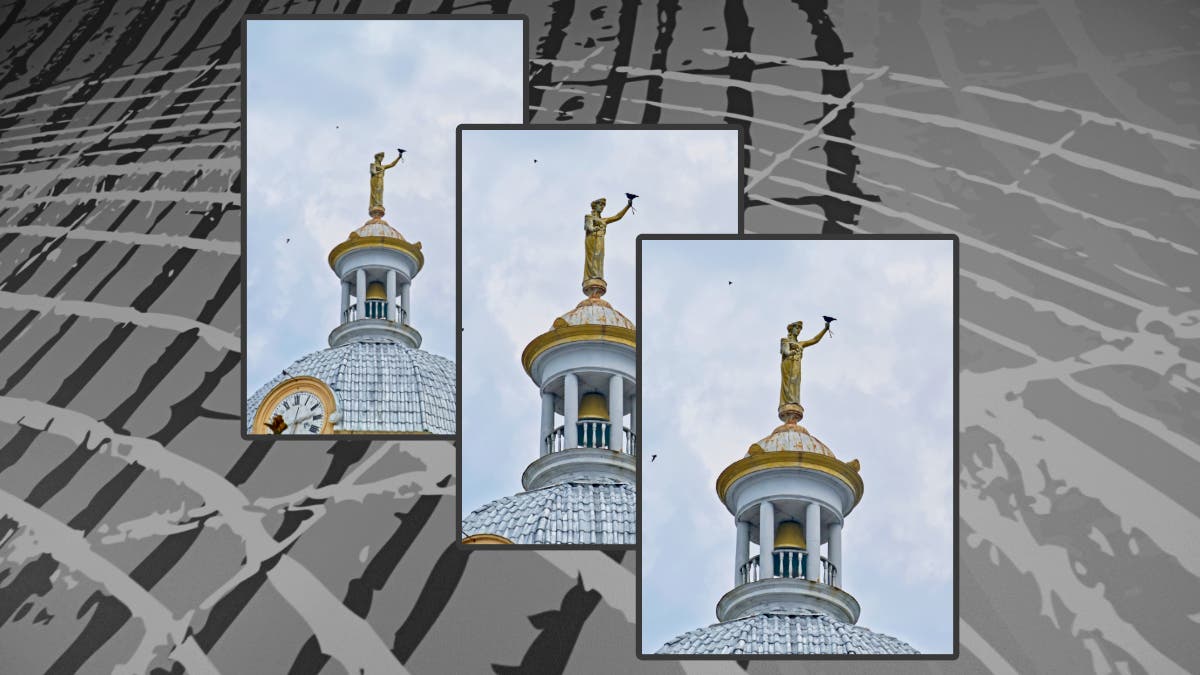
Yes, getting 600mm equivalent reach with a 300mm is pretty much the same as cropping out roughly half of your image from a full-frame camera. But we all know the dirty little secret of photography is that everybody crops. The only question is how much you crop.
With MFT, you have less cropping room quality-wise after shooting, but with the added reach, cropping may not be necessary.
F-Stops: Same Aperture, Different Results
Apertures are picky with MFT. It is truly the biggest adjustment I have to make to my shooting style any time I shoot MFT. When shooting MFT, the depth of field is effectively bumped two stops (roughly), but your exposure isn’t markedly changed. This is primarily because you need to stand further back to capture the same frame (as full frame), and distance to subject is a huge part of DOF.
That means that if you shoot on f4, you get about the same depth of field as f8 on a full-frame system. For large depth-of-field scenes like landscapes, that’s fabulous. But if you need deep bokeh to hide an ugly background, it can get tricky. You really have to pay careful attention to settings for depth-of-field management.

Diffraction
Technically an aperture issue, I wanted to point this out on its own. While deeper depth of field helps your focus many times, playing on the edges of your lens’s f-stop range is playing with fire in MFT.
Like squinting your eyes, there’s a point it helps you focus and a point where it makes everything blurry again. With Micro Four Thirds, you tend to hit the point where stopping down starts to diffract the light and create soft focus faster than on full-frame cameras.
Noise
The smaller sensor collects less light, and that affects signal-to-noise ratio. Plus, there’s just less sensor surface. The end result is you start to notice noise at lower ISOs than full-frame systems. I knew that going in, but how early it became noticeable surprised me. Of course, exact ISO thresholds vary by body and sensor generation, so your mileage may vary.
Most bodies do a good job of noise handling for in-camera JPEG processing. If you shoot RAW, you’ll want an editing program with good noise reduction options, especially if you tend to deliberately slightly underexpose to give yourself more editing leeway.
Dynamic Range
On paper, Micro Four Thirds should have about two stops less dynamic range capability than full frame sensors. However, in shooting, I’ve found that most of the time MFT returns a fairly nicely nuanced dynamic range right out of the camera that struggles more with shadows than highlights. That said, final results will largely depend on the contrast of the scene and how a specific camera body handles processing a scene.
Universal Lenses (Mostly)
Lens availability keeps photographers with specific brands. Micro Four Thirds gives you extra choices when looking for the best lenses since MFT lenses fit all MFT cameras regardless of brand. However, while autofocus (AF), exposure metering, and EXIF should be fine, there are some limitations.
Limits typically come in with:
- Image stabilization (IS): Optical image stabilization (OIS) lenses may not sync properly with in-body image stabilization when crossing brands.
- Physical aperture rings: The physical aperture rings on some Lumix lenses won’t function on OM bodies.
- Advanced features: Some in-camera features, such as focus stacking with OM, might not work with cross-brand lenses.
- Function buttons: Programmable function buttons might not work when crossing brands.
Micro Four Thirds in the Real World: Best (and Worst) Photography Genres

Truly, you can use Micro Four Thirds for any type of photography, but there are genres where MFT truly shines and a few where drawbacks become noticeable.
Photography Genres Where Micro Four Thirds Shines
- Street photography: Small and unobtrusive, MFT keeps you out of the subject’s notice.
- Handheld video shoots: The IBIS systems help even the playing field for video without gimbals or other stabilization gear.
- Travel photography: Portability, flexibility, and great IBIS make MFT a great choice.
- Wildlife and nature photography: MFT works well for most wildlife and nature photography, and the physically shorter lenses make gear much more portable.
Photography Genres Where Micro Four Thirds Shows Its Limits
- Fashion and beauty photography: In a world where micro-touchups are common, better dynamic range capabilities and more MP than MFT offer are usually called for.
- Sports photography: This is kind of a mixed bag. Daytime outdoor events wouldn’t be as much of an issue for MFT, but indoor events with poor lighting play havoc with Micro Four Thirds noise issues at high ISOs.
- Architecture and real estate photography: The focal length doubling causes problems here because of the need for wide-angle shots.
- Astrophotography and night photography: It can be done and done well; Olympus even has the OM-3 ASTRO with a modified infrared-cut filter designed for astrophotography. However, MFT low-light and noise issues are more pronounced overall.
The bottom line is that it’s about finding the right overall system for you, not just the sensor size. Micro Four Thirds isn’t going to be right for everyone in every situation, but it sure is a lot of fun to play with, and it opens up the world for many with strength or mobility challenges. Check out Sarah Teng’s OM-3 review to see how MFT can fit into your lifestyle.
Ready to see if MFT fits your kit? Browse Micro Four Thirds cameras and lenses from OM System and Panasonic to find the setup that matches how, and where, you actually shoot.