As AI and other technologies make work faster and more efficient, what happens to the things people do in their careers that can’t be measured? Let’s explore what Rory Sutherland’s Doorman Fallacy can teach photographers about AI, efficiency, and human judgment.
I was thinking more about this after my editor sent me a Medium article titled “The Doorman Fallacy: The Hidden Cost of Blind Efficiency” by Dr. Cristina Imre. In it, she talks about a particular kind of organizational thinking that can look smart on paper but overlook what actually creates value.
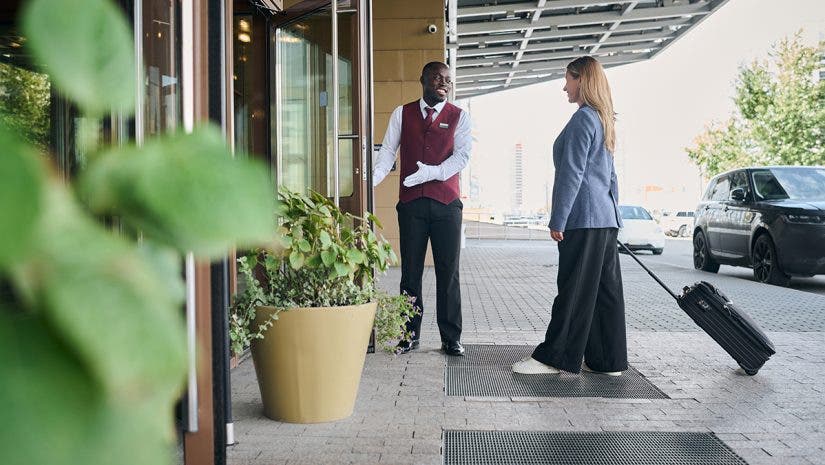
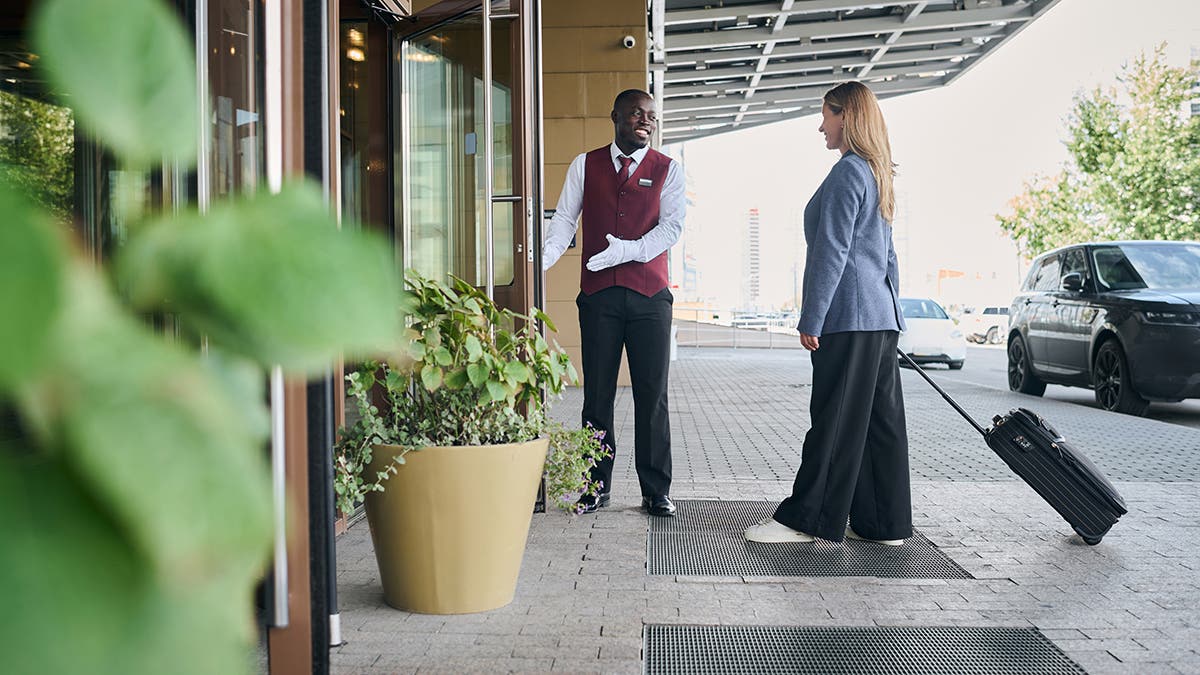
Imre quotes behavioral economist Rory Sutherland, who gave this pattern a name in his 2019 book Alchemy: “The Doorman Fallacy.” It’s what happens, he describes, when your strategy becomes synonymous with cost-cutting and efficiency. “First,” he wrote, “you define a hotel doorman’s role as ‘opening the door’, then you replace his role with an automatic door-opening mechanism. The problem arises because opening the door is only the notional role of a doorman.”
Except, of course, that’s not really the job. The doorman also greets guests, recognizes regulars, calls taxis, makes people feel welcome, and keeps an eye on who is coming into the hotel. He gives the impression of service and status before a guest has even checked in. The door is just the most obvious thing he does….
Efficiency and Cost-Cutting vs. Creativity
Speaking earlier this year at The Drum’s Predictions 2026, Sutherland warned that businesses are sleepwalking into a future defined by cost-cutting and regulatory fear. AI, he argued, is being sold in exactly the wrong way and marketers will pay the price if they don’t push back.
“My predictions are slightly pessimistic,” he said, before outlining what he sees as the dominant mindset across much of business. “Most businesses only have two principal modes,” he argued. “Cost reduction and regulatory paranoia. Don’t fall foul of the regulator. Don’t have a reputational disaster. Spend as little money as you can.” Marketing and innovation, he added, sit uncomfortably outside that worldview. And AI, for all the excitement around it, risks being pulled firmly into the same cost-obsessed logic. “The bill for AI is going to come due. Insane amounts of money have been spent. So how do you sell it to clients? The easiest way is cost reduction.”
Now let’s see how this applies to photography, since many of the photographers I know like using AI for tedious technical editing tasks but not for creative editing, style, or vision.
What the video here

More Than Just Taking Pictures
Simply put, a photographer gets hired to take photographs. But the job can also include making a nervous subject feel calm and comfortable, being aware when someone is about to reveal something genuine, knowing when to give direction and when to move away from the person, and anticipating a moment before it happens.
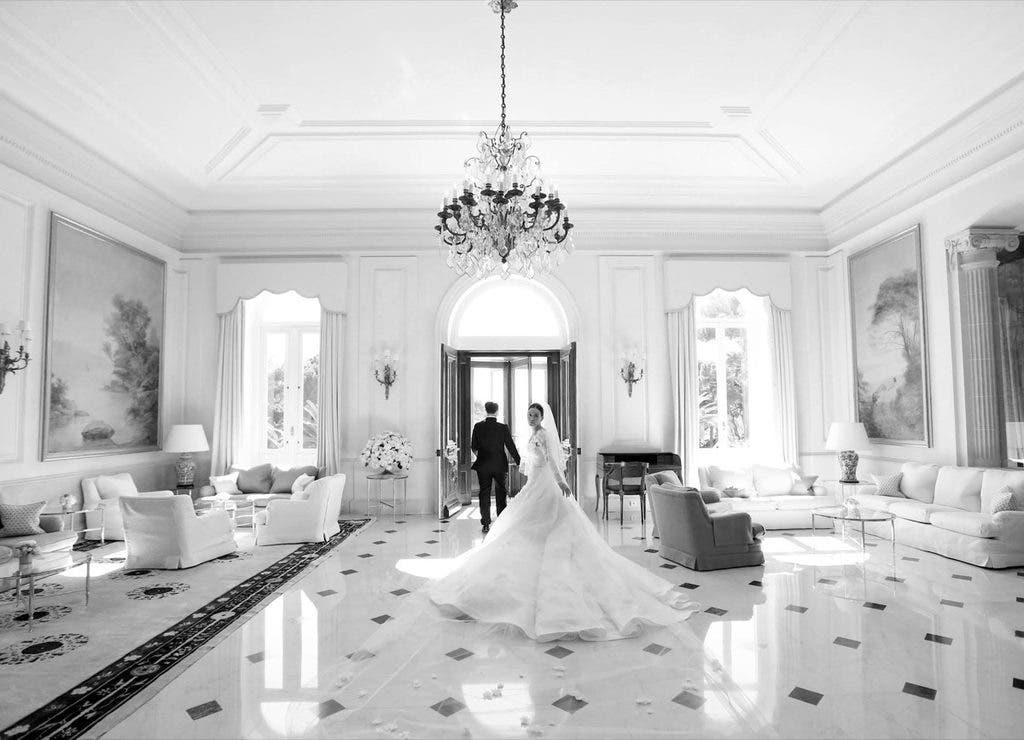
Wedding photography may be the clearest example. A wedding photographer is not merely documenting a wedding. They are dealing with personalities, schedules, emotions, family dynamics, and moments that will never happen again.
Elizabeth Messina, who has built a long and successful career photographing weddings and portraiture, considers that relationship with the subject as an essential part of the job.
“That’s the part of the job that isn’t easily measurable,” she says. “But I believe you can feel it in the final images. It’s the difference between simply making a technically competent, beautiful photograph and creating an image that feels honest and genuinely reflects the person in front of you.”
Teaching More than F-Stops
That same idea extends to the way Messina teaches photography through The Arte Society, the creative community she founded. “My intention isn’t simply to give photographers more information about cameras, lighting, or technique,” she explains. “It’s also to help them examine their own work critically, understand why an image is or isn’t working, develop their own visual voice, and become part of a community. What I loved about art school was being immersed in a community of artists, making work, exchanging ideas, and learning from one another.” The Arte Society is more than education; it’s about cultivating human connection.”
Going further, Messina believes human connection will become even more valuable in her field, not less. “The reason the human doorman matters is that no two doormen are alike,” she says. “They are each a unique person, one more chatty, one more personal, one more hands-on… It’s the same with photography and photographers. “Our differences, our individual perspectives, are what make photographs compelling. Without that individuality, photography becomes like a song with one note.”
As Sutherland pointed out during an episode of The Knowledge Project late last year, “When you pursue efficiency, generally you start looking at numerical or mechanical factors. And of course, in the process, you disregard psychological factors where the greater gains may be found. And so, you focus too heavily on cost reduction and too little on value creation.”
The Parts of Photography That Don’t Appear in the Metadata
Many photographers have the same concerns on the job: Is the image sharp enough, and is the subject in focus? Is the exposure correct? Is the color accurate? How fast can I deliver the files?
Those things matter. But some of the most important photographic decisions don’t show up in the metadata. Things like: Why did I press the shutter at that exact moment? Why did I wait? Why did I choose the imperfect frame over the more boring but perfect one?
These are judgments. And judgment is difficult to automate because it depends on context.
I explore this concept more in-depth in a previous Adorama article, “Why Human Guidance in Photography Matters So Much in the Age of AI.” Yes, AI can be incredibly good at analyzing information and identifying patterns, but that doesn’t mean it knows the context behind a decision or why one choice might matter more than another.
An algorithm can determine whether a person’s eyes are open. But can it discern if the photograph of the person’s eyes half-closed is the one that reflects who they really are?
It can identify the sharpest frame in a sequence. But is the sharpest frame necessarily the best photograph?
It may make a photograph technically cleaner. But does cleaner always mean better?
This is another point where the Doorman Fallacy seems particularly relatable to photography. We tend to assume that if something can be made more technically perfect, it automatically becomes more valuable. Or does it?
Grain, motion blur, a strange expression, or a slightly awkward composition are what can give a photograph its character. A perfectly polished image can be beautiful, but an imperfect one can feel more personal, more surprising, and trickier to reproduce.

Automate the Workflow, Not the Eye
If automation allows a photographer to spend more time with a subject, experiment with an idea, talk to a client, or look more closely, then efficiency has done exactly what it should. It has taken friction out of the creative process.
The problem is when efficiency becomes the goal itself. When the goal is simply to shoot more, edit faster, deliver sooner, make images as perfect as possible, and minimize human involvement. At that point, we may discover that we’ve optimized the wrong thing.
As Liz Masoner wrote in a recent article for Adorama on How AI Pushback is Bringing Humanity Back to Photography, “Proof of reality is replacing perfect photos. Thanks to AI, hyper-polished photos, super-saturated colors, and improbable situations spark more suspicion than wonder. As AI images flood social media, audiences are searching for authenticity, process, storytelling, and proof over perfection. I never thought I’d say it, but AI is saving humanity in photography.”
For photographers, the better question is what that efficiency gives them back. Ideally, it allows more time to do the part of the job that technology still struggles to replicate, like paying attention, making judgment calls, developing a point of view, and deciding what is worth photographing in the first place.
The camera will continue to get faster. The software will continue to get smarter. The workflow will continue to become more efficient. That’s not necessarily something to fear. It may give photographers more room to do the part of the job that matters most. It’s not merely about pressing down on the shutter. Or opening a door. In the words of Rory Sutherland: “AI risks being introduced first as a cost-cutting exercise rather than a way to improve the customer experience.”